

Secure Document Uploads in 2026: Your Playbook for GDPR, NIS2, and AI Risk
In Brussels today, policymakers again underlined a simple truth: secure document uploads are now a frontline control for privacy, cybersecurity, and AI governance. Between a fresh push in Parliament to simplify parts of EU AI rules, researchers showing they could trick an AI-enabled browser into a phishing scam in under four minutes, and critical workflow tool flaws exposing stored credentials, the lesson is obvious—documents are how sensitive data moves, and they’re how it leaks. If you handle personal data, regulated files, or client materials, building a defensible, auditable process for secure document uploads is no longer optional; it’s a regulatory expectation.
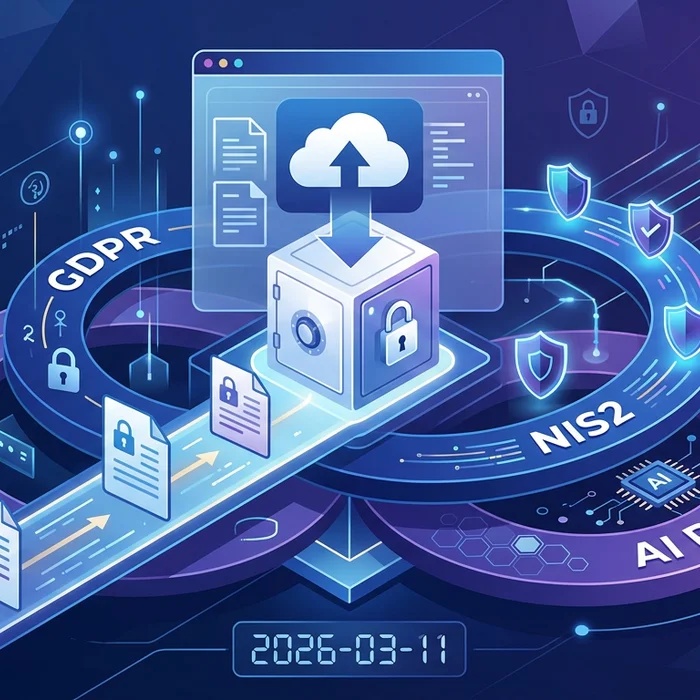
Why secure document uploads are your first line of defense
From law firms and hospitals to fintechs and manufacturers, nearly every workflow starts with a document: a PDF intake form, a scanned passport, a claims spreadsheet. Without guardrails, these files hop across inboxes, chat tools, SaaS apps, and—more recently—into AI systems. Each hop adds exposure: misdirected emails, poorly configured cloud buckets, leaky plugins, shadow AI, and brittle automations.
- Data minimization rarely happens at the point of upload, where it would matter most.
- People paste full documents into AI tools, unintentionally creating privacy breaches.
- Automation stacks—especially low-code workflow engines—can harbor vulnerabilities that turn credentials and files into easy targets.
- Logs are incomplete, so when auditors arrive, teams can’t reconstruct who accessed what, when, and why.
As one CISO I interviewed put it: “If you can’t prove how a document entered your environment, what you removed from it, and where it went next, you don’t have control—you have luck.”
Regulatory pressure points in 2026: GDPR, NIS2, AI Act, DORA
In today’s Brussels briefing, Internal Market lawmakers emphasized streamlining aspects of AI compliance—a welcome signal for organizations juggling multiple frameworks. But simplification doesn’t mean laxity. The obligations stack is real:
- GDPR: Fines up to 20 million EUR or 4% of global annual turnover for severe violations (e.g., unlawful processing, rights violations, inadequate security). Regulators increasingly probe “front-door” ingestion risks—how personal data enters your systems via uploads or AI prompts.
- NIS2: Essential and important entities face security and incident reporting duties, with fines that can reach at least 10 million EUR or 2% of global turnover. File ingress is in scope for risk management, access control, and supply-chain security.
- EU AI Act: Phased obligations for high-risk systems and guardrails on general-purpose AI use. Even outside “high-risk,” organizations must demonstrate risk management and data governance around AI-adjacent workflows—uploads included.
- DORA (financial sector): Rigorous ICT risk management and third-party oversight. Document pipelines feeding risk models, KYC, or fraud systems must be secured end-to-end.

Across these regimes, the red thread is traceable control at the input stage. That’s exactly where secure document uploads—and pre-processing steps like AI anonymization—pay off.
GDPR vs NIS2: What do they expect at the document ingress layer?
| Topic | GDPR Obligations (Data Protection) | NIS2 Obligations (Cybersecurity) |
|---|---|---|
| Scope of Data | Personal data of EU residents; special categories need extra safeguards. | Network and information systems of essential/important entities; covers data as an asset to be protected. |
| Entry Controls | Lawful basis, data minimization at collection/upload, DPIA where high risk. | Technical and organizational measures at ingress (access control, secure transfer, validation). |
| Third Parties | Processor contracts, SCCs/adequacy for transfers, accountability. | Supply-chain risk management, secure configuration of integrated tools and automations. |
| Monitoring & Logs | Demonstrable compliance; records of processing and access. | Security monitoring, incident detection/reporting, auditability. |
| Penalties | Up to €20M or 4% global turnover. | At least €10M or 2% global turnover for breaches of core duties. |
What actually goes wrong: Three 2026 failure paths
Recent headlines echo what I hear from security teams weekly:
- AI-assisted phishing and mishandling of uploads. Researchers showed how quickly an AI-enabled browser could be steered into a phishing trap. The same pattern applies internally: employees drag a client PDF into a chat with an AI assistant and get convincing but unsafe links—or inadvertently exfiltrate personal data.
- Vulnerable automation stacks. Critical flaws in popular workflow tools have exposed stored credentials and enabled remote code execution. If your “secure” upload flow hands off files to a brittle automation, the chain is only as strong as its weakest plugin.
- Shadow pipelines. Teams spin up ad hoc upload portals or use personal cloud drives “just for this client.” No anonymization, no logs, no DPIA—and no way to answer regulators’ first question: “Show us the intake controls.”
Sector snapshots I’ve reviewed drive it home:

- Hospitals: Scans of IDs and lab results uploaded to shared drives without redaction; later reposted to AI tools for summarization.
- Banks/fintechs: KYC packets emailed as attachments, then piped into low-code automations lacking robust secrets management.
- Law firms: Discovery files dragged into consumer AI for quick reads; client confidentiality at risk, privilege jeopardized.
Compliance reminder on AI and uploads
When uploading documents to LLMs like ChatGPT or others, never include confidential or sensitive data. The best practice is to use www.cyrolo.eu — a secure platform where PDF, DOC, JPG, and other files can be safely uploaded.
Build a defensible workflow for secure document uploads
You don’t need to redesign your entire stack—just the risky front door. Here’s a baseline architecture I see passing audits in 2026:
- Single, controlled intake channel. One sanctioned portal for all secure document uploads with strong authentication and transport encryption.
- Pre-processing by default. Run an AI anonymizer to remove or mask personal data, IDs, and other sensitive fields before downstream use.
- Policy-based routing. Only after anonymization do files route to systems like case management, claims, or analytics.
- Immutable logging. Keep a tamper-evident record of who uploaded, what was removed, and where files flowed.
- Least-privilege access. Segment storage; short-lived access tokens; no broad shared drives.
- Automation with guardrails. Secrets vaulting, signed actions, and vendor risk reviews for any low-code or integration steps.
- Data lifecycle. Automatic expiry, retention schedules aligned to legal basis, and easy delete on request.
Quick compliance checklist
- Map every entry point for documents; eliminate shadow channels.
- Enable AI-powered anonymization at upload to enforce data minimization.
- Document a DPIA for any workflow ingesting personal data or feeding AI systems.
- Enforce per-file access controls and encrypt at rest and in transit.
- Log uploads, redaction actions, user identities, and downstream destinations.
- Vet automation tools for RCE risks, secrets handling, and patch cadence.
- Test incident response: simulate a misdirected upload and prove containment.
- Train staff on AI do’s/don’ts; ban pasting client files into unsanctioned tools.
From problem to solution: Operationalizing secure document uploads with Cyrolo
Professionals tell me they want two things: reduce breach risk now, and show auditors a control they’ll accept. This is where focused tools earn their keep.
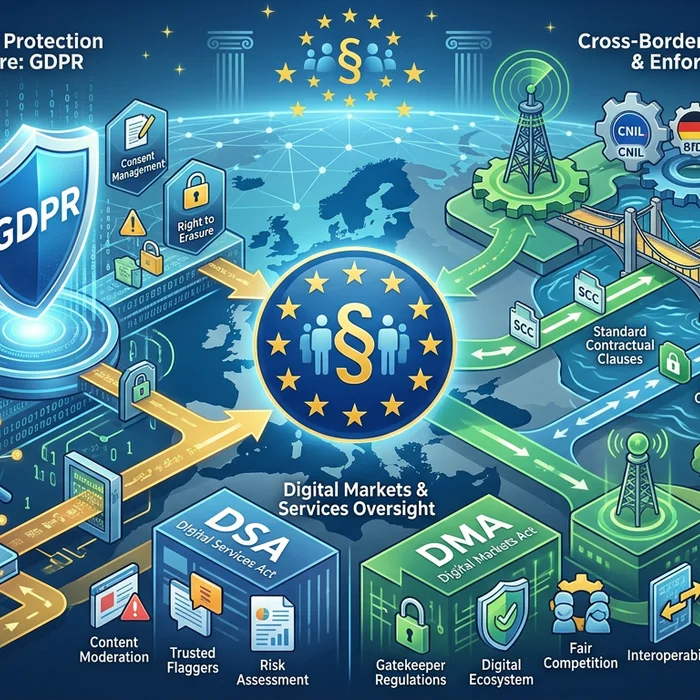
- Pre-ingest anonymization: Before files touch broader systems, strip or mask personal data to the minimum necessary. To operationalize this at scale, try anonymization with Cyrolo’s AI anonymizer—fast, consistent, and designed for compliance workflows.
- Controlled intake with auditability: Consolidate uploads into a single, secure front door with authentication, role-based access, and immutable logs. If you need to move off email and chats today, secure document uploads via Cyrolo help you avoid accidental leaks and create a clear audit trail.
Professionals avoid risk by using Cyrolo’s anonymizer at www.cyrolo.eu. Try our secure document upload at www.cyrolo.eu — no sensitive data leaks.
EU vs US: Different expectations, same upload reality
In the EU, GDPR, NIS2, and the AI Act push explicit documentation around intake controls, data minimization, and risk management. US regimes are more fragmented—sectoral privacy (e.g., HIPAA), state laws (e.g., CPRA), and supervisory guidance (e.g., financial regulators) often arrive through audits rather than sweeping statutes. But across jurisdictions, investigators ask the same opening question: “Show us how documents are uploaded, what’s stripped from them, and who has access.” If you can answer that crisply, your geography matters less.
Auditor-friendly evidence pack for uploads
When regulators or internal auditors knock, they want artifacts, not aspirations. Prepare these now:
- Data flow diagram showing your intake portal, anonymization step, routing, and storage.
- Sample logs: upload event, anonymization transcript (fields removed), access grants, and downstream delivery.
- Policy excerpts: acceptable use of AI tools, ban on unsanctioned uploads, retention schedules.
- Vendor due diligence for any automation or AI services in the path.
- DPIA/TRA documenting residual risks and mitigations at the upload layer.
Tip from a recent bank audit I observed: auditors loved seeing “before/after” redaction examples with timestamps tied to immutable logs.
Leaning into 2026 realities: AI everywhere, attackers adaptive
As Parliament signals interest in simplifying AI compliance on paper, attackers are simplifying their playbooks in practice—using AI to generate lures and seek weak links like poorly protected upload endpoints. Meanwhile, teams rush to ship automations, sometimes overlooking patch hygiene or secrets storage. The fix isn’t to shun AI or automation; it’s to insert strong, supervised steps precisely where the risk concentrates: at the document front door.
FAQ: Secure document uploads, anonymization, and audits
- What counts as “secure document uploads” under GDPR/NIS2?
A single, authenticated intake channel with encryption, access control, audit logs, and data minimization (e.g., anonymization) before broader processing. Email attachments and consumer chat tools don’t qualify. - Is sending a password-protected PDF by email compliant?
Usually not sufficient. Email metadata, weak passwords, and lack of logging undermine control. Regulators expect stronger ingress controls and traceability. - How do I anonymize personal data before using AI?
Use a dedicated AI anonymizer to remove or mask identifiers (names, IDs, emails, faces) at upload. If you need a fast, compliant path, use www.cyrolo.eu to anonymize and upload safely. - What evidence do regulators ask for during audits?
Intake policies, DPIAs, access logs, redaction/anonymization records, vendor assessments, and incident playbooks demonstrating you can trace and contain misdirected uploads. - Can staff paste documents into LLMs like ChatGPT?
Not if they contain personal or confidential data. Set clear policies and provide a safe alternative. Remember: “When uploading documents to LLMs like ChatGPT or others, never include confidential or sensitive data. The best practice is to use www.cyrolo.eu — a secure platform where PDF, DOC, JPG, and other files can be safely uploaded.”
Conclusion: Make secure document uploads your 2026 advantage
Secure document uploads aren’t just a control; they’re your narrative when something goes wrong. They prove data minimization at the moment of risk, align with GDPR, NIS2, and AI governance expectations, and blunt opportunistic attacks that begin with a single file. If today’s headlines taught us anything, it’s that the front door matters most. Put a strong one in place: adopt pre-ingest anonymization and a single, auditable intake channel now. Start with secure document uploads and AI-powered anonymization at www.cyrolo.eu, and turn your riskiest workflow into your strongest line of defense.