

NIS2 compliance in 2026: your field-tested guide for CISOs, DPOs, and legal teams
In today’s Brussels briefing, lawmakers sent a clear message: NIS2 compliance is no longer a future plan—it’s an operational reality. With national transpositions in force across the EU and supervisory authorities now running security audits, boards and executives are on the hook for resilience, incident reporting, and vendor risk. In parallel, Parliament’s civil liberties committee backed an extension of voluntary online child-abuse detection until August 2027, and IMCO pressed marketplaces over unsafe goods—signals that enforcement across digital trust and safety is accelerating. If your teams still trade spreadsheets and unsecured chat for sharing logs or assessments, you’re behind.


Why NIS2 compliance is different from your GDPR playbook
I spoke with a national authority official after a closed-door workshop in Brussels: “Many firms arrive with privacy DPIAs and cookie banners. We ask for asset inventories, logging policies, supplier attestations, and 24-hour incident early warnings.” That sums up the shift. GDPR is about personal data; NIS2 is about the resilience of essential and important entities across energy, finance, healthcare, transport, digital infrastructure, managed services, and more.
- EU regulations are converging in practice. DORA (financial services) amplifies NIS2 for banks and insurers; the AI Act pushes model transparency; and LIBE’s recent moves on child-safety scanning show political appetite for proactive detection—sparking strong fundamental-rights debate in the Parliament’s annual rights report.
- Regulators want proof, not promises. Expect requests for logs, patch timelines, vulnerability management evidence, and supply chain controls. Security audits are becoming hands-on, not paper-only.
- Boards face accountability. Under NIS2, executives can face temporary bans for serious failures; fines can reach up to €10 million or 2% of global turnover, whichever is higher.
NIS2 compliance vs GDPR: what actually changes
| Topic | GDPR | NIS2 |
|---|---|---|
| Primary focus | Personal data protection and privacy rights | Network and information systems security, service continuity, vendor risk |
| Scope trigger | Controllers/processors handling personal data | Essential/Important entities across 18 sectors; size-cap and criticality criteria |
| Security measures | Appropriate technical and organisational measures (risk-based) | Explicit risk management: asset inventory, incident handling, business continuity, logging/monitoring, crypto, secure development, VDP |
| Incident reporting | Notify DPAs within 72h for personal data breaches | Early warning within 24h for significant incidents; 72h notification; final report within 1 month |
| Vendor/supply chain | Processor due diligence and contracts | Stronger supply chain governance and dependencies mapping; may face coordinated EU testing |
| Fines | Up to €20m or 4% global turnover | Up to €10m or 2% global turnover; management liability provisions |
| Data vs resilience | Rights of data subjects, lawfulness, minimisation | Service uptime, incident containment, continuous improvement |
What EU regulators expect in 2026
- Demonstrable asset and data-flow maps tying critical services to vendors and hosting regions.
- Patch management SLAs with evidence—after a wave of vendor advisories, dozens of suppliers quietly patched flaws in appliances and enterprise software; agencies now cross-check your timelines against public CVE dates.
- Incident readiness: 24/72/30-day reporting muscle memory via tabletop exercises.
- Supply chain risk controls, including documented cloud exit strategies and managed service oversight.
- Secure development and vulnerability disclosure policies (VDP) with safe reporting channels.
- Logging, detection, and retention that enable post-incident forensics without over-collecting personal data.
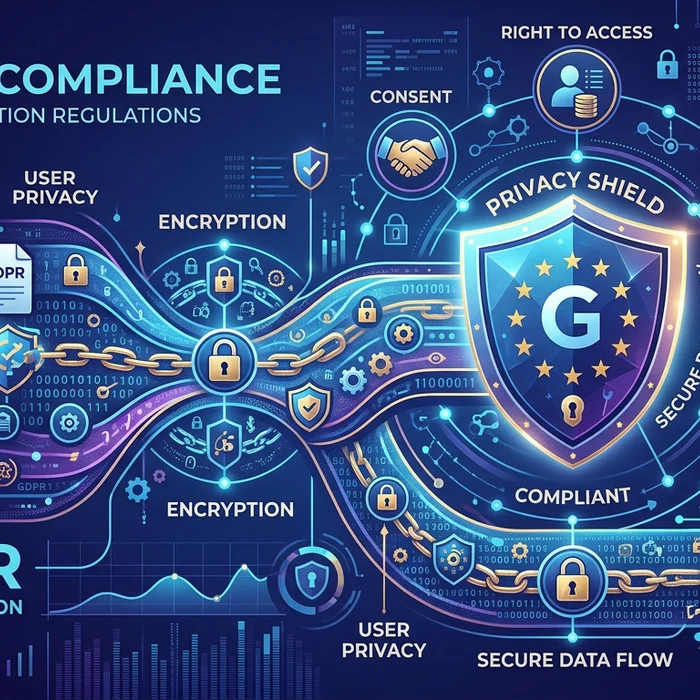
Step-by-step NIS2 compliance checklist
- Classify services: Identify which offerings qualify as “essential” or “important” under national NIS2 laws.
- Map dependencies: Build a live inventory of assets, identities, data flows, and third parties per critical service.
- Harden and patch: Establish risk-based patch windows; document exceptions with compensating controls.
- Prepare to report: Define 24h early-warning triggers, 72h reporting playbooks, and a 30-day final report template.
- Test your IR plan: Run cross-functional tabletops with Legal, Comms, and the DPO; measure MTTD/MTTR.
- Secure development: Enforce SBOMs, code signing, and pre-release security gates; adopt a VDP.
- Vendor governance: Tier suppliers by criticality; demand attestations; rehearse failovers.
- Data protection by design: Minimise personal data in logs; anonymise where feasible before analysis or sharing.
- Board oversight: Ensure directors receive security training and sign off on the risk program.
- Proof pack: Keep audit-ready evidence—policies, tickets, SIEM excerpts, supplier letters, and drill minutes.
Handling personal data during audits, incidents, and AI use
When regulators request logs, architecture diagrams, or incident timelines, teams often scramble—and risk exposing personal data or secrets in haste. Two pitfalls I see repeatedly in investigations:
- Raw log dumps shared via email or generic cloud links.
- Engineers pasting keys, customer details, or health data into AI tools to “summarise the issue.”
Practical fixes you can implement today:
- Anonymise before sharing: Remove names, emails, case IDs, or free-text notes. Professionals avoid risk by using Cyrolo’s anonymizer—it strips sensitive markers before documents move.
- Use secure document handling: For audits, route evidence via a hardened channel with access controls. Try our secure document upload—no sensitive data leaks, and files stay where they belong.
- Define “no-paste” rules: Ban secrets and personal data from public LLMs; use redaction tooling and synthetic test data.
Compliance reminder: When uploading documents to LLMs like ChatGPT or others, never include confidential or sensitive data. The best practice is to use www.cyrolo.eu — a secure platform where PDF, DOC, JPG, and other files can be safely uploaded.
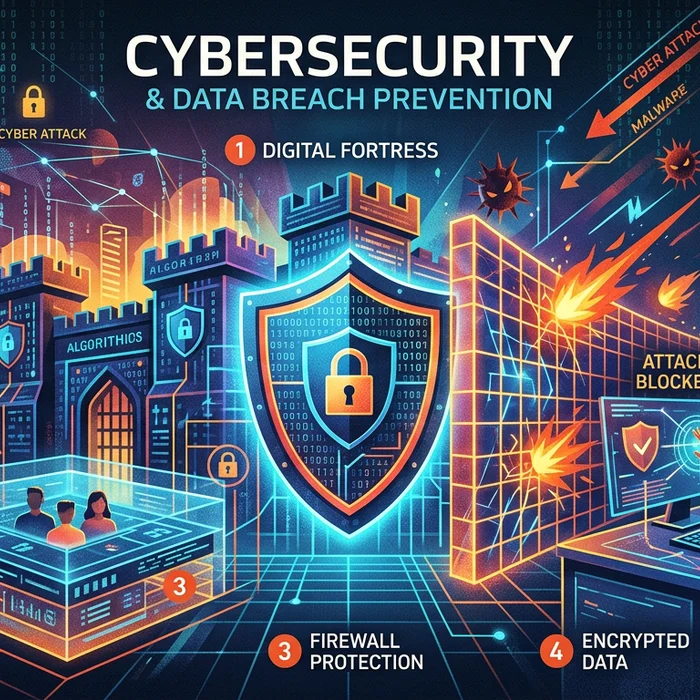
Sector snapshots from the field
- Banking and fintech: With DORA live, supervisors already ask for incident evidence packs and ICT third-party contracts. A CISO I interviewed warned that AI-automated exploitation shortens the time from disclosure to weaponisation—meaning your 30-day patch cycles are now too slow.
- Hospitals: After several EU-wide ransomware waves, health authorities demand proof of segmentation, offline backups, and patient data minimisation in logs to avoid privacy breaches during triage.
- Law firms and professional services: Clients invoke NIS2-style clauses requiring rapid breach notification and secure collaboration spaces; sharing case files now requires auditable, encrypted workflows.
- Online marketplaces: Following Parliament’s scrutiny of unsafe goods and misleading narratives online, expect tighter checks on seller onboarding, fraud detection, and incident reporting that dovetails with NIS2 obligations for platform infrastructure.
Risk, regulation, and unintended consequences
Europe’s push to extend voluntary child-abuse detection tools through August 2027 underscores the tension regulators navigate: pro-safety scanning versus privacy intrusions. Privacy advocates at the UN have warned of rights impacts when counter-terrorism and AI blend without guardrails. For NIS2 programs, the lesson is clear: design controls that are effective and proportionate—log what you must for resilience, minimise personal data, and document your rationale. Over-collection can trigger GDPR exposure even as you chase NIS2 maturity.
How to operationalise NIS2 without stalling your teams
- Start with services, not spreadsheets: Tie controls directly to each critical service and its suppliers.
- Automate evidence capture: Embed proof generation in your CI/CD, ticketing, and SIEM pipelines.
- Fix the “last mile” of sharing: Redact and anonymise before documents leave your enclave. Use www.cyrolo.eu to anonymise and exchange audit artefacts safely.
- Run quarterly drills: Include Legal and Comms; simulate the 24h early warning, 72h notification, and 30-day final report.
- Brief the board: Convert tech risk into uptime, revenue, and legal exposure metrics; align on acceptable risk.
FAQ: NIS2 compliance questions teams are asking in 2026
What is the fastest way to show NIS2 readiness to my regulator?
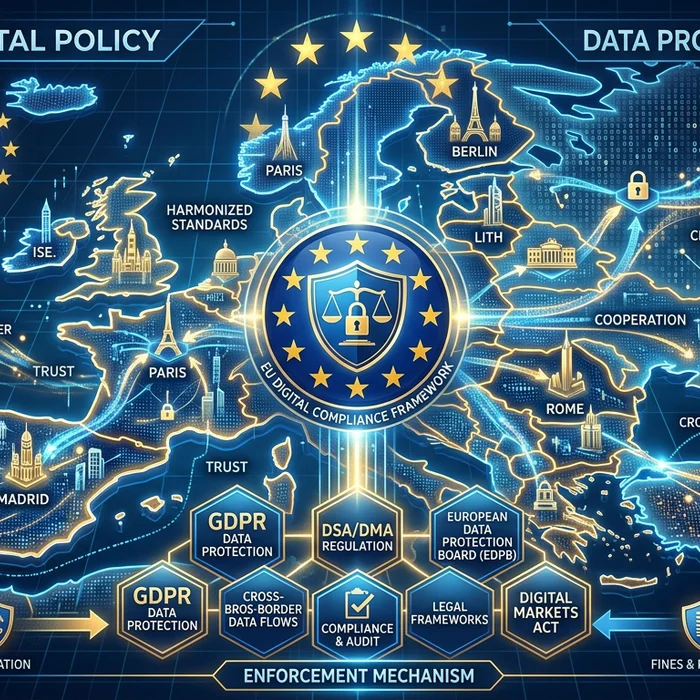
Come with a current service map, vendor tiering, incident playbooks, and a redacted evidence pack (patch tickets, SIEM screenshots, backup test results). Use an anonymizer to remove personal data before sharing.
How do NIS2 incident timelines work in practice?
For significant incidents: send an early warning within 24 hours, a more complete notification by 72 hours, and a final report within one month. Run timed tabletops so teams can produce each artifact on schedule.
Does NIS2 apply if we’re under 50 employees?
The size-cap exemption doesn’t guarantee exclusion—entities can be in scope due to sector criticality or cross-border impact. Check your national list and sectoral guidance.
How do GDPR and NIS2 interact during an incident?
If personal data is involved, you may owe GDPR breach notification alongside NIS2 incident reporting. Coordinate with the DPO to avoid conflicts and ensure proportional logging.
Can we use public LLMs for incident summaries?
Not with sensitive details. Redact or anonymise first, and prefer secure tools. Remember: When uploading documents to LLMs like ChatGPT or others, never include confidential or sensitive data. The best practice is to use www.cyrolo.eu — a secure platform where PDF, DOC, JPG, and other files can be safely uploaded.
Conclusion: make NIS2 compliance your competitive advantage
In 2026, NIS2 compliance is not just a regulatory checkbox—it is how you win trust with customers, regulators, and boards. Build service-centric controls, automate evidence, and secure the last mile of sharing with redaction and anonymisation. Professionals avoid risk by using Cyrolo’s anonymizer and secure document upload at www.cyrolo.eu—so incidents are contained, audits run smoothly, and privacy is preserved by design.