

NIS2 Privileged Access Management: What the Delinea–StrongDM Deal Signals for EU Compliance in 2026
In today’s Brussels briefing, regulators again underscored that under NIS2, privileged access is a board-level risk — and the market is responding. The Delinea–StrongDM acquisition shows how fast privileged access tooling is converging with identity, session telemetry, and infrastructure controls. For organizations preparing for NIS2 privileged access management, the message is clear: 2026 audits will go beyond passwords and vaults to verify least privilege, vendor access, and forensic evidence you can actually produce.

Why the changing PAM market matters for EU regulations
From my interviews with CISOs and EU policymakers, the pattern is consistent: PAM is no longer just a “vault plus MFA.” It’s identity-aware, ephemeral, and audit-first. A CISO I interviewed last week summed it up: “Our regulators don’t just ask ‘Do you have MFA?’ They ask ‘Show me proof you enforced least privilege for that admin login on 12 February — session trail, approvals, and who rotated the keys.’”
The Delinea–StrongDM move reflects this shift. Infrastructure access brokers, session recording, just-in-time (JIT) workflows, and machine identity governance are merging into one control plane. That aligns squarely with NIS2’s emphasis on risk management, logging, incident reporting, supply-chain security, and senior management accountability.
NIS2 obligations in plain language
NIS2 (Directive (EU) 2022/2555) expands the number of sectors in scope and tightens security and reporting duties. Member States had to transpose NIS2 by 17 October 2024; 2025–2026 is when supervisory scrutiny and audits scale up.
- Security measures: risk management, access control, incident handling, business continuity, and supply-chain security.
- Incident reporting: early warning within 24 hours, followed by a 72-hour notification and a final report within one month (Member State variations apply).
- Governance: management can be held liable; expect personal accountability for serious negligence.
- Penalties: for essential entities, at least up to €10,000,000 or 2% of global turnover; for important entities, at least up to €7,000,000 or 1.4% of global turnover.
Where does privileged access fit? Everywhere. From production databases to Kubernetes clusters and SaaS admin consoles, regulators expect controlled, monitored, and provable access.
NIS2 Privileged Access Management: what auditors will ask in 2026
- Inventory of privileged identities: humans, service accounts, machine identities, API tokens, cloud roles.
- Policy enforcement: least privilege, JIT elevation, time-bound access, and mandatory approvals for high-risk operations.
- Strong authentication: MFA everywhere, phishing-resistant where possible (FIDO2, passkeys), especially for admins.
- Session oversight: session recording and keystroke/command logging for critical systems; tamper-evident storage.
- Secrets hygiene: vaulting, rotation, short-lived credentials; no hardcoded keys in code or CI/CD.
- Third-party access: brokers for vendors/MSPs with isolation, expiry, and full audit trails.
- Break-glass controls: emergency access paths with enhanced logging and immediate post-incident review.
- Compliance evidence: demonstrable logs, attestations, and access reviews mapped to specific incidents and users.
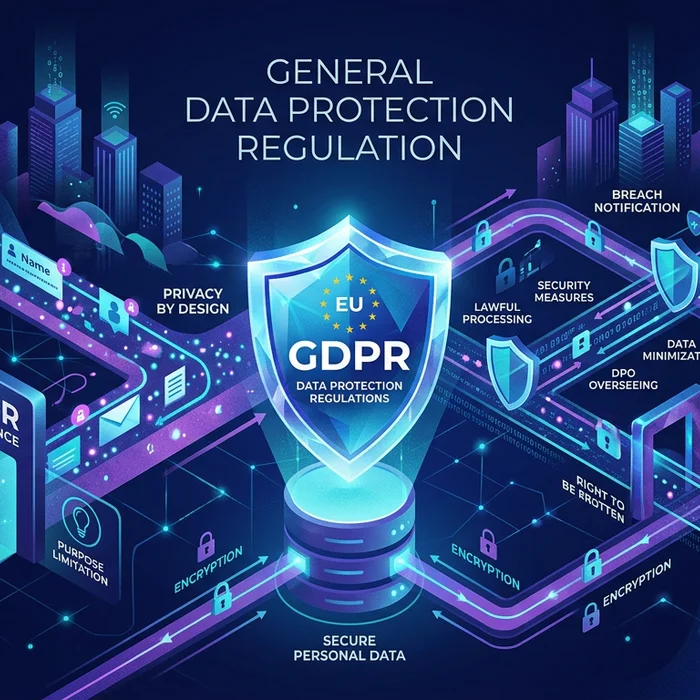
In other words, NIS2 privileged access management is as much about evidence and governance as it is about technical controls.
GDPR vs NIS2: how the obligations differ (and overlap)
Security leaders often ask whether GDPR or NIS2 “covers” PAM. GDPR is about personal data protection and privacy rights; NIS2 is about resilience and operational risk in essential and important entities. You’ll likely need to comply with both.
| Area | GDPR | NIS2 |
|---|---|---|
| Scope | Any controller/processor handling personal data of EU residents | Essential and important entities in designated sectors (e.g., energy, healthcare, digital infrastructure, finance, public administration) |
| Core Focus | Data protection, privacy rights, lawfulness, minimization, DPIAs | Cybersecurity risk management, operational resilience, incident reporting, supply-chain security |
| Access Controls | Appropriate technical and organizational measures to secure personal data | Explicit expectation for strong access management, logging, monitoring, and governance |
| Incident Reporting | Notify supervisory authority within 72 hours of personal data breach | Early warning within 24 hours for significant incidents; detailed reports thereafter |
| Fines | Up to €20M or 4% global turnover (whichever higher) | At least up to €10M/2% (essential) or €7M/1.4% (important) |
| Proof/Evidence | Risk assessment, records of processing, technical measures | Demonstrable logs, incident timelines, access evidence, governance attestations |
Compliance checklist: ready your PAM program for NIS2
- Map all privileged identities across on-prem, cloud, SaaS, and CI/CD. Include machine and service accounts.
- Standardize MFA and move admins to phishing-resistant methods where feasible.
- Implement JIT elevation and time-scoped access with approvals and recorded reasons.
- Enable session recording on crown-jewel systems; encrypt and retain logs per policy.
- Rotate credentials automatically; eliminate embedded secrets in code and IaC.
- Broker vendor/MSP access through managed gateways with isolation and expiry.
- Define break-glass playbooks; monitor and review every emergency use.
- Run quarterly access reviews; automate attestations with clear ownership.
- Integrate PAM telemetry with SIEM/SOAR for incident detection and forensics.
- Prepare evidence packages for audits: policies, diagrams, logs, approvals, and post-incident reports.
Blind spots that trigger findings
- SaaS “shadow admins” created outside IT change control.
- API tokens with wide scopes and no expiry; machine identities left unmanaged.
- Local admin rights on developer laptops used to access production indirectly.
- Secrets leaked in Git histories, CI logs, or ticket attachments.
- Unmonitored remote access tools used by MSPs or field engineers.
In recent EU enforcement discussions, supply-chain access and auditability consistently emerge as weak points. Expect targeted questions on vendor onboarding, revocation, and session evidence.
Documentation, evidence — and safe handling of sensitive files
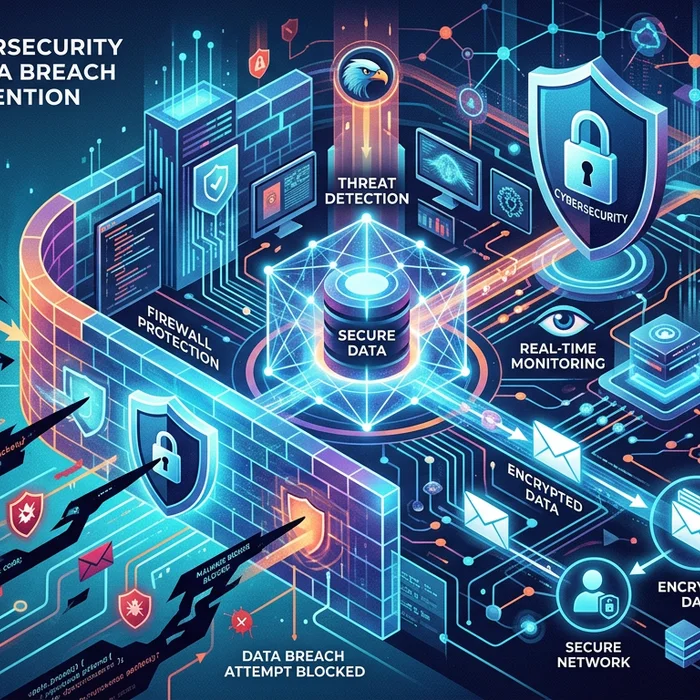
PAM success under NIS2 lives or dies on evidence: approvals, session logs, timelines, and incident reports. Many teams still email screenshots or attach raw logs that can reveal personal data, credentials, or system topology — increasing GDPR and security risk.
- Before sharing evidence with auditors or third parties, strip personal data and secrets.
- Standardize where and how evidence is uploaded and stored to prevent privacy breaches.
Professionals avoid risk by using Cyrolo’s AI-powered anonymization to redact names, emails, ticket numbers, and other sensitive fields from PDFs, DOCs, and images — and by leveraging a secure document upload workflow that keeps audit files under control.
When uploading documents to LLMs like ChatGPT or others, never include confidential or sensitive data. The best practice is to use www.cyrolo.eu — a secure platform where PDF, DOC, JPG, and other files can be safely uploaded.
Try our secure document upload at www.cyrolo.eu — no sensitive data leaks. It’s a fast way to keep your security audits and regulator interactions clean, consistent, and compliant.
EU vs US: different paths to access governance
EU frameworks (NIS2, GDPR, DORA in finance) increasingly converge on risk-based, auditable access control with explicit incident reporting. The US remains more sectoral, with regulators like the SEC, CISA, HHS, and FFIEC setting expectations, but without a single NIS2-style horizontal law. For multinationals, the safe baseline is to adopt NIS2-grade privileged access controls globally, then tailor reporting to local regulators.
What the Delinea–StrongDM signal means for your 2026 roadmap
Consolidation will continue: identity providers, PAM, secrets managers, and infrastructure access proxies are becoming one control plane. That’s good news for visibility and audits, but it raises integration and migration risks. In the short term:
- Prioritize controls that produce regulator-ready evidence over feature checklists.
- Rationalize admin paths; remove legacy access tools that bypass logging.
- Automate revocation, rotation, and review — the three “Rs” that close audit gaps.
- Harden third-party access and document every session on critical systems.

And wherever documentation moves, keep it private: use www.cyrolo.eu to anonymize and exchange audit artifacts safely across teams and advisors.
FAQ: NIS2 and privileged access — what practitioners ask
What is NIS2 privileged access management?
It’s the set of technical and governance controls required to restrict, monitor, and evidence administrative access across systems in scope of NIS2. Think least privilege, JIT elevation, MFA, session recording, vendor access controls, and audit-ready logs.
Does NIS2 require a specific PAM product?
No. NIS2 is technology-agnostic but outcome-driven. Supervisors will test whether your controls actually work: Can you prove who accessed what, when, why, with approvals and recordings?
How does PAM relate to GDPR?
PAM reduces the likelihood and impact of privacy breaches by limiting who can access personal data and by creating forensic trails. GDPR focuses on data protection; NIS2 focuses on operational resilience. Many entities need both.
What are the NIS2 incident reporting timelines?
Significant incidents generally require an early warning within 24 hours, a more detailed notification within 72 hours, and a final report within one month, with some Member State variations. PAM evidence often underpins these reports.
Which identities are often missed in PAM audits?
Service accounts, machine identities, API tokens, cloud roles with inherited privileges, and SaaS super-admins created outside standard workflows.
Conclusion: make NIS2 privileged access management evidence-rich — and privacy-safe
The Delinea–StrongDM deal is a reminder that identity, infrastructure, and telemetry are converging around one goal: provable control. If you can’t demonstrate least privilege, justify exceptions, and produce session evidence on demand, compliance risk rises — along with the chance of real-world incidents. Center your 2026 roadmap on NIS2 privileged access management that’s auditable end-to-end, and keep your documentation safe with www.cyrolo.eu. Redact sensitive fields with AI-powered anonymization, and share only through a secure document upload channel you control.