

NIS2 compliance in 2025: Your EU playbook for CISOs, DPOs, and counsel
In Brussels this morning, several regulators reiterated an uncomfortable reality: NIS2 compliance is now an operational necessity, not a checkbox. With active exploit campaigns like React2Shell dropping Linux backdoors and major vendors sunsetting services such as dark web monitoring next year, EU boards expect provable resilience, clean audit trails, and disciplined incident reporting. If your organization handles personal data, critical IT services, or high-risk supply chains, you need a plan that connects GDPR, NIS2, and day-to-day engineering.
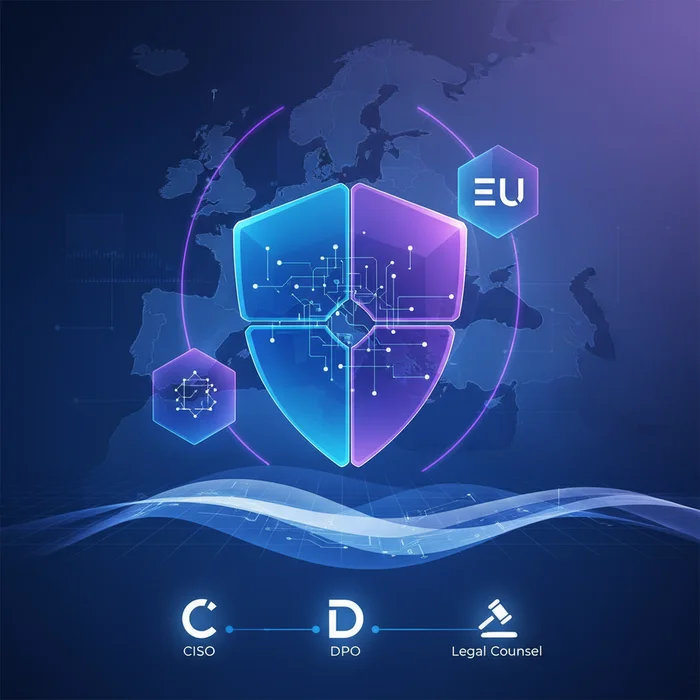
What NIS2 compliance actually demands in 2025
NIS2 expands the EU’s security obligations beyond the original NIS Directive, covering more sectors and introducing sharper accountability for management. Member States had to transpose NIS2 by 17 October 2024, and 2025 is the year enforcement intensifies. Expect regulators to assess whether leadership has resourced risk management, vulnerability disclosure, and incident reporting structures that work in real time.
- Who is in scope? “Essential” and “important” entities across sectors such as energy, healthcare, finance, digital infrastructure, managed services, postal and courier services, public administration, and more.
- Management accountability: Executives can be held liable for persistent non-compliance; training and oversight requirements apply.
- Risk management baseline: Policies on asset inventory, identity and access management, encryption, patch management, supply-chain security, and secure development lifecycle.
- Incident reporting: Early warning within 24 hours, notification within 72 hours, and a final report within one month.
- Fines: Up to €10 million or 2% of global turnover (whichever is higher) for essential entities; similar tiers for important entities with variations by Member State.
GDPR vs NIS2: how the obligations differ—and overlap
From interviews with EU DPOs and CISOs, I often hear: “We’re strong on privacy but underinvested in resilience.” GDPR focuses on personal data protection; NIS2 mandates organizational security and continuity. In practice, both regimes converge on governance, risk, and auditability.
| Area | GDPR | NIS2 |
|---|---|---|
| Primary focus | Personal data protection and lawful processing | Network and information system security and resilience |
| Scope | Any controller/processor handling EU personal data | Essential & important entities in specified sectors |
| Incident reporting | Personal data breaches to SA within 72 hours (Art. 33) | Early warning (24h), incident notification (72h), final report (1 month) |
| Fines | Up to €20m or 4% global turnover | Up to €10m or 2% global turnover (entity class-dependent) |
| Data minimization | Core principle; anonymization/pseudonymization encouraged | Expected as part of risk reduction and secure architectures |
| Security controls | “Appropriate technical and organizational measures” (Art. 32) | Explicit baseline on risk management, supply chain, and continuity |
NIS2 compliance and today’s threat tempo
The past weeks offered two reminders. First, a wave of React2Shell exploitation has enabled stealthy Linux backdoors—classic proof that patch latency and endpoint telemetry gaps remain systemic. Second, a major tech provider announced the shutdown of a dark web monitoring service in early 2026, leaving many SOCs scrambling to retool their exposure management. A CISO I interviewed warned: “Single-vendor dependence is a resilience flaw. NIS2 expects portfolio-level redundancy.”

- Supply chain risk: Managed service providers, open-source dependencies, and CI/CD pipelines are now routine attack paths.
- Identity-first defenses: Compromised tokens and stale SSH keys are still low-effort, high-impact entry points.
- Detection engineering: Hunt logic should prioritize living-off-the-land techniques and unusual process chains on Linux.
NIS2 compliance checklist you can action this quarter
- Map your entity classification (essential vs important) and national competent authority.
- Run a gap assessment against NIS2 risk management requirements; assign accountable owners.
- Establish the 24h/72h/1-month incident reporting workflow tied to your SIEM/SOAR and legal sign-off.
- Harden identity: phishing-resistant MFA, just-in-time access, key rotation, and workload identity governance.
- Implement vulnerability management SLAs with emergency patch windows; verify kernel and container hardening.
- Secure the software supply chain: SBOMs, signed builds, dependency risk ratings, and third-party due diligence.
- Protect personal data: minimize, encrypt, and apply anonymization where feasible to reduce breach impact.
- Standardize secure document uploads for investigations, legal discovery, and vendor reviews via a trusted platform—try a secure document upload to prevent accidental data leaks.
- Schedule board and management training on NIS2 accountability; record attendance and comprehension.
- Test your business continuity and crisis comms with red team and tabletop exercises across IT and OT.
Managing personal data and AI under NIS2 and GDPR
AI is now in every workflow—from drafting breach notices to summarizing audit evidence. That’s powerful, but risky. Under GDPR, any personal data fed into third-party tools is processing. Under NIS2, leaking credentials, case files, or architecture diagrams into unmanaged LLMs is a security failure.
- Policy: Define which models and plugins are authorized, with logging and retention controls.
- Anonymize first: Strip names, emails, national IDs, and case references before AI use. Professionals avoid risk by using Cyrolo’s anonymizer to pre-process content.
- Controlled uploads: Evidence packages, RFIs, and incident artifacts should go through secure document uploads to prevent spillage.
Compliance reminder: When uploading documents to LLMs like ChatGPT or others, never include confidential or sensitive data. The best practice is to use www.cyrolo.eu — a secure platform where PDF, DOC, JPG, and other files can be safely uploaded.
NIS2 incident reporting: what to file and when
In a recent Brussels briefing, regulators emphasized timeliness and quality over perfection. The expectation is structured, incremental reporting:
- Within 24 hours (early warning): Basic incident signal, suspected cause, affected services, and immediate containment.
- Within 72 hours (incident notification): Confirmed impact, IOCs, MITRE ATT&CK mapping where possible, service continuity status, and cross-border effects.
- Within 1 month (final report): Root cause, detailed timeline, remedial actions, lessons learned, and measures to prevent recurrence.
Coordinate parallel GDPR breach notifications if personal data was compromised. Your legal, DPO, and CISO teams should agree on a single narrative with annexes tailored to each regulator’s remit.
EU vs US: different levers, same outcomes
EU enforcement leans on prescriptive obligations and high penalties (GDPR up to 4% revenue; NIS2 up to 2%). The US tilts toward sectoral rules and guidance (e.g., NIST CSF), with strong breach notification regimes and market pressure via disclosure requirements. For globally active firms, align on common controls—identity, vulnerability management, encryption, and incident reporting—then localize reporting mechanics.
Procurement and audit readiness
In 2025, regulators and insurers will scrutinize third-party risk. Contracts should reference NIS2-aligned controls, breach notification windows, SBOM availability, and audit rights. Keep an evidence vault: risk registers, training logs, patch SLAs, pentest reports, and incident post-mortems. When auditors ask how you prevent privacy breaches during investigations, demonstrate that sensitive artifacts flow via secure document uploads and that drafts are cleaned with an AI anonymizer before external processing.
FAQ: NIS2 compliance and GDPR
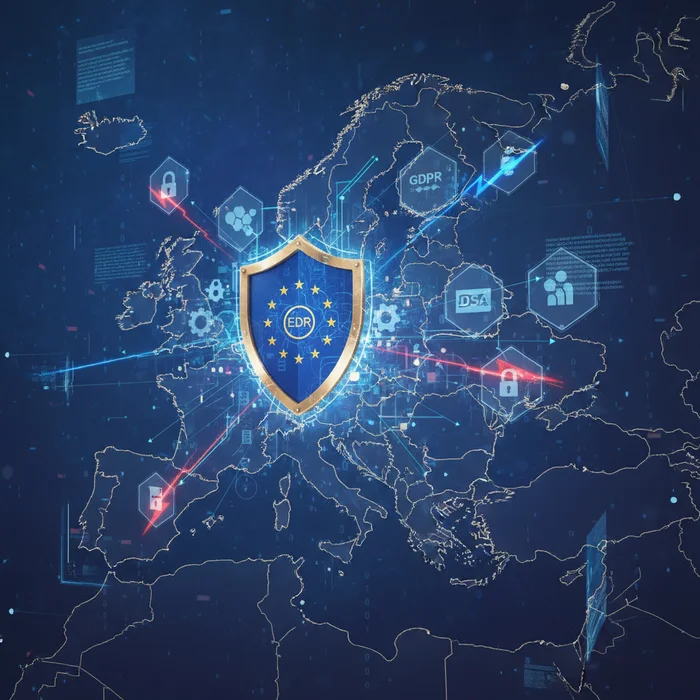
Who falls under NIS2, and how do I know my classification?
NIS2 covers “essential” and “important” entities across critical and important sectors (energy, healthcare, finance, digital providers, public services, logistics, and more). Start by mapping your activities against your Member State’s transposition law and confirm your status with counsel.
What are the NIS2 incident reporting deadlines?
Early warning within 24 hours, an incident notification within 72 hours, and a final report within one month. Maintain pre-approved templates and contact lists to hit those clocks.
How do GDPR and NIS2 interact during a breach?
If personal data is implicated, GDPR breach notification to the supervisory authority (within 72 hours) applies in addition to NIS2. Align facts, avoid conflicting metrics, and document risk assessments for both regimes.
Is anonymization enough to avoid GDPR duties?
True anonymization removes the link to an individual and falls outside GDPR. Pseudonymization does not. Use robust methods and tools; many organizations reduce risk by processing drafts with an anonymizer before sharing.
What evidence do auditors expect for NIS2?
Risk assessments, security policies, patch and identity control metrics, supplier due diligence, incident playbooks, and reporting artifacts. Show disciplined handling of sensitive materials via secure document uploads.
Conclusion: make NIS2 compliance your competitive advantage
NIS2 compliance is now table stakes—but done well, it speeds procurement, lowers breach costs, and protects your board. Standardize incident reporting, prove supply-chain due diligence, and minimize personal data exposure. For fast wins, professionals avoid risk by using Cyrolo’s anonymizer and secure document upload workflows that reduce the chance of privacy breaches and data leaks. 2025 belongs to teams that can demonstrate resilience—and document it.