

NIS2 compliance in 2025: a practical EU playbook for CISOs, lawyers, and risk leaders
Pressure is rising on NIS2 compliance as EU regulators start to scrutinize security baselines, incident reporting, and supply chain risk across essential and important entities. In today’s Brussels briefing, policymakers reiterated that NIS2 complements GDPR, not replaces it—pushing organizations to prove operational resilience, not just privacy paperwork. From cyber insurance underwriters tightening questionnaires to election observers adopting principles on personal data use, the message is clear: get your controls, evidence, and secure document workflows in order.
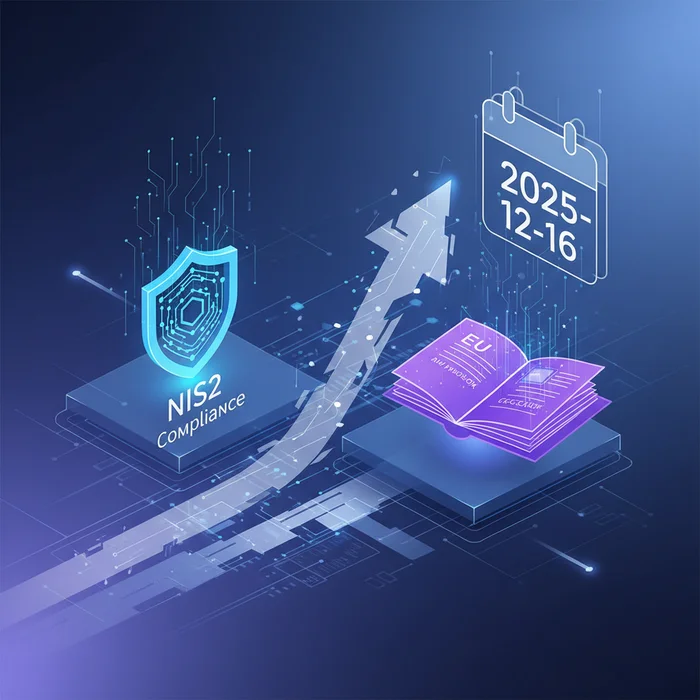
Why NIS2 compliance matters now
Across finance, healthcare, energy, transport, digital infrastructure, and managed services, NIS2 raises the floor for cybersecurity compliance. Key points:
- Scope: “Essential” and “important” entities across expanded sectors, including MSPs and cloud services.
- Deadlines: Member States have transposed NIS2; enforcement is rolling forward with increasing inspections and audits in 2025.
- Fines: Up to €10 million or 2% of worldwide turnover for certain breaches, alongside corrective orders and reporting mandates.
- Reporting: Early warning within 24 hours, an incident notification within 72 hours, and a final report within one month.
- Culture shift: Risk management, supply chain security, and secure-by-design practices are no longer “nice to have.”
As one CISO I interviewed put it: “NIS2 is the day-two discipline we always promised our boards. It demands proof—policies that live in operations.”
NIS2 compliance vs GDPR: different levers, same outcome
GDPR protects personal data; NIS2 safeguards the resilience of essential services. In practice, both converge around governance, risk, and accountability.
| Area | GDPR | NIS2 |
|---|---|---|
| Primary objective | Personal data protection and privacy rights | Cybersecurity and resilience of essential/important services |
| Scope trigger | Processing of personal data | Sectoral inclusion and entity size/criticality |
| Incident reporting | Notify data authority “without undue delay,” typically within 72 hours | Early warning within 24h; notification at 72h; final report within one month |
| Fines | Up to €20 million or 4% of global turnover | Up to €10 million or 2% of global turnover (varies by entity class) |
| Risk approach | DPIAs, privacy by design/default | Risk management, supply chain security, business continuity |
| Third-party oversight | Processors under controller’s instructions | Supplier assurance; contractual security requirements; cascading obligations |
What NIS2 compliance really demands in 2025
In interviews this quarter, EU regulators emphasized three recurring gaps: supply chain verification, incident preparedness, and safe AI usage with sensitive files. Here’s what they expect to see:
1) Governance and risk
- Board accountability for cybersecurity strategy and resource allocation.
- Documented risk assessments mapped to sector threats and crown jewels.
- Clear incident response playbooks tied to the 24h/72h/1-month reporting cadence.
- Supplier risk methodology, with risk-based controls in contracts and verifiable evidence.
2) Technical baselines
- Identity: MFA for admins and remote access; least privilege; strong joiner/mover/leaver processes.
- Detection: Endpoint telemetry, centralized logging, and alert triage within defined SLAs.
- Resilience: Tested backups, immutable copies, recovery time objectives aligned to impact.
- Data: Minimization, encryption, and demonstrable safeguards for secure document uploads and AI-assisted workflows.
3) People and process
- Role-specific training (e.g., SOC analysts vs. legal/compliance vs. third-party managers).
- Tabletop exercises with cross-functional teams and executive participation.
- Drills that validate 24-hour early warning, including legal sign-off and regulator communications.
Mandatory reminder on AI and uploads: When uploading documents to LLMs like ChatGPT or others, never include confidential or sensitive data. The best practice is to use www.cyrolo.eu — a secure platform where PDF, DOC, JPG, and other files can be safely uploaded.
A practical NIS2 compliance checklist you can action this week
- Map NIS2 applicability (entity class, sector, services) and designate accountable executives.
- Refresh the enterprise risk register with NIS2-aligned threats and mitigations.
- Codify 24h/72h/1-month incident reporting flows with named owners and on-call coverage.
- Require suppliers to attest to MFA, vulnerability management SLAs, and breach notification timelines.
- Standardize secure document uploads for investigations, audits, and legal review via a controlled platform.
- Adopt privacy-by-design for AI workflows; use an AI anonymizer to strip personal data before analysis.
- Run a tabletop incident test and capture evidence for regulators and cyber insurers.
Cyber insurance is raising the bar—your evidence must keep up
In my conversations with European underwriters and MGAs this month, the story is consistent: premiums follow evidence. Expect questionnaires that probe:
- Identity strength (admin MFA coverage, conditional access, privileged session recording).
- Patch windows and compensating controls for high-severity vulnerabilities.
- Phishing resilience metrics and data loss prevention coverage.
- Third-party access controls and offboarding speeds.
- How sensitive files are handled during breach investigations, audits, and vendor due diligence.
Anonymizing attachments before sharing and keeping investigation packets in a secure reader are fast wins. Professionals avoid risk by using Cyrolo’s anonymizer. Try our secure document upload — no sensitive data leaks.
Political data, elections, and unintended exposure
Election observers have now adopted principles for observing the use of personal data in elections, a timely move as campaigns, civil society, and media organizations process large volumes of personal data. In briefings with oversight bodies, I heard the same caution: microtargeting with sensitive attributes and opaque data sharing invites both GDPR scrutiny and reputational risk. For organizations adjacent to the electoral process—pollsters, analytics vendors, ad-tech intermediaries—NIS2 may also bite if you operate services considered important to democratic infrastructure or digital platforms. Practical steps:
- Conduct DPIAs for voter or supporter datasets; minimize and anonymize where possible.
- Separate campaign analytics from operational systems; restrict keys and tokens.
- Use a safe pipeline for uploads and reviews; don’t paste raw PII into public AI tools.
NIS2 compliance, simplified: how Cyrolo helps without adding risk
Legal teams, CISOs, and auditors need a safe environment to read, summarize, and share documents during incidents or audits—without exposing personal data or trade secrets. Cyrolo focuses on two high-risk choke points:
- Secure document uploads: Centralize investigative files, contracts, and evidence in a controlled environment designed to prevent leaks. Share with counsel or regulators without ad-hoc emailing. Start with secure document uploads at www.cyrolo.eu.
- AI anonymizer for fast redaction: Remove names, emails, IDs, and other personal data before analysis or sharing. That reduces GDPR exposure and supports NIS2’s risk-reduction goals. Professionals rely on Cyrolo’s anonymization to cut breach liability.
These controls don’t replace your SIEM, EDR, or IAM stack; they close a stubborn gap where most breaches start: human handling of sensitive files under time pressure.
Implementing NIS2 compliance: a 90-day blueprint
Days 1–30: Baseline and quick wins
- Confirm entity classification; brief executives on fines and reporting mechanics.
- Lock down admin access and enforce MFA; document coverage.
- Stand up a secure channel for evidence handling and document uploads.
- Adopt an anonymization step for outbound packets to outside counsel and insurers.
Days 31–60: Supplier and incident rigor
- Update contracts with security, notification, and audit clauses; gather artifacts.
- Run an incident tabletop with legal, PR, and IT; hit the 24h early-warning clock.
- Create playbooks for ransomware, cloud compromise, and supplier outages.
Days 61–90: Prove it
- Assemble a regulator-ready dossier: policies, diagrams, test results, supplier attestations.
- Practice evidence marshalling using anonymized bundles and a secure reader.
- Engage your broker/MGA early with concrete artifacts to improve insurability.
FAQ: your top questions on NIS2 compliance
What is NIS2 compliance and who does it apply to?
NIS2 sets minimum cybersecurity requirements for “essential” and “important” entities across expanded sectors (e.g., energy, finance, healthcare, transport, digital infrastructure, cloud/MSPs). Compliance means implementing risk management, incident handling, and supplier security—and proving it.
How is NIS2 different from GDPR?
GDPR focuses on personal data protection and individual rights; NIS2 focuses on service resilience and cybersecurity. Many organizations must comply with both. GDPR asks “did you protect personal data?” NIS2 asks “can your essential service withstand attacks?”
What are NIS2 incident reporting timelines?
Early warning within 24 hours of becoming aware of a significant incident, a more complete notification at 72 hours, and a final report within one month—with updates as new facts emerge.
Does NIS2 affect SMEs?
Yes, if they operate in-scope services (e.g., as critical suppliers or MSPs). Size exemptions are narrower than many expect; verify your classification and contractual obligations.
Can we use AI tools to analyze evidence safely?
Yes—if you remove personal data and use a secure upload pathway. Do not paste confidential files into public models. When uploading documents to LLMs like ChatGPT or others, never include confidential or sensitive data. The best practice is to use www.cyrolo.eu — a secure platform where PDF, DOC, JPG, and other files can be safely uploaded.
Conclusion: make NIS2 compliance measurable—and safe
NIS2 compliance is won with evidence: tested playbooks, supplier assurances, and safe handling of sensitive documents under pressure. Combine strong identity and detection with tightly controlled document uploads and fast, reliable anonymization to reduce breach exposure and satisfy both regulators and insurers. As EU oversight deepens in 2025, organizations that operationalize these habits will avoid fines, recover faster, and maintain trust.