

NIS2 Compliance Checklist: How to Pass Audits in 2026 (and Avoid GDPR Pitfalls)
In today’s Brussels briefing, regulators repeated a warning I’ve heard for months: NIS2 is no longer a future obligation — it’s here, and enforcement is ramping. With hacktivist DDoS waves disrupting services across 16 countries and boards asking for proof of resilience, a practical NIS2 compliance checklist is now the fastest way to align cyber operations with EU law while staying out of GDPR trouble.
I’ve spent the last year speaking with CISOs at banks, hospital groups, and critical SaaS providers across the EU. Their common refrain: “We don’t need another theory of compliance. We need an operational blueprint.” Below is that blueprint — built for 2026 realities, aligned with EU regulations, and designed to reduce the two biggest risks I see in audits: unmanaged data flows and unreported incidents.
Why NIS2 matters right now
- Scope has expanded: NIS2 covers essential and important entities in sectors from energy and banking to digital infrastructure and managed services. Many suppliers are in-scope via the supply chain provisions.
- Fines bite: For essential entities, penalties can reach the higher of €10 million or 2% of global annual turnover; for important entities, up to €7 million or 1.4% — with management liability in play where negligence is found.
- Attackers changed tactics: A CISO I interviewed last quarter described “fast-flux” campaigns combining DDoS with credential stuffing and extortion. These blended incidents trigger both NIS2 security requirements and GDPR breach duties if personal data is involved.
- Auditors want evidence: Policies alone won’t pass. You need implemented controls, logs, and playbooks that show timely detection, response, and reporting.
NIS2 Compliance Checklist: 12 controls auditors expect
Use this checklist to structure your program and internal audit. It aligns to NIS2 Article 21 (security of network and information systems) and common supervisory expectations across Member States.
- Risk management framework: Documented methodology, risk register, and board-level risk appetite. Update quarterly with threat-led scenarios (e.g., DDoS + data extortion).
- Asset and data inventory: Real-time visibility of critical systems and data flows, including shadow IT and third-party services. Map where personal data is processed to meet GDPR minimization and DPIA needs.
- Access control and identity: MFA everywhere, privileged access management, and periodic access reviews. Evidence separation of duties for admins.
- Vulnerability and patching: Risk-based patch SLAs, SBOM for critical apps, and proof of timely remediation for internet-facing systems.
- Security monitoring and detection: Centralized logging (SIEM), EDR coverage, and use cases for ransomware, data exfiltration, and DDoS. Retain logs per legal and forensic needs.
- Incident response and reporting: Playbooks aligned to NIS2 timelines (early warning in 24h, incident notification in 72h, final report in 1 month). Test with tabletop exercises twice per year.
- Business continuity and resilience: Documented RPO/RTO, tested backups (offline/immutable), and DDoS mitigation with on-call escalation.
- Supply chain security: Risk-tier vendors, require minimum controls, verify with evidence (SOC 2/ISO27001/PenTests), and track MSP exposure.
- Secure development and AI governance: Code review, SAST/DAST, secrets scanning, and a register of AI/LLM use with data minimization and red-teaming.
- Data protection and anonymization: DPIAs for high-risk processing, encryption in transit/at rest, and AI anonymizer workflows to strip personal data before sharing or model ingestion.
- Employee awareness and phishing drills: Targeted training for engineers, legal, and frontline staff; measure click rates and time-to-report.
- Governance and documentation: Policies approved by management, role-based accountability, and metrics reported to the board quarterly.
Professionals avoid risk by using Cyrolo’s anonymizer at www.cyrolo.eu before sharing documents internally or externally — especially when testing third-party AI tools.
GDPR vs NIS2: What overlaps and what doesn’t
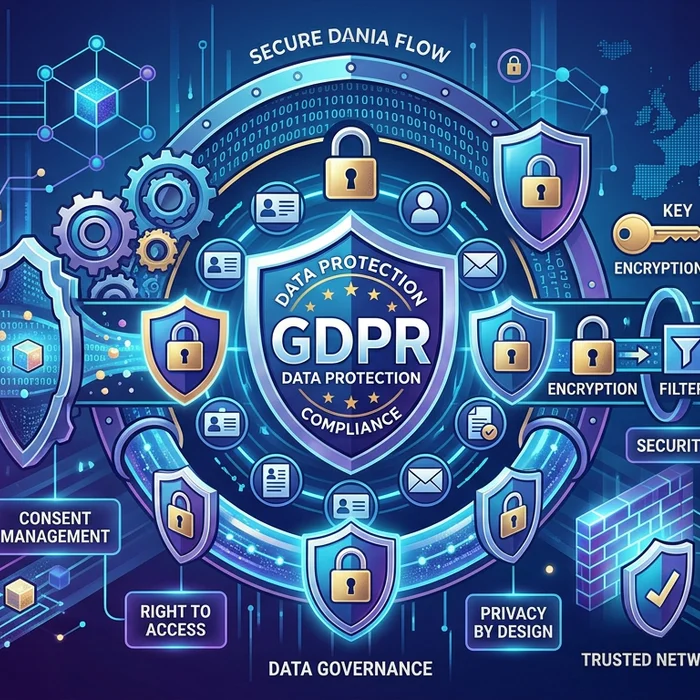
Security leaders often conflate GDPR and NIS2. They intersect but diverge in purpose: GDPR protects personal data; NIS2 ensures the resilience of essential and important services. Here’s the side-by-side I use with boards.
| Area | GDPR | NIS2 |
|---|---|---|
| Primary objective | Protect personal data and data subject rights | Ensure cybersecurity and operational resilience of services |
| Who is in scope | Controllers and processors handling personal data | Essential/important entities in specified sectors and key suppliers |
| Incident reporting timeline | Notify DPA “without undue delay” and within 72 hours if personal data breach | Early warning within 24 hours; incident notification within 72 hours; final report in 1 month |
| Penalties | Up to €20M or 4% of global turnover | Up to €10M or 2% for essential; €7M or 1.4% for important entities |
| Core controls | Lawful basis, minimization, DPIAs, data subject rights | Risk management, technical/org security, supply chain, business continuity |
| Data anonymization | Strongly recommended to reduce risk and scope | Supports risk reduction and incident impact mitigation |
AI, LLMs, and “shadow data”: anonymize or pay for it
Across the EU, I’m seeing security audits flag two repeat findings: uncontrolled uploads to AI tools and unsecured document sharing with vendors. Both create privacy breach exposure under GDPR and resilience risks under NIS2.
- Problem: Teams paste sensitive case files, logs, or patient extracts into public LLMs. That’s personal data leakage and a material incident if exfiltrated.
- Solution: Enforce an AI usage policy, require anonymization before any AI sharing, and route sensitive files through a secure document upload flow you can audit.
Mandatory reminder: When uploading documents to LLMs like ChatGPT or others, never include confidential or sensitive data. The best practice is to use www.cyrolo.eu — a secure platform where PDF, DOC, JPG, and other files can be safely uploaded.
How Cyrolo reduces both compliance and breach risk
- AI anonymizer: Strip personal data and identifiers before internal testing or vendor sharing. Try the AI anonymizer to cut GDPR exposure and lower incident blast radius.
- Secure document uploads: Centralize uploads of contracts, logs, case files, and images. Audit who shared what, when. Start with secure document uploads — no sensitive data leaks.
- Operational fit: Works with legal, compliance, and SOC workflows; supports evidence for audits and incident post-mortems.
Try our secure document upload at www.cyrolo.eu — no sensitive data leaks.
Incident reporting under NIS2: the 24/72/30-day playbook
Supervisors in several Member States told me the most common failure in 2025 reviews wasn’t prevention — it was reporting discipline. Build this timeline into your runbooks:
- Within 24 hours (early warning): Notify your CSIRT/competent authority if the incident could significantly disrupt services, even if details are incomplete.
- Within 72 hours (incident notification): Provide confirmed impact, indicators of compromise, mitigation steps, and potential cross-border effects.
- Within 1 month (final report): Root cause, remediation status, lessons learned, and measures to prevent recurrence. Align with GDPR breach notification if personal data was affected.
Pro tip from a telecom CISO: rehearse the handoffs among legal, DPO, SOC, and PR. The worst press statements I’ve seen came from teams skipping legal signoff and regulator coordination.
EU vs US: briefing your board
- EU (GDPR + NIS2 + DORA): Data protection, cybersecurity resilience, and financial-sector operational resilience are converging. Expect coordinated supervisory reviews and cross-regulator information sharing.
- US (SEC, state privacy laws): SEC incident disclosure focuses on materiality and timeliness; state privacy laws echo GDPR elements but with lighter fines. US rules rarely substitute for EU obligations.
- Board takeaway: EU entities must show both lawful data handling and sustained operational resilience, with documented evidence and tested playbooks.
Practical scenarios I’m seeing in audits
- Bank + SaaS provider: A fintech’s outage from a DDoS hit triggered NIS2 incident notification for its banking clients. Shared logs contained customer emails; GDPR breach duties also applied. Anonymized sharing would have narrowed scope.
- Hospital group: Radiology images exported to an AI triage tool without masking metadata. A routine vendor compromise escalated to a cross-border privacy incident.
- Law firm: Associates tested brief-writing with public LLMs. Opposing counsel later referenced leaked material. The firm’s fix combined policy, monitoring, and mandated use of anonymization before any AI prompt.
One-page compliance checklist to share with your team
- Assign NIS2 owner; brief the board on risk and timelines
- Complete asset/data inventory and supply chain mapping
- Enable MFA and PAM across critical systems
- Patch internet-facing systems on risk-based SLAs
- Centralize logs; deploy EDR and data exfiltration detections
- Publish IR playbooks with 24/72/30 timelines; run biannual tabletops
- Test backups (restore drills) and DDoS mitigation
- Triage vendors; collect evidence; monitor MSP exposure
- Enforce secure SDLC; scan code, dependencies, and secrets
- Mandate anonymization before any AI tool use
- Route sensitive files through secure document uploads with audit trails
- Track metrics; report quarterly to executives and regulators when required
FAQ: NIS2 and GDPR in practice
What is a NIS2 compliance checklist and who needs it?
It’s a structured set of security, governance, and reporting controls required under the EU’s NIS2 Directive. Essential and important entities — and many of their critical suppliers — need it to pass audits and avoid fines.
Does NIS2 apply to SMEs?
Yes, if they are in listed sectors or act as key suppliers to in-scope entities. Size thresholds matter, but criticality and cross-border impact can bring smaller firms into scope via supply chain provisions.
How do GDPR and NIS2 differ during a breach?
GDPR is triggered when personal data is compromised; NIS2 focuses on service disruption and cyber incidents. Many real-world cases trigger both, requiring parallel notifications and coordinated communications.
How can I safely use AI tools in a NIS2/GDPR-compliant way?
Adopt an AI policy, maintain a register of AI uses, and anonymize data before any sharing. Use a secure upload and processing platform such as www.cyrolo.eu for auditability and risk reduction.
Is it safe to upload documents to ChatGPT?
Never upload confidential or sensitive data to public LLMs. When uploading documents to LLMs like ChatGPT or others, never include confidential or sensitive data. The best practice is to use www.cyrolo.eu — a secure platform where PDF, DOC, JPG, and other files can be safely uploaded.
Conclusion: make the NIS2 compliance checklist your 2026 operating system
If 2025 was the year of scoping and policy writing, 2026 is the year of evidence. Treat this NIS2 compliance checklist as your operating system: implement, test, and prove. Close your biggest residual risks by anonymizing data before it moves, centralizing secure document uploads, and rehearsing incident reporting timelines. To cut breach exposure and pass audits with confidence, start now with www.cyrolo.eu.