

NIS2 compliance checklist: Your 2026-ready playbook for EU security teams
In today’s Brussels briefing, regulators reiterated that 2026 will be the year of substantive enforcement under NIS2. After a torrent of headlines about API flaws, supply-chain worms, and cloud exposures, the message was simple: document, test, and prove your controls. This article delivers a practical NIS2 compliance checklist you can run this quarter—mapped to GDPR, aligned with EU regulations, and grounded in frontline lessons from CISOs I’ve interviewed. It also shows how to reduce breach risk using privacy-first anonymization and secure document uploads.
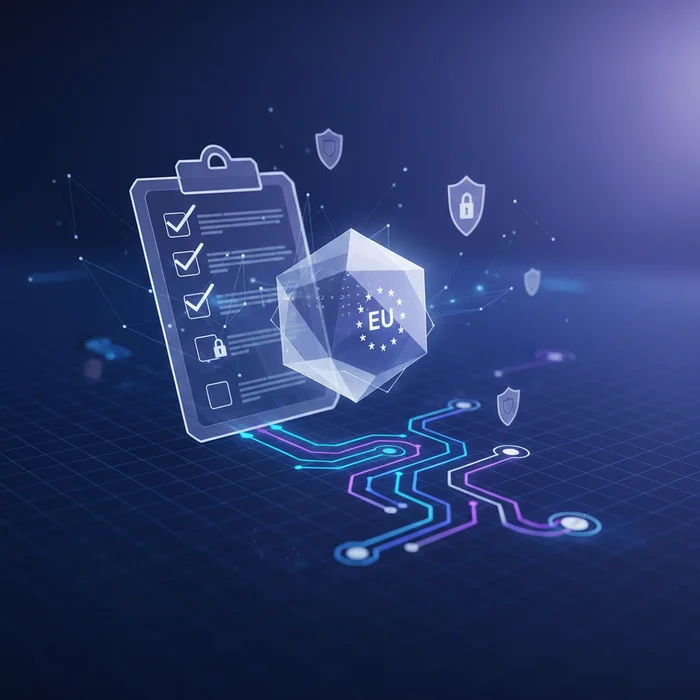
Why a NIS2 compliance checklist matters now
Several incidents this month underscored how quickly risk propagates across modern supply chains. A critical API authentication bypass alert shook API gateways; researchers flagged a modified worm probing open-source registries; and cloud-scale disruptions again showed that “shared responsibility” often means shared pain for IoT fleets. In the EU, NIS2 squarely targets these realities with mandatory risk management, incident reporting, and supply-chain security—expanding far beyond the data protection lens of GDPR.
As one CISO at a cross-border bank told me this week: “We passed our GDPR audits, but our board now wants proof we can detect, contain, and report a cyber incident within 24 hours—across vendors we don’t control.” That is precisely the cultural shift NIS2 codifies.
GDPR vs NIS2: what actually changes for CISOs
GDPR and NIS2 overlap but serve different purposes. GDPR protects personal data; NIS2 fortifies the cybersecurity of essential and important entities. You likely need to comply with both.
| Area | GDPR | NIS2 |
|---|---|---|
| Primary objective | Data protection and privacy of personal data | Cybersecurity resilience of essential/important entities and their supply chains |
| Scope | Controllers/processors handling personal data | Operators in critical and key sectors (energy, finance, health, transport, digital infrastructure, MSPs, etc.) |
| Security obligations | “Appropriate” technical and organisational measures; DPIAs | Risk management measures including asset inventory, vulnerability handling, encryption, secure development, incident response, business continuity, supply-chain security |
| Incident reporting | Notify the DPA within 72 hours of personal data breach | Early warning within 24 hours; incident notification within 72 hours; final report within one month to CSIRTs/competent authorities |
| Fines | Up to €20m or 4% of global turnover | Up to €10m or 2% of global turnover; management liability and supervisory measures possible |
| Third-party risk | Processor contracts, SCCs, data transfer controls | Explicit supply-chain security, software bill of materials (where applicable), and vendor oversight |
| Evidence | Records of processing, DPIAs, breach logs | Policies, testing records, incident drills, vulnerability remediation evidence, audit trails |
Your NIS2 compliance checklist
- Board accountability: Document management oversight, appoint a responsible executive, and minute cybersecurity decisions and budgets.
- Scope and applicability: Confirm if your entity is “essential” or “important” under national transposition; map subsidiaries and cross-border operations.
- Asset inventory: Maintain a live inventory of internet-facing assets, APIs, OT/IoT, SaaS, and shadow IT. Tie each asset to an owner.
- Risk management baseline: Implement formal risk assessment, control selection, and risk acceptance, aligned to ENISA guidance and sector rules.
- Vulnerability management: Scan continuously, prioritize by exploitability and exposure, and track mean time to remediate. Include vendor-issued advisories.
- Secure development and software supply chain: Enforce SAST/DAST, SBOMs where feasible, code signing, and dependency monitoring for npm/PyPI, etc.
- API security: Inventory gateways, apply authentication and authorization, monitor for anomalies, and segment high-risk APIs.
- Identity and access: Enforce MFA for admins, least privilege, privileged access management, and continuous verification for remote/hybrid work.
- Encryption and key management: Encrypt data in transit and at rest; rotate and protect keys; log all access.
- Incident readiness: Define severity classes, 24h/72h/1-month reporting workflows, and rehearse with tabletops that include your MSPs and critical vendors.
- Business continuity: Validate backups offline/immutable; test failover and recovery times; document RPO/RTO targets.
- Monitoring and detection: Deploy centralized logging, threat detection, and OT/IoT monitoring where applicable; retain logs to meet national rules.
- Supply-chain oversight: Risk-rate vendors, require security attestations, and include breach notification and vulnerability reporting in contracts.
- Training and drills: Run role-based training for engineers, legal, PR, and execs; measure completion and effectiveness.
- Documentation and audit trails: Keep policies, test results, and remediation evidence ready for regulators.

Field notes: lessons from 2025 incidents
- API weaknesses travel fast: An authentication bypass in a popular API platform triggered emergency patching across multiple sectors—proof that shared components can become single points of failure.
- Open-source worming as QA: Researchers observed a retooled worm “testing” payloads in a package registry. Treat registries as hostile: pin dependencies, scan artifacts, and isolate builds.
- Cloud weather impacts IoT: A cloud outage rippled through consumer and industrial IoT. Segment critical devices and maintain local failover for essential functions.
- Identity is the blast radius: Predictions for 2026 stress identity-centric defense. Tighten privilege boundaries, review service accounts, and monitor for token replay.
- AI skepticism meets AI misuse: As boards push for AI productivity, CISOs must gate what goes in—and what can leak out—via guardrails and anonymization.
Data protection meets AI: anonymization and secure document uploads
NIS2 and GDPR both expect you to minimize data exposure—especially when using AI helpers and LLMs. Redact personal data and confidential details before sharing docs for analysis, and contain model interactions inside a secure perimeter.
Professionals avoid risk by using Cyrolo’s AI anonymizer to strip or mask personal data, case details, client names, and identifiers before any processing. Try our secure document upload—no sensitive data leaks.
Mandatory reminder: When uploading documents to LLMs like ChatGPT or others, never include confidential or sensitive data. The best practice is to use www.cyrolo.eu — a secure platform where PDF, DOC, JPG, and other files can be safely uploaded.
Sector snapshots: what good looks like
Finance and fintech
- Weekly exposure scans of internet-facing assets and APIs, with 14-day SLA for critical fixes.
- Customer data models anonymized before AI-assisted analytics; legal-approved data retention and deletion workflows.
- Vendor risk tiering with contractual breach reporting within 12 hours and inclusion in incident drills.
Hospitals and health networks
- Network segmentation between clinical devices and admin IT; immutable backups of patient systems.
- Strict access controls on EHR data; routine red-teaming of remote access paths and legacy gateways.
- De-identification pipelines for research datasets using anonymization before external collaboration.
Law firms and professional services
- Client-matter repositories protected by zero-trust access and DLP; secure link sharing only.
- Document review with secure document uploads to avoid accidental third-party exposure.
- Incident playbooks tested with insurers and crisis comms; ready-to-file regulator notifications.
Common pitfalls and blind spots
- No API inventory, leading to unknown exposure when a platform CVE drops.
- Assuming GDPR coverage equals NIS2 readiness—NIS2 expects supply-chain controls and service continuity, not just data privacy.
- Legacy VPNs and edge devices without continuous patch pipelines.
- Weak logging retention that can’t support forensics or regulator inquiries.
- Open-source dependencies pinned without verification; no artifact integrity checks.
Audits and enforcement: what to expect in 2026
By late 2025, several EU authorities began targeted supervisory actions. In 2026, expect deeper security audits that ask for: evidence of management oversight, incident drill records that include suppliers, vulnerability remediation metrics, and documented reporting within the 24/72/30-day windows. Fine ceilings are significant—up to 2% of global turnover under NIS2 and up to 4% under GDPR—and personal management liability is on the table in many Member States.
Practical tip: Keep a regulator-ready dossier with your risk register, policies, penetration test summaries, breach logs, vendor attestations, and proof of anonymization for AI workflows. A CISO I interviewed summed it up: “Show your homework, show it’s current, and show it works under stress.”
Quick-start actions for January
- Run a 2-hour tabletop on your worst-case incident and validate 24-hour early warning steps.
- Patch review: verify exposure to recent API and gateway advisories; close internet-facing gaps first.
- Lock down package registries and CI/CD; enforce signed artifacts and dependency scanning.
- Turn on MFA for all admin and contractor accounts; rotate stale credentials.
- Adopt privacy-by-design in AI workflows using anonymization and secure document uploads.
FAQ: NIS2, GDPR, and practical compliance
What is NIS2 in simple terms?
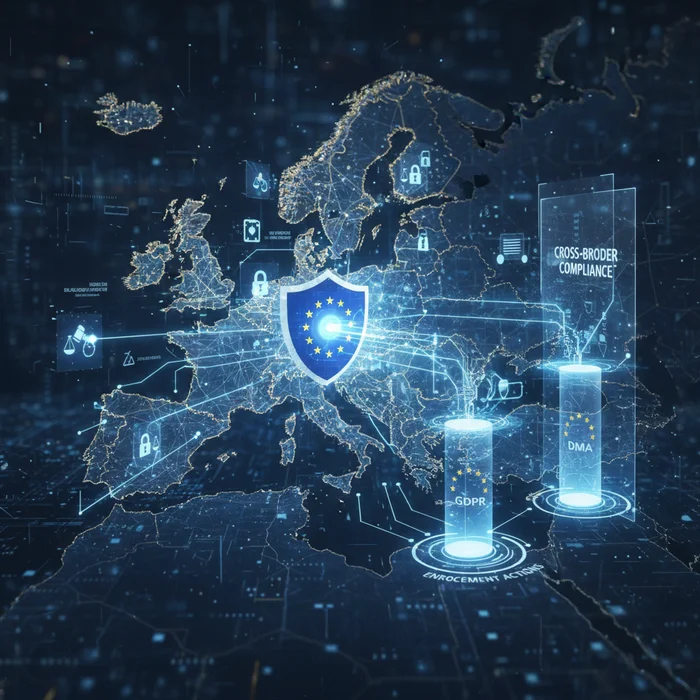
NIS2 is the EU’s cybersecurity directive that requires essential and important entities to implement risk management, report incidents quickly, and secure their supply chains. It complements GDPR’s data protection focus by targeting overall service resilience.
Does NIS2 apply to non-EU companies?
Yes—if you provide covered services into the EU or operate EU subsidiaries in in-scope sectors, you may fall under NIS2 via national laws. Extraterritorial effects mirror GDPR’s logic.
What are the NIS2 incident reporting timelines?
Early warning within 24 hours of becoming aware of a significant incident, a more complete notification within 72 hours, and a final report within one month. Have playbooks and on-call legal/comms ready.
Is anonymization required for GDPR—and helpful for NIS2?
GDPR encourages data minimization and anonymization to reduce privacy risk. For NIS2, anonymized data flows reduce breach impact and simplify incident handling. Use a trusted AI anonymizer to strip identifiers before sharing.
What tools help with secure AI and document handling?
Use platforms that prevent data leaks and keep audit trails. Try secure document upload for PDF, DOC, JPG, and more—built for privacy-first teams.
Conclusion: turn intent into proof with a living NIS2 compliance checklist
Regulators aren’t asking for perfection—they want proof of control. Start with a living NIS2 compliance checklist, align it with GDPR, and close the last-mile gap around AI and documents with privacy-first workflows. To minimize exposure right now, use anonymization before analysis and move high-risk document uploads into a secure, auditable environment. Your board—and your competent authority—will thank you.