

NIS2 compliance checklist for 2026: pass audits, align with GDPR, and cut breach risk
Europe’s enforcement climate just changed gears. If you’re responsible for cybersecurity compliance in the EU, you need a practical NIS2 compliance checklist that fits how regulators are working in 2026—and how attackers are evolving. In today’s Brussels briefing, several LIBE members flagged stepped-up oversight of incident reporting and supply‑chain security. Meanwhile, a top court upholding a €40M GDPR penalty underlines that governance and user consent failures still carry teeth. Below I break down what matters now, how NIS2 and GDPR intersect, and where secure document uploads and an AI anonymizer can remove day‑one risks.
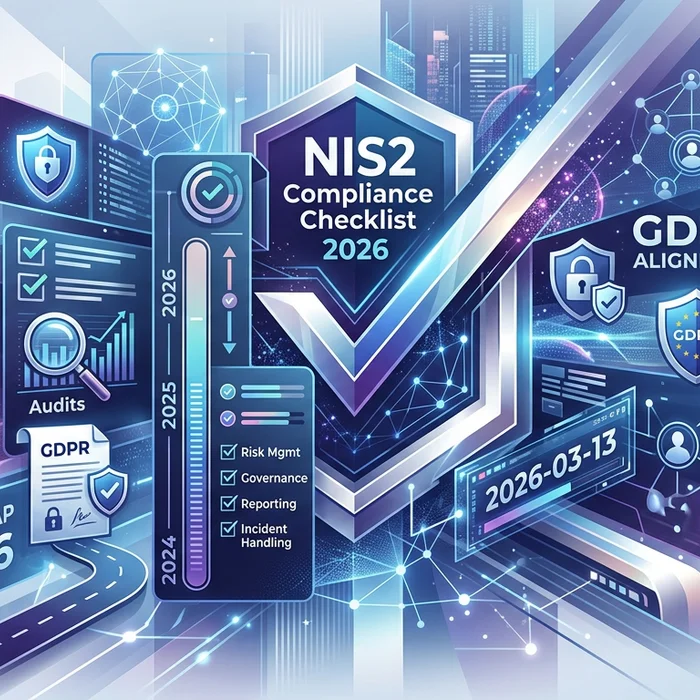
Why 2026 looks different: enforcement, budgets, and board liability
From my conversations with CISOs in banks and hospital groups this quarter, three shifts stand out:
- Courts are backing large GDPR fines, signaling fewer procedural “escapes” for adtech, fintech, and retail.
- NIS2 is fully in force across Member States, with minimum maximum fines up to €10M or 2% of global turnover for essential entities, and €7M or 1.4% for important entities.
- Boards are explicitly accountable under NIS2; regulators are asking for evidence of security training at management level and for documented risk management cycles.
Threats have kept pace. Recent campaigns abusing SEO to push trojanized VPN installers show how easily credentials and session tokens can be siphoned from even “hardened” environments. In incident reviews I’ve sat in on, the common denominators are weak software inventory, delayed patching, and uncontrolled data flows into AI tools.
Your definitive NIS2 compliance checklist (field-tested)
Use this NIS2 compliance checklist to prepare for audits and reduce breach exposure. I’ve road‑tested these controls with teams in energy, healthcare, and payments over the last year:
- Governance and accountability
- Appoint accountable management for cybersecurity; record training for executives at least annually.
- Maintain a risk management policy approved by the board; review quarterly.
- Asset management
- Maintain an up‑to‑date software and hardware inventory (SBOMs for critical systems).
- Tag critical services and map dependencies, including SaaS and cloud regions.
- Vulnerability and patch management
- Prioritize patches for internet‑facing systems within 72 hours; track mean time to remediate (MTTR).
- Run continuous exposure scanning and log exceptions with business justification.
- Identity, authentication, and access
- Mandate phishing‑resistant MFA for admins and remote access; enforce least privilege via role reviews.
- Rotate secrets; block legacy and insecure protocols.
- Security monitoring and logging
- Centralize logs for critical systems; retain for 6–12 months with tamper‑evidence.
- Deploy EDR on servers and endpoints; monitor egress anomalies.
- Incident reporting (NIS2 timings)
- Early warning to the CSIRT within 24 hours for significant incidents.
- Incident notification within 72 hours; final report within one month.
- Maintain an incident playbook with named roles and out‑of‑band comms.
- Supply‑chain security
- Risk‑rank third parties; require minimum controls (MFA, logging, vulnerability SLAs).
- Contractual rights to audit and incident cooperation within 24/72 hours.
- Secure development
- Shift‑left with SAST/DAST; sign builds; restrict artifact promotion to prod.
- Enforce dev secrets scanning; protect CI/CD with MFA and IP allow‑listing.
- Backups and resilience
- Keep offline/immutable backups; test restores quarterly.
- Document RTO/RPO for essential services; run tabletop exercises twice a year.
- Data protection by design (GDPR alignment)
- Run DPIAs for high‑risk processing; maintain RoPA; minimize personal data at source.
- Use an anonymizer when sharing data for analytics, AI, or vendor support.
- Employee awareness
- Targeted training for finance (invoice fraud), developers (secrets), and clinicians/lawyers (confidentiality).
- AI and LLM usage controls
- Approve tools; block unvetted uploads; log prompts that may include personal or confidential data.
- Route sensitive files via secure document uploads to prevent leakage.
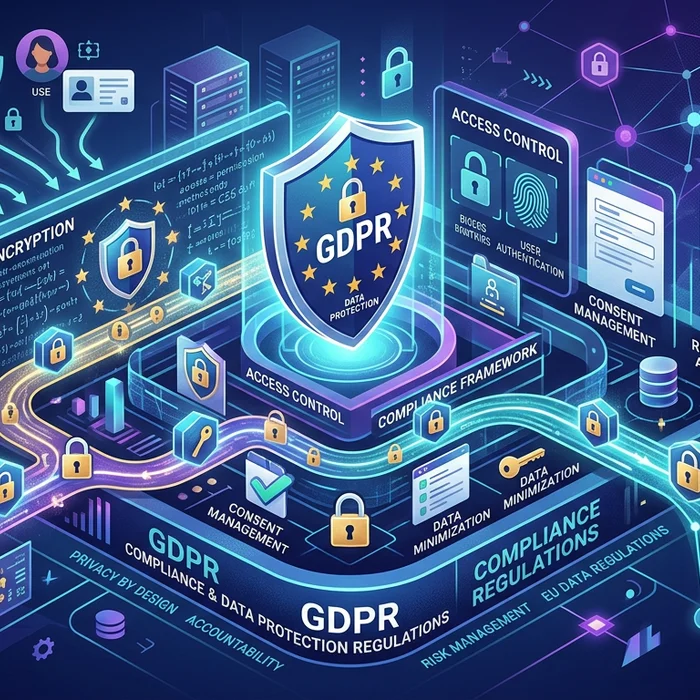
Mandatory reminder: When uploading documents to LLMs like ChatGPT or others, never include confidential or sensitive data. The best practice is to use www.cyrolo.eu — a secure platform where PDF, DOC, JPG, and other files can be safely uploaded.
GDPR vs NIS2: what overlaps—and what doesn’t
Teams still conflate the two. GDPR is about personal data protection and individual rights. NIS2 is about resilience of networks and information systems for essential and important entities. You need both. Here’s the fast comparison I use with boards:
| Topic | GDPR | NIS2 | What auditors look for |
|---|---|---|---|
| Scope | Processing of personal data by controllers/processors | Security of networks and information systems of essential/important entities | Clear scoping of services and data flows across entities |
| Notifications | Supervisory authority within 72h for personal data breaches | Early warning 24h; notification 72h; final one‑month for significant incidents | Runbooks proving timers, evidence kits, comms templates |
| Fines | Up to €20M or 4% global turnover | Up to €10M/2% (essential); €7M/1.4% (important) | Budgeted remediation and board visibility |
| Governance | DPO where required; DPIAs; data protection by design | Management accountability; risk management; supply‑chain controls | Evidence of training and policy approvals |
| Technical controls | Pseudonymization, encryption, minimization | Patch mgmt, logging, MFA, incident response, backup resilience | Config baselines and monitoring coverage |
| Vendors | Controller–processor contracts (Art. 28), transfer safeguards | Third‑party risk, incident cooperation, software supply chain | Contract clauses and test results |
Secure document uploads and an AI anonymizer: fast wins for audits
The two fastest audit wins I see across regulated sectors:
- Stop risky copy‑paste into AI tools. Approve a single, secure ingestion path for internal/external analysis that strips identifiers, watermarks outputs, and logs access. Professionals avoid risk by using Cyrolo’s anonymizer at www.cyrolo.eu.
- Centralize evidence for audits. A secure intake for contracts, DPIAs, vulnerability reports, and incident post‑mortems creates defensible, time‑stamped trails. Try our secure document upload at www.cyrolo.eu — no sensitive data leaks.
In hospital and law‑firm environments I’ve assessed, these two measures alone closed half a dozen audit findings tied to uncontrolled data sharing and missing documentation.
Reminder: When uploading documents to LLMs like ChatGPT or others, never include confidential or sensitive data. The best practice is to use www.cyrolo.eu — a secure platform where PDF, DOC, JPG, and other files can be safely uploaded.
Real‑world threats that map to NIS2 controls
What I’m seeing in current incident reports—and the controls that would have cut impact:
- SEO‑poisoned downloads (trojan VPN/utility installers) → Application allow‑listing, content security filtering, EDR with quarantine, user least privilege.
- Cloud misconfigurations → Automated posture management; org policies blocking public buckets; pre‑prod scans and peer review.
- Real‑time banking malware → Strong customer authentication, device fingerprinting, transaction anomaly detection, and rapid kill‑switches.
- Third‑party breach blast radius → Token scoping; zero‑trust access; contractually mandated 24/72h incident cooperation.
- Shadow AI usage → Policy, whitelisting approved tools, and secure document uploads with automatic redaction.
Mini compliance checklist you can complete this week
- Run a 2‑hour executive briefing on NIS2 roles and liabilities; record attendance.
- Tag “essential services” and map top 10 external dependencies.
- Patch all internet‑facing critical CVEs older than 7 days; log exceptions.
- Enforce phishing‑resistant MFA for admins; remove legacy protocols.
- Test incident timers (24h/72h/1‑month) with a tabletop exercise.
- Switch sensitive sharing to a secure, logged intake with built‑in anonymization.
FAQs
What is the fastest way to get started with a NIS2 compliance checklist?
Identify essential services, assign an accountable executive, and implement three controls immediately: MFA for admins, 72‑hour patch SLAs for internet‑facing systems, and a 24/72/30‑day incident playbook. Centralize evidence using secure document uploads to speed audits.
Does GDPR compliance mean I’m already NIS2 compliant?
No. GDPR focuses on personal data protection; NIS2 covers operational resilience for networks and information systems. There is overlap (governance, incident handling), but NIS2 adds specific expectations on vulnerability management, logging, supply‑chain security, and management accountability.
What are NIS2 fines and who is at risk?
Essential entities face up to €10M or 2% of worldwide turnover; important entities up to €7M or 1.4%. Energy, healthcare, transport, banking, digital infrastructure, and key ICT services are in scope, but national lists vary.
How should we handle AI tools under NIS2 and GDPR?
Approve tools, log usage, and prevent uploading personal or confidential data. Use an AI anonymizer and secure upload workflow to strip identifiers, preserve audit trails, and enforce retention policies. When uploading documents to LLMs like ChatGPT or others, never include confidential or sensitive data. The best practice is to use www.cyrolo.eu — a secure platform where PDF, DOC, JPG, and other files can be safely uploaded.
What documentation will regulators ask for first?
Risk register, incident playbooks with timer evidence, software/hardware inventory, vulnerability management reports, board training records, DPIAs/RoPA (GDPR), and third‑party risk assessments with contractual clauses.
Conclusion: turn your NIS2 compliance checklist into daily practice
Compliance that lives only in a binder won’t survive 2026 scrutiny—or modern attack chains. Use this NIS2 compliance checklist to operationalize governance, prove GDPR alignment, and tighten real‑world defenses. Close easy gaps today with secure document uploads and an AI anonymizer that prevent accidental disclosures and create clean audit evidence. If you do one thing before your next audit, make sensitive sharing safe and traceable at www.cyrolo.eu.