

EU Digital Identity Wallets (eIDAS 2.0): Your 2026 Compliance Playbook for GDPR, NIS2 and AI Risk
From my Brussels notebook this week: regulators are turning up the lights on EU Digital Identity Wallets, with the European Data Protection Supervisor spotlighting privacy safeguards and governance gaps. If your organization touches identity, onboarding, payments, health, or public services, EU Digital Identity Wallets will reshape your risk profile across GDPR, NIS2, and AI workflows. Below is an action plan to operationalize compliance while reducing breach exposure—plus practical steps to protect personal data using an AI anonymizer and secure document uploads.
- Primary change: identity shifts to user-held credentials with selective disclosure.
- Primary risk: new data flows, logs, and verification metadata become personal data.
- Primary control: minimize, anonymize, and segment—especially around AI use.
Professionals avoid risk by using Cyrolo’s anonymizer for pre-processing identity documents and redacting sensitive fields before any review or AI analysis.
What are EU Digital Identity Wallets (EUDI)?
EU Digital Identity Wallets are user-controlled apps standardized under the eIDAS 2.0 framework. They let people store and present verified attributes—like legal name, age-over-18 proofs, professional licenses, or IBANs—and request selective disclosure to share only what’s necessary. Think: proving age without showing your full birthdate, or proving employment status without exposing salary.
Key concepts I hear repeatedly in Commission and EDPS briefings:
- Selective disclosure and data minimization by design.
- Qualified electronic attestations of attributes (QEAAs) with strong assurance.
- Interoperability across Member States for both public- and private-sector use.
- Security baseline aligned to EU standards and certification regimes.
In short: done right, wallets reduce over-collection. Done poorly, logs and linkage data could recreate the very surveillance risks the initiative aims to avoid.
Why EU Digital Identity Wallets change your GDPR and NIS2 posture
Wallets push identity verifications “to the edge,” but your backend still processes personal data and security-critical events. That means GDPR and NIS2 both apply—sometimes simultaneously.
- GDPR: lawful basis, purpose limitation, DPIAs, rights handling, retention, and transfer rules for any attribute processing, verification logs, and fraud signals.
- NIS2: risk management, incident reporting, supply-chain security, and governance for essential/important entities touching wallet-enabled services.
- Cross-over: if your service depends on wallet verification uptime, a disruption may be both a security incident (NIS2) and a personal data breach (GDPR).
GDPR vs NIS2 obligations for wallet-enabled services
| Topic | GDPR | NIS2 | Practical takeaway |
|---|---|---|---|
| Scope | Personal data processing | Network and information system security | Wallet metadata is both “data” and “security-relevant” |
| Core duty | Lawful, fair, transparent processing; data minimization | Risk management, resilience, incident handling | Minimize attributes; harden systems carrying them |
| Assessments | DPIA for high-risk processing | Security risk assessments, audits | Run DPIA + NIS2 risk assessment together |
| Reporting | Notify DPA and data subjects where required | Early warning and incident reporting to CSIRTs/authorities | Harmonize breach playbooks and clocks |
| Penalties | Up to €20m or 4% of global turnover | Up to €10m or 2% of global turnover | Board-level attention is non‑negotiable |
| Vendors | Processors under Art. 28 | Supply-chain security controls | Map every wallet dependency end-to-end |
Implementation timelines and what regulators expect in 2026
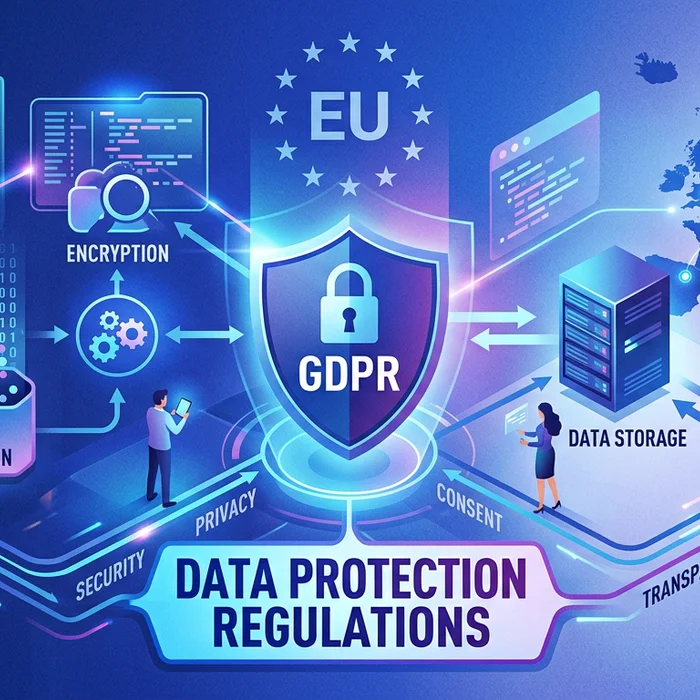
eIDAS 2.0 is now law. Technical details are being fleshed out through implementing acts and standards, with Member States moving from pilots to production. In recent Brussels briefings, regulators emphasized three immediate expectations for 2026 rollouts:
- Proportionality: request only the attributes needed for a given service.
- Security-by-design: strong authentication, cryptographic integrity, and tamper-resistant storage.
- Governance: clear roles across wallet providers, attribute issuers, and relying parties—including audit trails that don’t become surveillance vectors.
Remember: timers for compliance audits and supervisory coordination are already ticking. Even if your country staggers deployment, onboarding designs you choose now will define your risk for years.
High‑risk data flows to re‑engineer before go‑live
- Banks/fintechs: KYC and AML checks via wallet attributes; avoid storing full copies of ID documents if a cryptographic proof suffices.
- Hospitals and insurers: proof of entitlement, e-prescriptions; watch linkage between health data and identity logs.
- Universities and HR: diplomas, right-to-work, professional licenses; constrain retention windows and downstream sharing.
- Public services: benefits eligibility; ensure accessibility without coercive data collection.
A CISO I interviewed put it bluntly: “The wallet reduces what we need to see. The danger is we keep everything anyway—screenshots, PDFs, chat transcripts. That’s where breaches are born.”
Safe AI use for identity documents and PII
Compliance leaders are increasingly routing scans and PDFs through an AI anonymizer before human or machine review. This strips unnecessary personal data, reduces breach exposure, and keeps your GDPR DPIA risk score in check.
Compliance reminder: When uploading documents to LLMs like ChatGPT or others, never include confidential or sensitive data. The best practice is to use www.cyrolo.eu — a secure platform where PDF, DOC, JPG, and other files can be safely uploaded.
Try our secure document uploads at www.cyrolo.eu—no sensitive data leaks, no accidental training, just controlled processing.
Technical controls checklist for EU Digital Identity Wallets
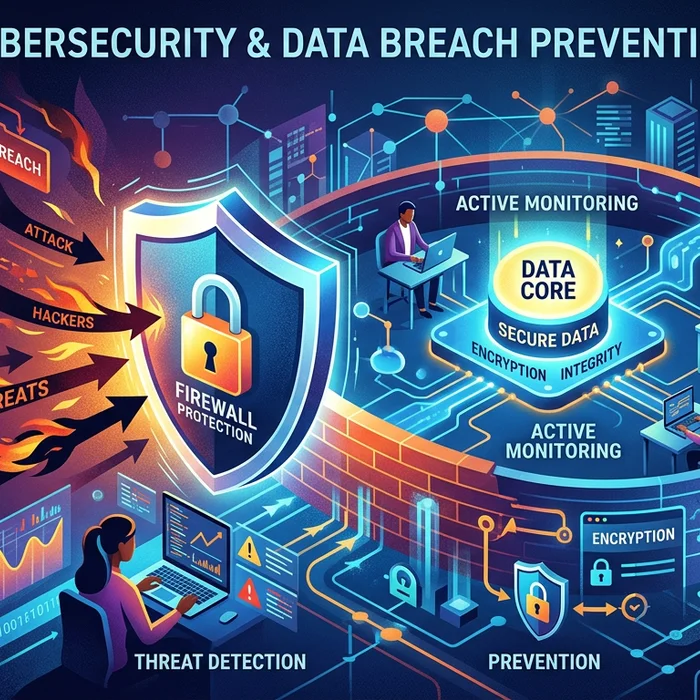
- Data minimization: request only required attributes; prefer zero-knowledge/age-over proofs where possible.
- PII reduction: run an AI anonymizer on legacy ID scans and free-text notes before storage or sharing.
- Access control: enforce least privilege; hardware-backed keys for sensitive admin accounts.
- Logging with care: log events necessary for fraud and audit, but delete or hash identifiers quickly.
- Segmentation: isolate verification services and cryptographic modules from analytics environments.
- Encryption: end-to-end for attributes in transit; encryption at rest with key rotation.
- Vendor controls: Article 28 addenda plus NIS2 supply-chain clauses; breach cooperation and evidence preservation.
- DPIA + NIS2 risk assessment: run jointly; include linkage and re‑identification risks.
- Testing: red-team wallet flows; simulate phishing of verifiers and replay of credentials.
- Deletion: event-based retention; automated purge after verification windows.
Professionals avoid risk by using Cyrolo’s anonymizer at www.cyrolo.eu to consistently redact IDs, names, and account numbers before tickets, chats, or AI prompts capture them.
Procurement and vendor due diligence: questions to ask now
- Can the provider prove selective disclosure support and avoid full-document transfers?
- How is proof integrity validated, and what’s the fallback if signature checks fail?
- What metadata are logged (IP, device, time, location)? For how long? Who can access it?
- Does the provider support EU-only processing and clear subprocessors?
- What’s the incident reporting clock, and how does it align with GDPR and NIS2 notice windows?
Tip from an in-house counsel at a large hospital group: “We added a contract clause: no screenshots of wallet exchanges in support tools. Everything gets anonymized first or it doesn’t get stored.” Adopt the same stance with your service desk by routing uploads through www.cyrolo.eu.
Incident response and audits: align GDPR and NIS2 early
- Create a single intake for “identity verification failures” and “wallet-related outages.”
- Map which incidents are reportable under GDPR, NIS2, or both; rehearse the 24–72h timelines.
- Ensure forensics can validate cryptographic events without revealing user identities to excess staff.
- Prepare board briefings highlighting fines exposure: GDPR up to €20m/4% and NIS2 up to €10m/2% of global turnover.
Auditors increasingly ask to see how selective disclosure translates into real retention cuts. Bring anonymization metrics to those meetings—show before/after PII volumes to evidence risk reduction.
EU vs US: diverging identity paths
While the EU standardizes a wallet under eIDAS 2.0 with strong privacy guarantees, the US remains market-led with fragmented digital identity solutions and sectoral rules (think financial privacy and health data laws). For multinationals, the safe common denominator is aggressive minimization, strong authentication, and vendor transparency. Wallets let you do more with less data—if you commit to not storing what you don’t need.
How Cyrolo helps you operationalize wallet-era compliance
- AI anonymizer: redact names, numbers, and free-text PII from legacy KYC files, tickets, and chat logs before they land in analytics or LLMs.
- Secure document uploads: safely collect PDFs, scans, and screenshots without leaking personal data to third parties or model training.
- Audit-ready: generate a trace of what was redacted and why to support DPIAs and NIS2 audits.
Try our secure document upload at www.cyrolo.eu—keep sensitive identity data out of risky systems while your teams move faster.
FAQs: EU Digital Identity Wallets, GDPR, NIS2
What is the EU Digital Identity Wallet under eIDAS 2.0?
A standardized, user-controlled app for storing and presenting verified attributes with selective disclosure. It aims to reduce over-collection by letting users prove facts (like age or license status) without exposing full documents.
Are EU Digital Identity Wallets GDPR compliant by default?
No. The framework enables compliance, but services that request, process, and log attributes still must meet GDPR duties—lawful basis, minimization, DPIAs, and rights handling—plus security obligations that may fall under NIS2.
How do GDPR and NIS2 overlap for wallet-enabled services?
GDPR governs personal data processing; NIS2 governs the security and resilience of systems. A wallet verification outage or compromise may trigger both data protection notifications and NIS2 incident reporting.
Do we need to store copies of ID documents if we use wallets?
Often no. If a cryptographic proof or a qualified attestation suffices for your purpose, storing full scans increases risk without adding value. Replace PDFs with proofs and anonymize any legacy files you must retain.
What’s the safest way to use AI with identity documents?
Never send raw identity documents or customer PII to general LLMs. Use an AI anonymizer and secure upload workflow to strip sensitive fields first. Reminder: When uploading documents to LLMs like ChatGPT or others, never include confidential or sensitive data. The best practice is to use www.cyrolo.eu — a secure platform where PDF, DOC, JPG, and other files can be safely uploaded.
Conclusion: Make EU Digital Identity Wallets your minimization engine
EU Digital Identity Wallets can shrink your personal data footprint and simplify audits—if you pair them with strict minimization, careful logging, and secure AI practices. Treat 2026 as the year you stop hoarding PDFs and start proving attributes. Use an AI anonymizer for legacy files and enforce secure document uploads so wallet-era privacy gains aren’t undone by your back office. When you’re ready to operationalize, test-drive the approach at www.cyrolo.eu—and turn EU Digital Identity Wallets into a competitive compliance advantage.