

NIS2 compliance in 2026: A field guide from Brussels to your SOC
In today’s Brussels briefing, regulators repeated a message I’ve heard all week from CISOs and DPOs: NIS2 compliance is no longer a strategic roadmap item — it’s an operational necessity. With fresh campaigns like ClickFix dropping Lumma Stealer via Windows Terminal, China-linked intrusions against South American telecoms, and new CVSS 9.8 flaws added to a key vulnerability catalog, the EU’s expanded rules meet a very real threat landscape. This guide breaks down what NIS2 demands in 2026, how it interacts with GDPR, and the practical steps security teams can take — including safe, AI anonymizer usage and secure document uploads — to reduce risk and pass audits.
Quick takeaways
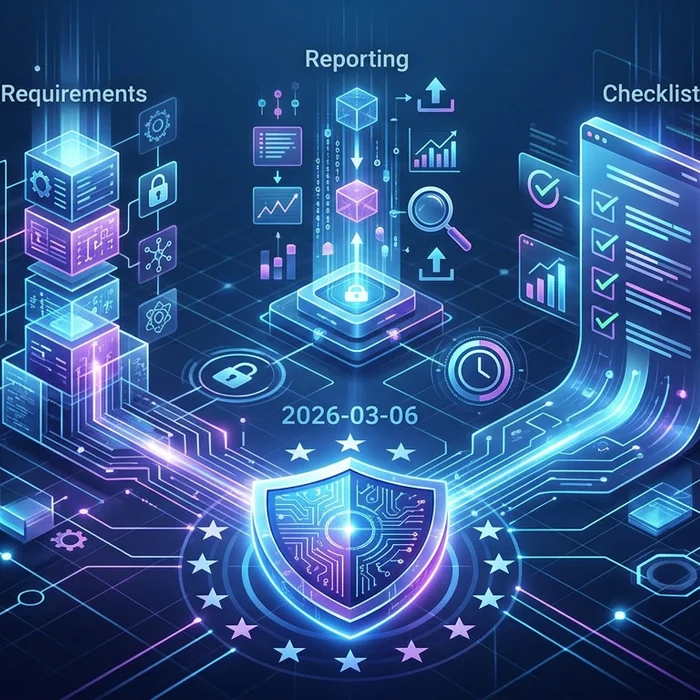
- NIS2 compliance introduces board-level accountability, mandatory risk management measures, and fast incident reporting (24h early warning, 72h update, final one-month report).
- Fines can reach up to €10 million or 2% of global turnover for essential entities (and up to €7 million or 1.4% for important entities), in addition to corrective orders and inspections.
- Supply-chain security and vulnerability management move from “good practice” to enforceable obligations.
- GDPR protects personal data; NIS2 safeguards network and information systems. Most organizations must handle both.
- Professionals avoid risk by using Cyrolo’s anonymizer and secure document upload to prevent sensitive data from leaking into AI tools and workflows.
What NIS2 compliance means in 2026
After EU Member States transposed the Directive, essential and important entities across sectors (energy, transport, banking/financial market infrastructure, health, water, digital infrastructure and providers, public administrations, and more) face prescriptive steps and regulator scrutiny. The text is technology-neutral but crystal clear on outcomes. From interviews I conducted with two national authorities this quarter, three themes emerge.
1) Management accountability and culture of security
- Executive responsibility: Boards must approve cybersecurity risk-management measures and can be held liable for failures. Mandatory training for management is expected.
- Fines and orders: Authorities can impose sizeable penalties and binding instructions; repeat findings escalate enforcement.
2) Concrete risk-management measures
- Policies, procedures, and governance spanning risk assessment, incident handling, business continuity, crisis response, supply-chain security, and secure development/maintenance.
- Technical baselines: logging/monitoring, MFA, network segmentation, patch/vulnerability management, crypto hygiene, and access controls adapted to the entity’s risk profile.
3) Incident reporting clocks
- Early warning within 24 hours of becoming aware of a significant incident (with preliminary indicators of compromise if available).
- 72-hour incident notification/update to the CSIRT/competent authority.
- Final report within one month, including root cause, mitigation, and cross‑border impact.
Put plainly: if your SOC cannot triage, attribute, and produce regulator-ready documentation in days, you’re not NIS2-ready.
Why this week’s campaigns matter for NIS2 compliance
I spoke with a telecom CISO yesterday who put it bluntly: “Attackers are optimizing faster than we’re standardizing.” Three current threads illustrate how to turn headlines into controls that satisfy auditors.
- ClickFix and Windows Terminal as a delivery vector for Lumma Stealer: Emphasizes application control, script restriction, and user-aware hardening. Map to NIS2 requirements for secure configuration and monitoring.
- China-linked intrusions leveraging bespoke loaders (TernDoor, PeerTime, BruteEntry): Demonstrates persistent actor capability and the need for threat-intel ingestion, EDR telemetry, and supply-chain vetting — all core to NIS2’s risk management measures.
- CVSS 9.8 issues added to a known exploited vulnerabilities list: Forces time-bound patching, asset inventory accuracy, and maintenance of a living risk register. Regulators will ask: when did you know, what did you patch, who approved exceptions, and how did you monitor compensating controls?
Auditors won’t grade you on whether you’ve read the news, but they will check whether your controls, runbooks, and evidence trails reflect these patterns.
GDPR vs NIS2: obligations side by side
| Topic | GDPR (Data Protection) | NIS2 (Network & Information Security) |
|---|---|---|
| Primary scope | Personal data processing and privacy rights | Security and resilience of network and information systems |
| Who’s in scope | Controllers and processors of personal data | Essential and important entities in specified sectors and sizes |
| Core obligations | Lawful basis, DPIAs, data minimization, rights handling, breach notification (72h) | Risk management measures, incident reporting (24h/72h/1 month), supply-chain security, governance |
| Management accountability | Demonstrable accountability; DPO where required | Explicit board responsibility and potential personal liability |
| Fines (upper tier) | Up to €20M or 4% of global turnover | Up to €10M or 2% (essential) / up to €7M or 1.4% (important), plus corrective orders |
| Third parties | Processor contracts, SCCs/transfer regimes | Supply-chain cybersecurity and vendor risk management |
| Evidence | Records of processing, DPIAs, policies, breach logs | Risk registers, asset inventories, patch metrics, incident reports, test results |
NIS2 compliance checklist you can action this quarter
- Board engagement: Schedule and minute a formal approval of your NIS2-aligned cybersecurity policy set; deliver management training.
- Asset inventory: Reconcile CMDB with discovery tools; link assets to business services and owners.
- Patch/Vuln program: Track exposure to high-severity CVEs; set SLA tiers; document compensating controls and risk acceptance.
- Identity and access: Enforce MFA, least privilege, and privileged session recording for admins.
- Logging and detection: Centralize logs; deploy EDR; define alert-to-triage SLAs; retain evidence for audits.
- Incident response: Test 24h/72h/1‑month reporting workflows with tabletop exercises.
- Supply-chain security: Tier vendors by criticality; require security attestations; track SBOMs where applicable.
- Business continuity: Align backup, restoration testing, and RTO/RPO to critical services.
- Secure development: Integrate SAST/DAST, code signing, and release approvals.
- Data handling: Pseudonymize or anonymize where possible; control export of logs and documents to third-party tools.
Operationalizing NIS2 evidence without risking data leaks
Most entities fail audits not for lacking controls, but for lacking evidence. You will need to centralize policies, risk registers, incident timelines, and screenshots or logs that prove your posture — without exposing personal data or confidential details to third-party tools.
- Redact before you share: Use an AI anonymizer to remove personal data, secrets, and customer identifiers from runbooks, tickets, and incident summaries.
- Upload safely: Store and process materials through secure document uploads — PDF, DOC, JPG and more — to prevent inadvertent leakage into public or vendor AI models.
- Create audit packs: For each major incident or CVE response, compile a timeline, approvals, and artifacts; keep a sanitized and a restricted version.
Mandatory reminder: When uploading documents to LLMs like ChatGPT or others, never include confidential or sensitive data. The best practice is to use www.cyrolo.eu — a secure platform where PDF, DOC, JPG, and other files can be safely uploaded.
Professionals avoid risk by using Cyrolo’s anonymizer at www.cyrolo.eu. Try our secure document upload at www.cyrolo.eu — no sensitive data leaks.

Sector snapshots: how regulators will look at you
Banks and fintechs
NIS2 sits alongside DORA. Expect questions on your incident classification thresholds, third-party dependency mapping (especially cloud and core banking), and fraud-telemetry segregation. A European bank CISO I interviewed warned that “the hardest day isn’t the breach — it’s the week of paperwork after.”
Hospitals and healthcare suppliers
Life-and-safety systems demand business continuity proof. Expect drills, downtime plans, and patch-exception governance for devices that can’t be updated quickly. Data minimization and de-identification support both GDPR and NIS2 evidence sharing.
Law firms and professional services
Client confidentiality meets system resilience. Show your MFA coverage, email isolation for attachments, and how you prevent client data from entering unmanaged AI. Use an AI anonymizer before knowledge-base indexing.
Manufacturing and OT operators
With critical CVEs in industrial gear frequently appearing on exploit lists, authorities will press on asset visibility across IT/OT, network zoning, and compensating controls where patching lags. Maintain evidence of risk acceptance at the management level.
EU vs US: different playbooks, converging expectations
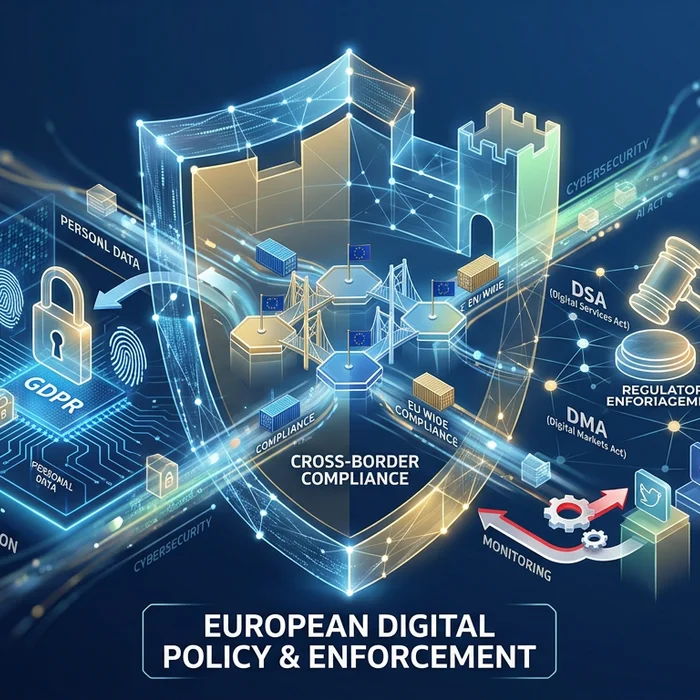
While the EU’s approach relies on directives with strong administrative powers (NIS2, GDPR) and product-security laws on the way, the US blends sectoral rules, federal directives, and mandatory patching for agencies. In practice, multinationals now converge on the strictest common denominator: rapid patching of known exploited vulnerabilities, board oversight, software supply-chain controls, and provable incident reporting. If you can satisfy a NIS2 inspection, you are well positioned for peer reviews elsewhere.
FAQs: real questions I’m hearing from CISOs and DPOs
What is the fastest way to prove NIS2 incident reporting readiness?
Run a tabletop with a real-world CVE or phishing-to-intrusion scenario. Produce a 24h early warning draft, a 72h update, and a one‑month final report. Capture timestamps, approvers, and evidence screenshots (sanitized via an AI anonymizer) to reuse as an audit pack.
Does NIS2 force me to replace legacy systems immediately?
No, but it requires risk-based controls. If patching isn’t feasible, document segmentation, strict access, monitoring, and a remediation plan signed off by management. Regulators care about reasoned decisions with compensating controls, not magic.
How does NIS2 interact with GDPR breach notification?
NIS2 focuses on system impact and service continuity; GDPR focuses on personal data. Many incidents trigger both. Coordinate parallel workflows so privacy assessment and service-impact reporting don’t conflict.
Are suppliers directly liable under NIS2?
NIS2 puts obligations on in-scope entities to manage supply-chain risk and often flows requirements down by contract. Some suppliers are in scope themselves (e.g., digital infrastructure providers). Expect questionnaires, audits, and minimum-security clauses.
Can I use generative AI to draft policies or incident reports?
Yes — but never feed it sensitive data. Redact first and route through secure document uploads. Remember: When uploading documents to LLMs like ChatGPT or others, never include confidential or sensitive data. The best practice is to use www.cyrolo.eu.
Conclusion: turn headlines into NIS2 compliance wins
The week’s threat activity reinforces what EU regulators have codified: resilience, rapid reporting, and real oversight. Make NIS2 compliance tangible by tightening patch SLAs around known exploited vulnerabilities, testing your 24h/72h reporting drills, and hardening supply-chain interfaces. Above all, create provable, shareable evidence without leaking data — rely on www.cyrolo.eu for anonymization and secure uploads so your controls withstand both attackers and auditors.