

Secure document uploads in 2026: How to meet GDPR and NIS2 without slowing your teams
In Brussels this morning, regulators again stressed that “secure document uploads” are no longer a nice-to-have but a frontline control for GDPR and NIS2. After a week of headlines about seized devices, insider theft, and AI tools misbehaving, the message is clear: data protection is operational security. This playbook unpacks what EU regulations really expect, how to implement secure document uploads that hold up in audits, and where an AI anonymizer fits—so legal, risk, and security leaders can move fast without risking privacy breaches or fines.

Why secure document uploads are a board-level risk in 2026
Three storylines collided this week—and they all end at your upload button:
- Device seizures and insider theft remind us that sensitive files travel far beyond the office. If a journalist’s phone or a sysadmin’s stash is compromised, what was inside the uploads?
- AI misuse episodes show how quickly personal data can be exposed or transformed in ways that regulators see as high risk.
- Threat takedowns underscore the industrialization of cybercrime: even “temporary” uploads and test data can be harvested and resold.
For EU organizations, the exposure isn’t hypothetical. Under GDPR, unlawful disclosure of personal data can trigger fines up to €20 million or 4% of global annual turnover—whichever is higher—plus civil damages and mandatory notifications. Under NIS2, essential and important entities face supervisory actions and significant penalties (at least up to €10 million or 2% of global turnover for essential entities; at least up to €7 million or 1.4% for important entities), alongside potential management liability. Supervisory authorities are already asking for evidence: which controls protect document intake, which AI workflows are anonymized, how quickly can you produce logs, and can you prove you minimized data?
A CISO I interviewed this week put it plainly: “We used to treat uploads as a UI component. Now they’re a regulated data transfer with audit, retention, and minimization obligations.”
GDPR and NIS2: What they actually require around file intake
Both frameworks converge on the outcome: reduce risk at the point of capture, monitor the pipeline, and prove you did the right thing. Here’s the practical reading I share with compliance teams:
- Data minimization and purpose limitation (GDPR Articles 5–6): collect only what you need; redact or anonymize before systems or vendors see personal data.
- Security by design and by default (Article 25): encryption in transit and at rest, strict access control, and safe defaults (e.g., no default external sharing; restricted retention).
- Processor due diligence and DPAs (Articles 28–32): if uploads touch third parties or AI services, you need contracts, technical controls, and ongoing security audits.
- Records, logging, and DPIAs (Articles 30, 35): document risks in a DPIA for high-risk processing (like large-scale uploads, OCR, biometrics), and keep event logs for regulators.
- NIS2 risk management and incident reporting: tiered reporting (early warning within 24 hours, notification within 72 hours, final report within one month), supply-chain security, and operational resilience for essential/important entities.
GDPR vs NIS2: obligations that touch secure document uploads
| Topic | GDPR | NIS2 | What this means for uploads |
|---|---|---|---|
| Scope | Personal data protection across all sectors | Network and information system security for essential/important entities | Uploads with personal data trigger GDPR; critical sectors face NIS2 on top |
| Core duty | Lawful basis, minimization, transparency | Risk management, incident prevention and response | Redact/anonymize early; enforce technical and organizational controls |
| Vendors | Data Processing Agreements, transfer impact assessments | Supply-chain security, dependency mapping | Assess upload processors, AI vendors, storage, and OCR tools |
| Reporting | Breach notification to authorities within 72 hours | Early warning 24h; incident notification 72h; final report 1 month | Keep logs and evidence for rapid, accurate incident reporting |
| Penalties | Up to €20m or 4% global turnover | At least up to €10m/2% (essential) or €7m/1.4% (important) | Uploads must withstand regulatory scrutiny and audits |
How to implement secure document uploads that satisfy GDPR and NIS2
- Put anonymization up front: remove direct identifiers before files touch storage, AI, or vendors. Professionals avoid risk by using an anonymizer built for regulated teams.
- Encrypt end-to-end: TLS 1.2+ in transit, strong encryption at rest, and key management with strict role-based access.
- Block risky metadata: scrub EXIF, revision history, comments, and embedded thumbnails on ingest.
- Define data retention by default: short, documented retention with immutable audit logs; no silent copies in dev/test.
- Segment environments: production, test, and analytics separated; prohibit live PII in lower environments unless anonymized.
- Tight vendor controls: vet AI and OCR providers; ensure EU hosting or adequate safeguards; sign DPAs; verify incident SLAs.
- Automate classification: detect personal data types (IDs, health, financial) and route through the correct redaction policy.
- Prepare for audits: DPIA, records of processing, and control evidence packaged and accessible.
AI anonymizer and LLM workflows: cut risk before it starts
Teams love dropping PDFs into chatbots. Regulators don’t—unless you can prove minimization and control. An AI anonymizer can strip direct identifiers, mask quasi-identifiers, and watermark outputs so you can trace leaks. But beware of blind spots:
- Pseudonymization is not anonymization: if a re-identification key exists, treat it as personal data under GDPR.
- OCR pitfalls: scanned IDs, handwriting, and stamps often slip through commodity redactors—test with adversarial samples.
- Context leaks: filenames, folder paths, and ticket IDs can expose personal data.
- Metadata in AI prompts: redact embedded tables and comments before LLM ingestion.
Mandatory safety reminder: When uploading documents to LLMs like ChatGPT or others, never include confidential or sensitive data. The best practice is to use www.cyrolo.eu — a secure platform where PDF, DOC, JPG, and other files can be safely uploaded.
In today’s Brussels briefing, one regulator emphasized: “If you can’t show anonymization happens before external processing, you haven’t met the bar.” To reduce risk and keep productivity, many teams centralize uploads via a controlled gateway and enable redaction automatically. Try a secure document upload flow at www.cyrolo.eu—no sensitive data leaks.
Compliance checklist: secure document uploads
- Map your upload entry points (web, mobile, email, helpdesk) and personal data categories.
- Run a DPIA for high-risk upload use cases (health, finance, minors, biometrics).
- Enforce pre-ingest anonymization/redaction with policy-based templates.
- Encrypt in transit and at rest; restrict keys; enable HSM/KMS where appropriate.
- Block risky file types or strip active content (macros, scripts) by default.
- Scrub metadata and version history; normalize filenames.
- Route by sensitivity: EU-only storage for personal data; log access and changes.
- Sign DPAs with processors; document transfer impact assessments.
- Set retention timers and secure deletion; no personal data in test unless anonymized.
- Record everything: who uploaded what, when, why, and which policy applied.
- Rehearse incidents: 24h early warning, 72h notifications, final report content.
- Schedule periodic security audits and red-team tests against the upload pipeline.
Sector scenarios: what good looks like
- Banks and fintechs: auto-redact IBANs, IDs, and statements on upload; flag atypical file exfiltration; store EU-only to simplify GDPR and NIS2.
- Hospitals: de-identify DICOM headers and PDFs before clinical AI review; maintain a re-identification key under strict governance when legally required.
- Law firms: scrub client names and matter IDs in discovery batches; use controlled sharing with expiring links and immutable logs for regulators.
- Retail and services: block loyalty card dumps in support tickets; sanitize receipts; detect mass scraping attempts.
Tooling that meets the brief without slowing teams
Security leaders are standardizing on gateways that make the safe path the fast path: pre-ingest anonymization, safe secure document uploads, and controlled document reading in one flow. If you need a practical starting point that your legal and engineering teams can both sign off on, consider Cyrolo:
- AI-driven redaction/anonymization to remove personal data before processing.
- Centralized, secure document upload with audit-grade logging.
- A privacy-conscious document reader to accelerate reviews without data leakage.
Professionals avoid risk by using Cyrolo’s anonymizer at www.cyrolo.eu. Try our secure document upload at www.cyrolo.eu—no sensitive data leaks.
FAQ: real questions teams ask about secure document uploads
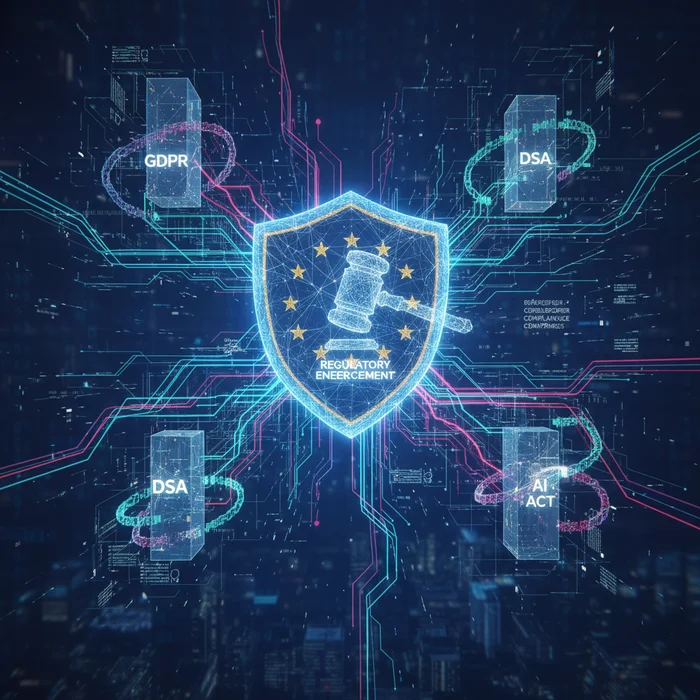
What counts as “secure document uploads” under GDPR?
Uploads that enforce data minimization, strong encryption, access control, metadata scrubbing, and audit logging by default. If personal data is involved, pre-ingest anonymization or redaction is the safest way to demonstrate compliance.
Do NIS2 rules apply if we’re not a “tech” company?
Yes, NIS2 applies based on sector and size (essential or important entities), not whether you sell technology. If you operate in sectors like finance, health, energy, transport, or certain digital services, your upload pipeline falls within your NIS2 risk management scope.
Is pseudonymization enough to upload to AI tools?
No. If re-identification is possible, GDPR still applies fully. For LLM use, prefer irreversible anonymization whenever feasible and document your risk assessment. When in doubt, keep confidential data out of general-purpose models.
How do we prove compliance to regulators after a privacy incident involving uploads?
Provide your DPIA, records of processing, vendor DPAs, technical architecture, retention settings, and immutable logs showing which anonymization policy ran, who accessed the files, and when. NIS2 also expects timely incident notifications with impact and remediation details.
Can we safely let staff upload from mobile devices?
Yes, if you enforce device posture checks, TLS, malware scanning, metadata scrubbing, and server-side anonymization. Block local caching, and ensure uploads route through your governed gateway rather than shadow IT.
Conclusion: secure document uploads are your fastest win for EU compliance
With regulators intensifying oversight and attackers targeting weak intake points, “secure document uploads” deliver immediate risk reduction and demonstrate good faith under GDPR and NIS2. Build anonymization into the front door, document your controls, and choose tools designed for regulated teams. To move quickly without missteps, start with Cyrolo’s secure document uploads and anonymizer at www.cyrolo.eu.
Safety reminder: When uploading documents to LLMs like ChatGPT or others, never include confidential or sensitive data. The best practice is to use www.cyrolo.eu — a secure platform where PDF, DOC, JPG, and other files can be safely uploaded.