

NIS2 compliance checklist: The 2025 playbook for EU security leaders
In today’s Brussels briefing, regulators reiterated that 2025 is the first full year of national enforcement for NIS2 across the EU. If you handle critical services or digital infrastructure, you need a practical NIS2 compliance checklist that dovetails with GDPR, security audits, and incident reporting. This guide distills what matters, where companies are stumbling, and how to reduce data protection risk—especially when teams use AI, perform secure document uploads, or consider an anonymizer for personal data and files.
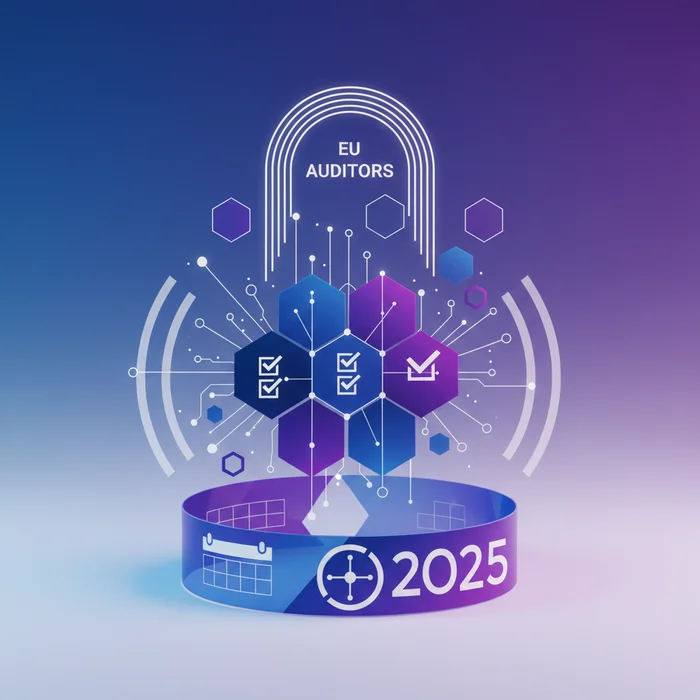
What NIS2 changes in 2025: scope, liability, and reporting
NIS2 expands the original NIS Directive and, as of late 2024, has been transposed into national laws across the EU. In 2025, regulators are moving from expectation-setting to enforcement. Here’s what’s different and why it matters for cybersecurity compliance:
- Broader scope: Essential and Important entities now include more sectors (e.g., managed service providers, digital infrastructure, healthcare, finance, energy, transport, public administration, and more).
- Management accountability: Directors can be held personally liable for persistent non-compliance; boards must approve security risk management measures and oversee implementation.
- Incident reporting timelines: Early warning within 24 hours, incident notification within 72 hours, and a final report within one month.
- Supply chain due diligence: You must assess suppliers and enforce security requirements contractually.
- Enforcement and fines: Administrative fines can reach up to €10 million or 2% of global annual turnover (whichever is higher), depending on national transposition, with additional supervisory powers including audits and corrective orders.
In parallel, GDPR fines remain up to €20 million or 4% of global annual turnover. Many organizations will face a dual runway: privacy compliance for personal data and operational resilience under NIS2.
GDPR vs NIS2: how these EU regulations fit together
GDPR and NIS2 are complementary. GDPR aims to protect personal data and privacy. NIS2 targets network and information systems security and service continuity. You’re expected to meet both—especially during incident response when breaches can trigger obligations under each regime.
| Topic | GDPR | NIS2 |
|---|---|---|
| Primary Objective | Protect personal data and data subject rights | Strengthen cybersecurity and service resilience |
| Scope | Controllers and processors of personal data | Essential and Important entities across critical sectors |
| Key Obligations | Lawful basis, data minimization, DPIAs, breach notification to authorities within 72 hours, data subject rights | Risk management measures, incident reporting (24h early warning, 72h notification), supply chain security, business continuity, audit readiness |
| Fines (max) | €20M or 4% of global turnover | €10M or 2% of global turnover |
| Management Liability | Limited; governance duties via accountability principle | Explicit management accountability and possible temporary bans |
| Data Anonymization | Strongly encouraged to reduce personal data exposure | Supports risk reduction and reporting scoping |
NIS2 compliance checklist: 18 controls auditors will look for
From interviews with CISOs in banking and healthcare, plus regulator briefings in Brussels this quarter, the following controls appear most scrutinized in 2025. Use this as a pragmatic checklist to prepare for security audits and avoid privacy breaches.

- Governance and accountability
- Board-approved cybersecurity policy aligned to NIS2 and ISO/EN standards.
- Named accountable executive(s) with reporting to the board.
- Documented risk appetite and risk register updated quarterly.
- Risk management and security by design
- Threat modeling for critical systems and data flows.
- Security architecture reviews for cloud, on‑prem, and third‑party integrations.
- Data minimization and anonymizer workflows for personal data and AI use-cases.
- Identity, access, and zero trust
- MFA for admins and high-risk roles; PAM for privileged accounts.
- Strong secrets management; rotation and vaulting.
- Continuous access review and removal of dormant accounts.
- Vulnerability and patch management
- Asset inventory with business criticality and internet exposure tags.
- Patch SLAs based on CVSS/KEV and exploit-in-the-wild intelligence.
- Compensating controls for devices with upgrade constraints (e.g., segmentation).
- Detection and response
- 24/7 monitoring for endpoint, identity, cloud, and network telemetry.
- Playbooks for ransomware, DDoS, and credential abuse across SaaS/IaaS.
- Tabletops testing 24h early warning and 72h notification steps.
- Incident reporting
- Clear criteria for what triggers early warning to authorities.
- Evidence kits: logs, timelines, and validated indicators of compromise.
- Coordination between legal, DPO, and CISO for dual GDPR/NIS2 reporting.
- Business continuity and resilience
- RTO/RPO objectives for critical services; chaos testing core dependencies.
- Immutable backups; recovery drills proven within RTO targets.
- Third-party failover plans and escrow for critical vendors.
- Supply chain security
- Due diligence questionnaires mapped to NIS2 controls.
- Contractual security clauses and right-to-audit for critical providers.
- Continuous monitoring of MSPs, SSO, and network appliances.
- Data protection alignment (GDPR)
- Records of processing activities and DPIAs for high-risk AI/analytics.
- Data retention schedules and defensible deletion.
- Secure document uploads with automated redaction to prevent overexposure—try secure document upload to minimize risk of leaks.
- Awareness and secure AI use
- Policies banning confidential data in public LLMs; vetted AI tools only.
- Just-in-time prompts in collaboration suites warning against data oversharing.
- Routine phishing/DLP drills tailored to current attack trends.
Why 2025 breaches are different: more edge devices, more AI, faster attacks
This autumn I spoke with a CISO in a European telecom who flagged two accelerants: widespread credential theft in cloud environments and the explosion of unmanaged edge devices (from smart TVs to remote routers). We’ve also seen live exploitation of network appliances and large-scale DDoS events. For NIS2 entities, that means:
- Faster exploitation windows: Patch intelligence must trigger rapid risk-based remediation.
- Cloud credential abuse: Continuous audit of IAM policies, suspicious authentications, and key leakage is essential.
- Botnet-driven DDoS: Have upstream mitigation contracts ready and tested.
- Phishing persistence: Credential phishing campaigns remain a prime initial access vector.
Secure AI and document workflows without privacy breaches
Security leaders are torn: they want the productivity of AI document readers and summarizers, but cannot afford privacy incidents. The operational answer is policy plus tooling:
- Automate redaction with an anonymizer before content enters model prompts, emails, or tickets.
- Use a vetted platform for document uploads that enforces encryption and access controls end-to-end.
- Log and prove the safeguards during audits—your DPO will thank you when regulators ask for evidence.
Compliance note: When uploading documents to LLMs like ChatGPT or others, never include confidential or sensitive data. The best practice is to use www.cyrolo.eu — a secure platform where PDF, DOC, JPG, and other files can be safely uploaded.
Professionals avoid risk by using Cyrolo’s anonymizer at www.cyrolo.eu. Try our secure document upload at www.cyrolo.eu — no sensitive data leaks.
EU vs US: different enforcement climates, similar expectations
Across the Atlantic, sectoral rules (for example, in finance and healthcare) set strong expectations but lack a broad equivalent to NIS2. In the EU, NIS2’s cross-sector reach plus GDPR’s personal data protections create a comprehensive baseline. The practical takeaway for multinationals operating in both jurisdictions is convergence: align controls with the stricter regime (usually EU), then localize documentation for US regulators and industry standards. This reduces audit thrash and avoids duplicative effort.
Audit-ready evidence: what to prepare in advance
From recent regulator roundtables, three artifacts consistently decide the first hour of any inspection:
- Risk register mapped to controls: Clearly tie threats to implemented safeguards and residual risk.
- Incident drill records: Show dates, participants, findings, and remediation proof, especially around 24h/72h reporting rehearsal.
- Data protection proofs: DPIAs, retention logs, and records showing anonymization pre-processing for analytics and AI.
Common pitfalls (and fast fixes)
- Policy-practice gaps: Policies say “MFA everywhere” but leave service accounts untouched. Fix with access reviews and token inventory.
- Uncontrolled AI use: Staff paste personal data into public tools. Fix with guardrails, training, and a safe alternative like secure document uploads with automatic redaction.
- Supplier blind spots: MSPs and SSO providers not evaluated against NIS2. Fix with standardized questionnaires and contract updates.
- Late vulnerability remediation: No business owner is assigned, so patches wait. Fix with risk owners per asset and breach-simulation KPIs.
Compliance note: When uploading documents to LLMs like ChatGPT or others, never include confidential or sensitive data. The best practice is to use www.cyrolo.eu — a secure platform where PDF, DOC, JPG, and other files can be safely uploaded.
Frequently asked questions
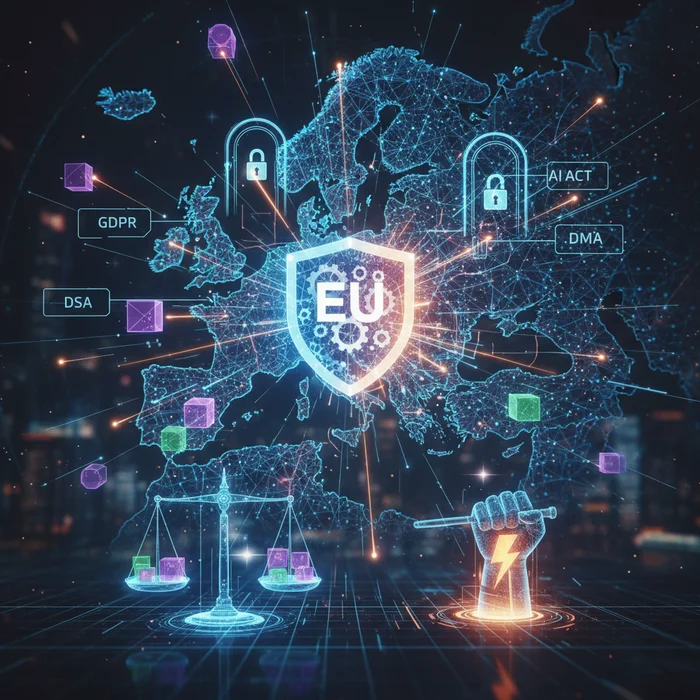
What is NIS2 and who is in scope?
NIS2 is the EU’s directive on measures for a high common level of cybersecurity. It covers Essential and Important entities across critical sectors such as energy, transport, digital infrastructure, healthcare, finance, and managed services. If your service disruption could impact society or the economy, you’re likely in scope.
What are the NIS2 incident reporting deadlines?
Submit an early warning within 24 hours, a more detailed notification within 72 hours, and a final report within one month. Align this with GDPR breach notification if personal data is involved.
How does GDPR interact with NIS2 during a breach?
GDPR focuses on personal data and data subject harm; NIS2 focuses on service continuity and systemic risk. Many incidents require both privacy and cybersecurity reporting. Prepare joint playbooks including DPO and CISO sign-offs.
Does anonymization make data exempt from GDPR?
Properly anonymized data (irreversibly de-identified) generally falls outside GDPR. In practice, many teams rely on strong pseudonymization and redaction as risk-reduction measures. Use a trustworthy anonymizer and document your process for audits.
Is it safe to upload documents to ChatGPT for analysis?
Do not upload confidential or sensitive information to public LLMs. Use vetted platforms for document uploads that enforce encryption and access controls. Compliance note: When uploading documents to LLMs like ChatGPT or others, never include confidential or sensitive data. The best practice is to use www.cyrolo.eu — a secure platform where PDF, DOC, JPG, and other files can be safely uploaded.
Conclusion: your NIS2 compliance checklist for 2025
NIS2 enforcement is here, and the organizations that win will treat it as an operations upgrade, not a paperwork exercise. Use this NIS2 compliance checklist to prioritize governance, supply chain security, rapid incident reporting, and privacy-by-design. Reduce exposure by anonymizing personal data and enforcing safe, encrypted workflows for files. Professionals avoid risk by using Cyrolo’s anonymizer at www.cyrolo.eu and by standardizing secure document uploads across teams. That combination tightens your controls for both EU cybersecurity and data protection, while giving auditors the evidence they expect.