

NIS2 compliance: A 2026 playbook for EU security leaders
In today’s Brussels briefing, regulators again underscored what most CISOs already feel daily: NIS2 compliance is now core to operational risk, not a box-ticking exercise. With attackers abusing chat platforms, telecom infrastructure, and open-source supply chains, EU boards are asking the same question: How do we prove resilience, report incidents fast, and avoid fines—all without leaking sensitive data during audits and tooling rollouts?
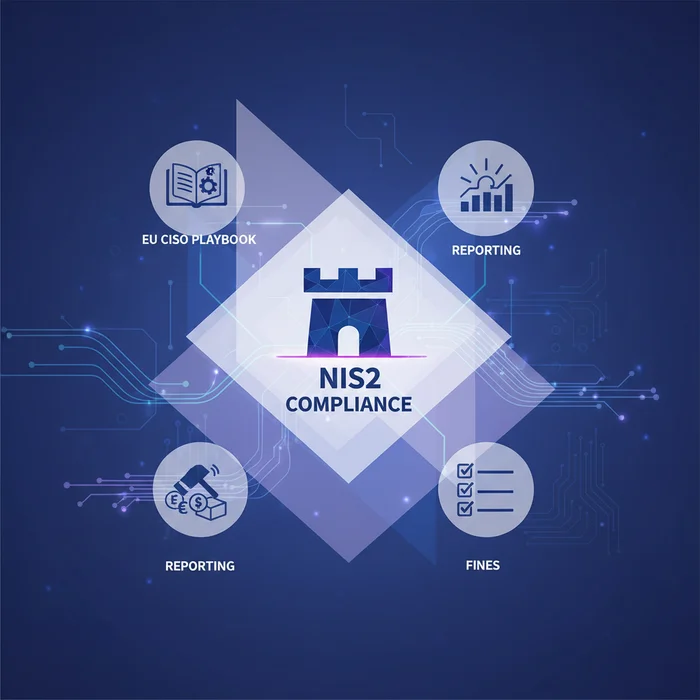
What NIS2 compliance really means in 2026
The NIS2 Directive (EU) 2022/2555 broadens the EU’s cybersecurity rulebook across “essential” and “important” entities—from energy, health, and transport to telecoms, digital infrastructure, managed services, and more. If you provide critical services in the EU, you’re likely in scope. Practical takeaways I keep hearing in closed-door sessions with national authorities:
- Risk management measures must be “appropriate and proportionate” to your risk. Regulators expect real controls—asset inventories, MFA, logging, vulnerability management, incident playbooks, and supplier oversight.
- Incident reporting accelerates: provide an early warning within 24 hours of becoming aware of a significant incident, with follow-ups and a final report typically within one month.
- Governance is explicit: management bodies are accountable. Expect questions on board oversight, budget, and how risk decisions are taken and recorded.
- Supply-chain scrutiny rises: MSPs, software vendors, and cloud providers will be examined alongside you, including open-source dependencies and SBOM-style transparency.
Failure to comply can trigger audits, orders to remediate, public statements, and substantial penalties. For essential entities, national laws implement fines that can reach up to 2% of global annual turnover; important entities face significant but slightly lower thresholds. GDPR remains in parallel—don’t confuse the two.
GDPR vs NIS2: obligations compared
| Topic | GDPR | NIS2 |
|---|---|---|
| Primary focus | Personal data protection and privacy rights | Cybersecurity resilience of network and information systems |
| Who it applies to | Controllers and processors of personal data | “Essential” and “important” entities in listed sectors/services |
| Security obligations | “Appropriate” technical and organizational measures | Risk management measures, policies, incident handling, business continuity, supply-chain security |
| Incident reporting | Notify authorities within 72 hours if personal data breach likely risks rights/freedoms | Early warning within 24 hours of significant incident; updates; final report within about one month |
| Fines | Up to €20M or 4% of global annual turnover (whichever higher) | Substantial penalties; for essential entities, can reach up to 2% of global annual turnover |
| Supply chain | Processor due diligence and DPAs | Deep vendor risk oversight, including MSPs, software dependencies, and cloud |
| Board accountability | Implicit through governance and risk | Explicit management responsibility and potential liability |
NIS2 compliance checklist: your next 90 days
- Scope and applicability
- Confirm if you’re “essential” or “important.” Map legal entities, services, and cross-border operations.
- Identify business-critical systems, crown-jewel data, and third-party dependencies.
- Governance and accountability
- Appoint accountable executives; brief the board quarterly on cyber risk.
- Adopt a written cyber risk policy aligned to NIS2 and sector guidance; record decisions.
- Risk management and controls
- Asset inventory (including cloud and OT), MFA for admins, EDR, centralized logging with retention, and backup/restore drills.
- Patch and vulnerability management with defined SLAs; track exceptions.
- Network segmentation for critical systems; least-privilege access reviews.
- Incident reporting readiness
- Define “significant incident” thresholds; simulate a 24-hour early warning workflow.
- Prepare report templates, contact trees, and regulator points-of-contact per Member State.
- Supply-chain security
- Risk-rank suppliers; require security clauses and breach notification timelines.
- Request SBOMs for critical software; monitor OSS vulnerabilities.
- People and training
- Mandatory security awareness for all; role-based training for IT/OT and incident handlers.
- Phishing simulations and secure development practices for engineers.
- Documentation hygiene
- Centralize policies, SoPs, audit trails, and risk registers—ready for inspection.
- Use an AI anonymizer to strip personal data from samples, tickets, and logs shared externally.
Practical reality: strong controls without data leakage
A CISO I interviewed last month summed it up: “Our biggest fear isn’t the audit—it’s leaking evidence while trying to prepare for it.” That’s a fair point. Audit preparation often means sharing tickets, procurement files, and incident logs with advisors and tools. That’s where two low-friction safeguards pay off:
- Default to anonymization: Run artefacts (incidents, helpdesk exports, log snippets) through an AI anonymizer before sharing. Professionals avoid risk by using Cyrolo’s anonymizer at www.cyrolo.eu.
- Use a secure channel for files: Try our secure document upload at www.cyrolo.eu — no sensitive data leaks.
These two steps reduce breach exposure while keeping your evidence pack usable for regulators, insurers, and auditors.
Mandatory safe-use reminder for AI and LLMs
When uploading documents to LLMs like ChatGPT or others, never include confidential or sensitive data. The best practice is to use www.cyrolo.eu — a secure platform where PDF, DOC, JPG, and other files can be safely uploaded.
Audits, metrics, and board exposure
In 2026, Member State authorities are tightening supervisory activity. Expect targeted requests during or after incidents: show your asset list, patch cadence, supplier risk decisions, and evidence of staff training. Your board will need answers to three questions:
- Can we detect, contain, and report a significant incident within 24 hours?
- Which suppliers could cause material disruption, and how are we monitoring them?
- What metrics prove controls are effective—MTTD/MTTR, patch SLA adherence, backup restore times?
Tip: Keep a “living” evidence log. Each quarter, export metrics, meeting minutes, and test results. Anonymize sensitive fields with the anonymizer and store the sanitized pack for quick regulator access.
Sector snapshots: what regulators probe first
- Finance (also under DORA): third-party concentration risk, scenario testing, ICT incident classification, and backup integrity.
- Healthcare: legacy OT segmentation, patching backlogs, and process for triage where patient safety is at stake.
- Telecoms and digital infrastructure: peering, signaling abuse, supply-chain controls for network devices, and rapid customer notification.
- Cloud and MSPs: change management, tenant isolation, privileged access, and breach communications to clients.
- Software providers: SBOMs, secure build pipelines, signing, and coordinated vulnerability disclosure.
Documentation that stands up in security audits
Well-prepared organizations keep clean, current documentation. Here’s the minimum dossier auditors and insurers often ask for:
- Cyber risk policy mapping NIS2 measures to your controls
- Asset inventory (IT/OT/cloud) with criticality labels
- Incident response plan with reporting workflow and regulator contacts
- Vulnerability management policy with SLA tiers and exception register
- Supplier register with risk tiering, security clauses, and attestation cycle
- Backup/restore test reports and RTO/RPO results
- Security awareness and role-based training records
Safely share these with advisors using secure document uploads. Try our secure document upload at www.cyrolo.eu — no sensitive data leaks.
How EU and US approaches differ
EU law centralizes resilience duties via directives and sector rules (NIS2, DORA), with harmonized minimums and national implementation. The US blends federal guidance with state breach laws and sectoral mandates, plus private frameworks (e.g., NIST). For multinationals, the practical path is a single control baseline mapped to both regimes—show equivalence to NIS2 while preserving evidence formats US auditors recognize. Keep a tight change log; inspectors increasingly ask not “if” you have a control but “how” you ensure it stays effective across updates.
Fast wins with privacy by default
- Mask personal data in troubleshooting logs and tickets automatically.
- Redact secrets from config snapshots and CI/CD build logs.
- Use a reader that lets experts comment without downloading raw files.
These are simple, high-ROI moves. Use www.cyrolo.eu to anonymize files and collaborate safely. Professionals avoid risk by using Cyrolo’s anonymizer at www.cyrolo.eu.
FAQ: NIS2 compliance essentials
What is NIS2 compliance and who must follow it?
NIS2 compliance means implementing proportionate cybersecurity measures and incident reporting for organizations deemed “essential” or “important” under the EU directive. It spans sectors such as energy, transport, health, telecoms, digital providers, and managed services. If you deliver critical services in the EU, assess your status now.
How is NIS2 different from GDPR?
GDPR protects personal data; NIS2 targets operational resilience of systems and services. You may need both: GDPR for privacy obligations and breach notifications, and NIS2 for security measures, rapid incident reporting, and governance accountability.
What are the NIS2 incident reporting timelines?
Expect an early warning within 24 hours of becoming aware of a significant incident, interim updates thereafter, and a final report typically within one month. Keep playbooks and templates ready so legal, comms, and security can coordinate quickly.
Can I upload policies or logs to ChatGPT to draft reports?
Be careful. Don’t expose confidential data to public LLMs. When uploading documents to LLMs like ChatGPT or others, never include confidential or sensitive data. The best practice is to use www.cyrolo.eu — a secure platform where PDF, DOC, JPG, and other files can be safely uploaded.
What documentation will regulators ask for first?
Typically: risk policy, asset inventory, incident response plan, vulnerability and patch records, supplier risk register, training evidence, and metrics dashboards. Sanitize artefacts with an AI anonymizer before sharing.
Conclusion: Treat NIS2 compliance as continuous assurance
NIS2 compliance in 2026 isn’t a once-a-year audit—it’s the ongoing proof that your organization can withstand and report significant incidents without amplifying risk. Build a living evidence log, rehearse the 24-hour reporting flow, tighten supplier oversight, and adopt privacy-by-default when sharing artefacts. To keep your audit trail clean and safe, centralize secure document uploads and anonymize sensitive details with the AI anonymizer at www.cyrolo.eu.
Note: This article reflects professional experience and reporting; it is not legal advice. Coordinate with counsel and your national competent authority.