

NIS2 compliance: What long-dwell APTs mean for your 2026 EU security strategy
By Siena Novak — EU Policy & Cybersecurity Reporter

In today’s Brussels briefing, regulators emphasized how sustained, stealthy intrusions reshape the baseline for NIS2 compliance. Fresh threat intelligence this week — including reporting on China‑nexus operators lingering inside Southeast Asian military networks for years — underscores a blunt reality: European organizations can no longer treat detection, logging, and supply‑chain assurance as “nice to have.” Under NIS2, these are enforceable obligations with real fines, board accountability, and mandatory incident timelines.
For banks, hospitals, utilities, public administrations, digital infrastructure, and many manufacturers newly in scope, the message is clear: assume adversaries are already in, then prove you can detect, respond, and report — fast and verifiably.
What the latest APT campaigns mean for NIS2 compliance
As one CISO I interviewed in Frankfurt put it, “If an actor can camp in a defense network for multiple years, they can certainly live off the land in a European manufacturer or regional hospital for months — unless we change our telemetry and our playbooks.” NIS2 does exactly that: it compels risk management measures, security policies, incident response, business continuity, supply‑chain controls, and testing — not as guidance, but as law transposed by each Member State.
Dwell time and logging: from optional to obligatory
- APT dwell time measured in months or years exposes the weakest link: insufficient detection coverage and log retention.
- NIS2 expects “appropriate and proportional” technical controls, which in practice means endpoint telemetry, centralized logging, and the ability to reconstruct incidents across identity, network, and SaaS layers.
- Many national transpositions reference or expect alignment with frameworks like ISO 27001/27002 and ENISA good practices; failure to maintain adequate logs can render you unable to meet the 24/72‑hour reporting windows.
Supply chain: your vendors are your attack surface
- The campaigns in Asia again show how adversaries pivot through contractors and IT service providers. NIS2 explicitly elevates supplier risk management — contract clauses, security baselines, and continuous assurance are no longer optional.
- Expect auditors to ask for third‑party inventories, inherent risk ratings, and evidence of monitoring. “Trust but verify” becomes “verify continuously.”
Practical steps to achieve NIS2 compliance in 2026
Below is a field‑tested checklist I use with EU entities preparing for supervisory scrutiny. It maps to Article 21 risk management measures and the directive’s reporting duties.
NIS2 compliance checklist
- Map scope and ownership: identify “essential” vs “important” entities in your group; assign accountable executives and board reporting.
- Asset and data discovery: maintain an up‑to‑date CMDB and data map across IT, OT, cloud, and SaaS; tag personal data to meet GDPR obligations in parallel.
- Risk management program: document method, risk register, treatment plans; align with ISO 27001/27005 or equivalent.
- Detection and logging: deploy EDR/XDR, central SIEM, and long‑enough log retention to investigate months‑long intrusions.
- Identity security: enforce MFA, least privilege, PAM, and continuous review for admins and service accounts.
- Vulnerability and patching: risk‑based SLAs, SBOM intake, and a coordinated vulnerability disclosure policy (CVD).
- Incident response: defined playbooks, tabletop exercises, CSIRT contact details, and templates for 24‑hour early warning, 72‑hour initial, and 1‑month final reports.
- Business continuity: ransomware‑resilient backups (immutable, tested restores), disaster recovery RTO/RPO defined.
- Supplier oversight: third‑party inventory, due diligence, security clauses, breach notification terms, and continuous control monitoring.
- Training and awareness: role‑based education for engineers, legal, and executives on NIS2 and GDPR intersections.
- Evidence management: maintain audit‑ready proof of controls, tests, and decisions; time‑stamp and store securely.
GDPR vs NIS2: what changes for CISOs and DPOs?
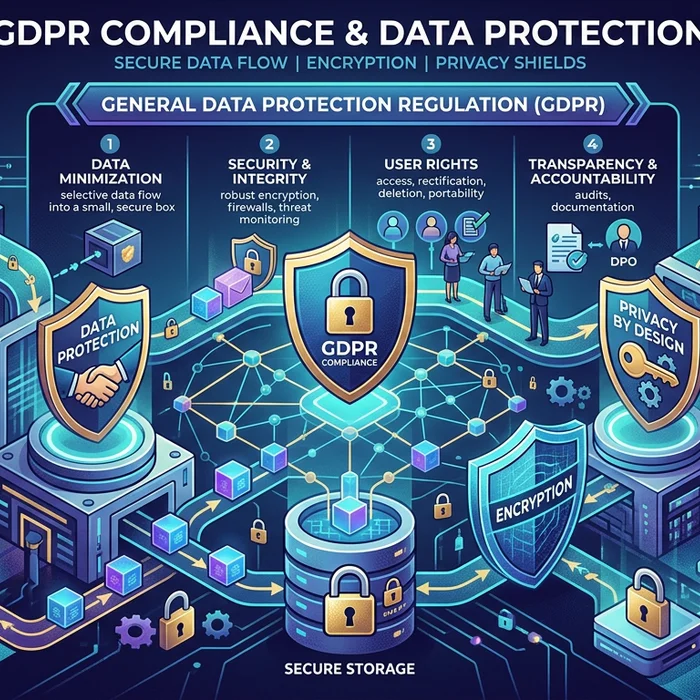
GDPR focuses on personal data protection; NIS2 centers on the resilience and security of essential and important services. Most organizations must comply with both.
| Aspect | GDPR | NIS2 |
|---|---|---|
| Primary focus | Personal data protection, privacy rights | Cybersecurity of essential/important entities and services |
| Who’s covered | Any controller/processor of EU residents’ personal data | Sector‑based entities (energy, health, transport, banking, digital infrastructure, public administration, manufacturing of critical products, etc.) by size/criticality |
| Obligations | Lawful processing, DPIAs, DPOs, data subject rights, breach notification | Risk management measures, incident reporting, supply‑chain security, governance, testing, business continuity |
| Incident reporting | Notify DPA within 72h if personal data is breached; inform individuals if high risk | Early warning within 24h for significant incidents; initial report within 72h; final report within 1 month |
| Fines | Up to €20M or 4% of global turnover | Essential: up to €10M or 2% of global turnover; Important: up to €7M or 1.4% (Member State specifics apply) |
| Regulators | Data Protection Authorities (DPAs) | NIS competent authorities and national CSIRTs |
| Third‑party risk | Processor due diligence and contracts | Expanded supplier security expectations, monitoring, and contractual controls |
Secure document workflows that don’t risk violations
Investigations into APT activity regularly uncover lateral movement via exposed files, misconfigured shares, or leaked credentials hidden inside documents. That’s where disciplined document handling becomes part of your NIS2 posture — and where an AI‑supported anonymization workflow is invaluable for privacy and security teams.
- Before sharing incident packets, logs, legal briefs, or patient files internally or with suppliers, scrub names, emails, MRNs, IBANs, addresses, and unique IDs.
- Replace sensitive fields with consistent tokens to preserve analysis value without exposing personal data or secrets.
- Use a secure platform for document uploads that prevents accidental leakage to third parties.
Professionals avoid risk by using Cyrolo’s anonymizer at www.cyrolo.eu. Try our secure document upload at www.cyrolo.eu — no sensitive data leaks.
Compliance note: When uploading documents to LLMs like ChatGPT or others, never include confidential or sensitive data. The best practice is to use www.cyrolo.eu — a secure platform where PDF, DOC, JPG, and other files can be safely uploaded.
Incident reporting under NIS2 compliance: timelines and evidence
Member States have now transposed NIS2, and enforcement is maturing in 2025–2026. Expect supervisors to hold you to precise timelines and evidence standards:
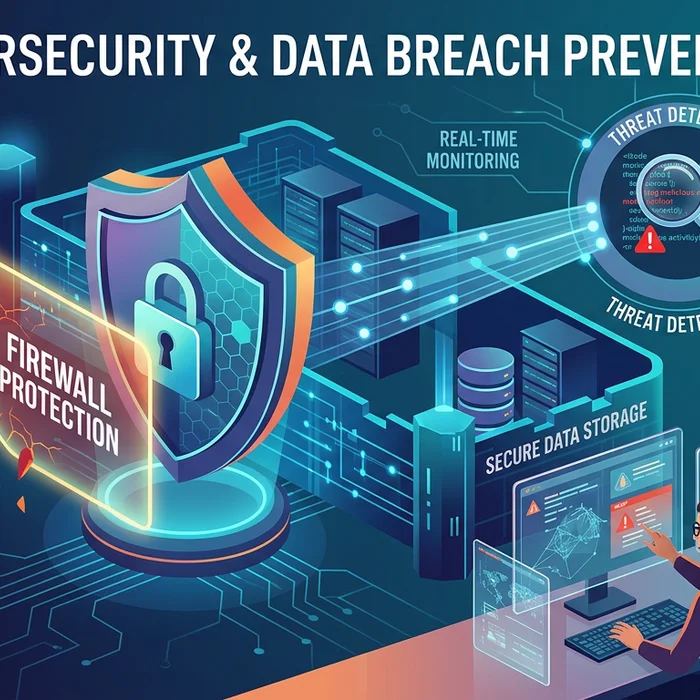
- Within 24 hours: send an early warning if the incident is significant or could spill over cross‑border.
- Within 72 hours: provide an initial report detailing indicators, suspected cause, impact, and mitigation steps.
- Within 1 month: submit a final report with root cause, lessons learned, and longer‑term improvements.
“The hardest part for boards isn’t the clock — it’s the proof,” a CISO at a pan‑EU healthcare group told me last month. “If you can’t reconstruct the kill chain because logs rolled off, you will struggle with both the regulator and your insurer.”
EU vs US: navigating different but converging expectations
- United States: publicly listed firms face SEC cyber incident disclosure obligations; CIRCIA will impose timelines for critical infrastructure once rules finalize. Sectoral rules (health, finance) add layers.
- European Union: NIS2 establishes uniform minimums across Member States, with higher fines and direct governance duties. GDPR remains in force for any personal data touched during an incident.
- Convergence: both jurisdictions increasingly expect rapid notification, board oversight, and demonstrable control effectiveness. Divergence lies in scope and which authorities you notify.
Case study scenario: hospital ransomware, dual NIS2–GDPR exposure
A regional hospital in Central Europe suffers a weekend ransomware event. EDR shows suspicious PowerShell weeks earlier; backups exist but were not periodically restored. Patient appointment systems are offline; some scheduled surgeries are postponed.
- NIS2: The outage qualifies as a significant incident; early warning goes to the national CSIRT within 24 hours; initial report at 72 hours; final at one month.
- GDPR: Personal data is likely involved; the DPA must be notified within 72 hours; high‑risk patients receive individual notices.
- Supplier angle: The PACS imaging vendor had admin access; contracts lacked robust breach terms — a finding that will be scrutinized by auditors.
- Prevention lift: Stronger EDR coverage, immutable backups with restore testing, supplier access segmentation, and a policy to share incident artifacts only after anonymization using a secure document upload workflow.
How Cyrolo supports a defensible NIS2 program
- AI anonymizer built for privacy and security teams: Strip or tokenize personal data, credentials, and unique identifiers before analysis or sharing.
- Secure document uploads: A controlled environment to handle PDFs, DOCs, images, and log bundles without exposing them to uncontrolled third parties.
- Audit‑friendly: Produce consistent redactions and export evidence that demonstrates privacy‑by‑design and data minimization — principles appreciated by both NIS and GDPR regulators.
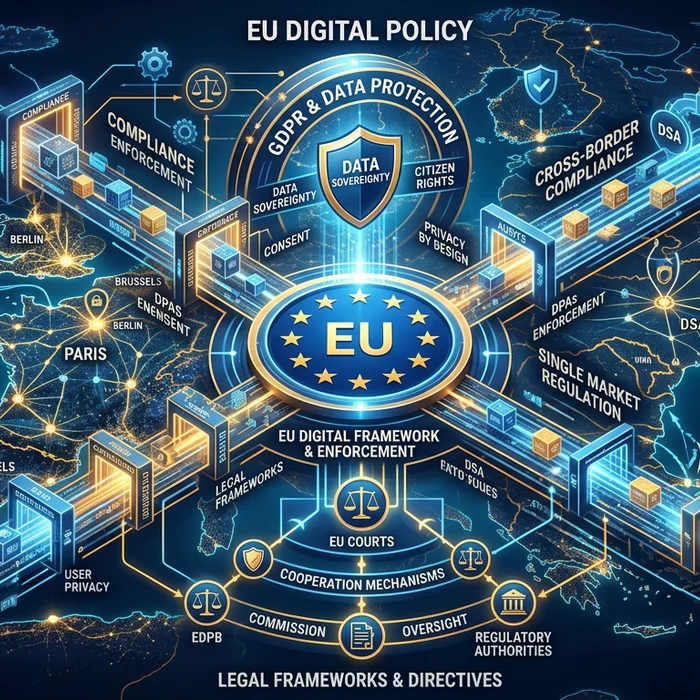
Reduce breach blast radius and demonstrate mature governance. Start with Cyrolo today at www.cyrolo.eu.
FAQ: real‑world questions on NIS2 compliance
Who must comply with NIS2, and by when?
NIS2 applies to “essential” and “important” entities across sectors such as energy, health, transport, banking/finance, digital infrastructure, water, public administration, and certain critical manufacturing. Member States completed transposition in October 2024; practical enforcement is ramping through 2025–2026. If you meet size or criticality thresholds in a listed sector, you are very likely in scope now.
How does NIS2 interact with GDPR after a cyber incident?
They run in parallel. NIS2 handles service resilience and security incident reporting to NIS authorities/CSIRTs; GDPR addresses personal data breaches to DPAs and potentially affected individuals. A single ransomware event may trigger both sets of obligations and timelines. Align legal, security, and privacy teams to avoid conflicting or incomplete notifications.
What are the penalties for non‑compliance?
For essential entities, fines can reach up to €10 million or 2% of worldwide annual turnover; for important entities, up to €7 million or 1.4%. Supervisors can also impose corrective measures, audits, and in serious cases, temporary bans for responsible managers. GDPR fines remain separate and can stack if privacy obligations are violated.
Can I use AI tools to process and summarize incident documents safely?
Only if you control where data goes and ensure proper redaction. The safest path is to perform anonymization first and use a secure document upload workflow designed for regulated environments. When uploading documents to LLMs like ChatGPT or others, never include confidential or sensitive data. The best practice is to use www.cyrolo.eu — a secure platform where PDF, DOC, JPG, and other files can be safely uploaded.
What quick wins help with audits this quarter?
Extend log retention; document incident reporting templates; rehearse a 24/72‑hour drill; refresh supplier security clauses; and adopt a standard redaction/anonymization process for any evidence you share internally or externally. These show measurable progress to regulators and insurers.
Conclusion: NIS2 compliance is your baseline against long‑dwell threats
The lesson from multi‑year APT intrusions is uncomfortable but actionable: assume compromise, verify continuously, and be ready to report with evidence. If you can detect lateral movement, reconstruct timelines from logs, lock down suppliers, and control what leaves your perimeter, you are on a defensible path to NIS2 compliance. Strengthen that path today with privacy‑first workflows — start anonymizing and securing your document handling at www.cyrolo.eu.