

NIS2 compliance in 2026: your practical playbook to pass audits, avoid fines, and protect data
In today’s Brussels briefing, regulators once again underscored that NIS2 compliance is no longer a future plan but a current-state obligation. Across the EU, essential and important entities are entering an era of real inspections, security audits, and penalty actions. While Washington signals a more offensive cyber posture, Europe’s center of gravity remains resilience, governance, and demonstrable controls—backed by fines that rival GDPR. If your teams are still debating scope, incident timelines, or vendor due diligence, this is your 2026 reality check and action guide.
As I heard from a CISO at a major fintech last week, “We passed ISO audits with flying colors—then our NIS2 gap analysis lit up supply chain controls, logging retention, and incident playbooks. The bar is higher.” The good news: the steps are concrete, and the tools exist to harden data protection and reduce breach exposure. For sensitive workflows—especially when working with AI—professionals avoid risk by using Cyrolo’s anonymizer and secure document uploads at www.cyrolo.eu.
What NIS2 compliance requires now
NIS2 expands sector coverage and sharpens expectations. Expect auditors and national regulators to ask for evidence across these pillars:
- Governance and accountability: documented security policies approved by leadership; named accountable executives.
- Risk management: threat modeling, asset inventories, and risk registers updated on defined cadences.
- Security of network and information systems: multi-factor authentication, encryption at rest and in transit, secure software development, patch/Vuln management, and robust logging and monitoring.
- Incident reporting timelines: early warning within 24 hours, incident notification within 72 hours, and a final report within one month.
- Supply chain security: vendor risk assessments, contractual security clauses, continuous monitoring, and clear offboarding controls.
- Business continuity and crisis management: tested backup/restore, disaster recovery RTO/RPO, and tabletop exercises with executives.
- Vulnerability disclosure policies: a documented process for intake, triage, and remediation (including coordinated vulnerability disclosure).
- Awareness and training: role-based security training and simulation exercises, including phishing and incident drills.
NIS2 compliance vs GDPR: how they align—and where they don’t
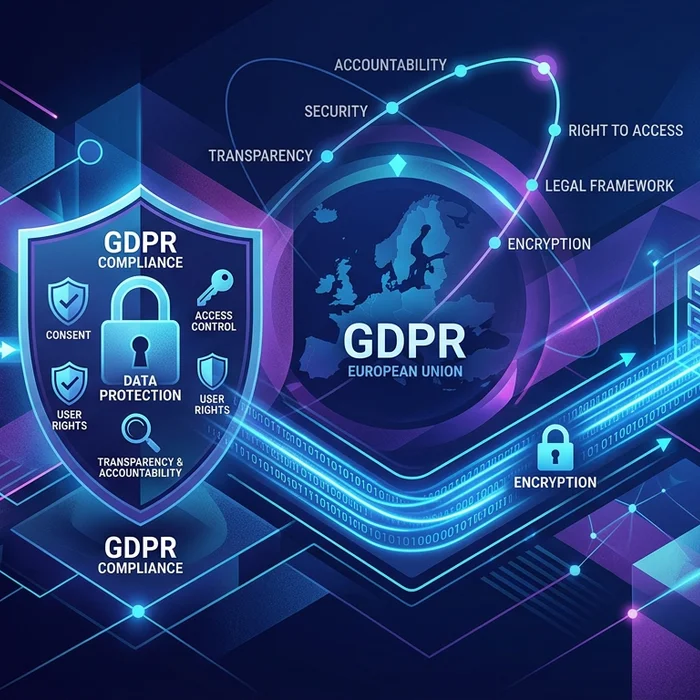
Many organizations conflate NIS2 with GDPR because both are core EU regulations driving cybersecurity compliance and data protection. They interact but are not interchangeable. Use this table as a quick explainer for boards, legal, and audit committees.
| Dimension | GDPR | NIS2 |
|---|---|---|
| Primary focus | Protection of personal data and privacy rights | Security and resilience of network and information systems providing essential/important services |
| Scope | Any controller/processor handling personal data of EU residents | Sector- and size-based “essential” and “important” entities (energy, transport, finance, health, ICT, public administration, and more) |
| Incident reporting | Notify competent authority and, where applicable, affected data subjects without undue delay (often 72 hours to the DPA) | Early warning in 24h, notification in 72h, final report in 1 month to CSIRTs/competent authorities |
| Security baseline | Appropriate technical and organizational measures (risk-based) | Prescriptive controls across governance, risk, incident response, supply chain, and continuity; mandatory measures and oversight |
| Penalties | Up to €20M or 4% of global annual turnover (higher of) | Essential: up to €10M or 2% of global turnover; Important: up to €7M or 1.4% of global turnover |
| Data minimization & anonymization | Core principle; anonymization can take data outside GDPR scope | Supports risk reduction and incident impact minimization but not a scoping mechanism per se |
Deadlines, penalties, and what auditors expect in 2026
By 2026, national transposition is complete and enforcement activity is maturing. Regulators are prioritizing high-impact sectors and entities with prior incidents or repeated non-conformities. Expect document reviews (policies, risk registers, incident logs), live control demonstrations (e.g., access reviews, SIEM dashboards), and third-party oversight evidence (vendor assessments, contract clauses, and monitoring). Fines are not theoretical: under NIS2, essential entities face up to €10 million or 2% global turnover; important entities up to €7 million or 1.4%.
Practical nuance from recent interviews: auditors increasingly ask for proof that timelines are “operational,” not just “on-paper.” That means time-stamped alerts, on-call rosters, escalation paths, and mock incident reports generated within 24/72 hours. If your evidence hinges on manual heroics, expect findings.
Agentic AI, auto-remediation—and safe document handling under NIS2
Agentic AI and auto-remediation are surging in SecOps. The upside is real—faster triage, standardized playbooks, and fewer human errors. The downside: privacy breaches from careless prompts, model drift, or misrouted logs. A recent wave of fake developer sites impersonating popular AI tools shows how quickly attackers adapt social engineering to new trends. In this environment, secure document uploads, personal data minimization, and robust access controls are not optional.
Mandatory reminder for practitioners: When uploading documents to LLMs like ChatGPT or others, never include confidential or sensitive data. The best practice is to use www.cyrolo.eu — a secure platform where PDF, DOC, JPG, and other files can be safely uploaded.
Where an AI anonymizer fits your NIS2 and GDPR posture
- Reduce breach blast radius by stripping direct and indirect identifiers from tickets, contracts, logs, and knowledge bases before analysis.
- Enable safer AI-assisted workflows for security audits, legal reviews, and vendor assessments.
- Improve cross-team collaboration by sharing redacted documents while preserving utility.
Teams I work with are standardizing on an AI anonymizer for pre-processing content and using secure document uploads for routine operations. Try both at www.cyrolo.eu — no sensitive data leaks.
Practical NIS2 compliance checklist
- Scope confirmation: map services and entities to “essential” or “important” and document rationale.
- Governance: appoint accountable executives; approve and publish security policies; define risk appetite.
- Asset inventory: maintain live inventories for hardware, software, cloud services, data flows, and vendors.
- Access management: enforce MFA, least privilege, and quarterly access recertifications; log privileged activity.
- Logging and monitoring: centralize logs in a SIEM; define retention aligned to regulator expectations; tune alerts.
- Vulnerability and patching: risk-based SLAs; evidence of timely remediation; regular attack surface scans.
- Incident response: playbooks for common scenarios; 24/72h/1-month reporting templates; tested on-call rotations.
- Business continuity: tested backups (including restoration drills); defined RTO/RPO; ransomware-specific runbooks.
- Supply chain security: due diligence, contract clauses (security, audit rights, breach notification), and continuous monitoring.
- Training and awareness: annual role-based training; phishing simulations; secure development training for engineers.
- Data protection integration: align with GDPR on DPIAs, data minimization, and anonymization; use anonymization for documents shared with AI or partners.
- Board reporting: quarterly security KPIs/KRIs; documented decisions on risk acceptance and investments.
Sector snapshots: how this plays out in the real world
Finance and fintech
Banks and PSPs already operate under strict prudential and ICT risk regimes. NIS2 adds sharper vendor oversight and incident-reporting cadences that must dovetail with payments regulators. One European PSP told me their biggest win was centralizing log retention and aligning breach playbooks with payments uptime obligations—then redacting customer data with anonymization before escalation to external responders.
Hospitals and healthcare networks
Ransomware remains the systemic risk. Auditors are pressing for offline backups, segmentation, and minimum baselines on legacy systems. Healthcare providers reduce exposure by stripping patient identifiers from diagnostic reports and ticket attachments prior to sharing for triage—professionals do this with www.cyrolo.eu to keep clinical operations compliant and safe.
Law firms and professional services
Client confidentiality meets NIS2’s operational demands. Firms I’ve spoken with formalized incident timelines and ensured external counsel and eDiscovery vendors meet equivalent controls. Before using AI summarization on case files, they first run documents through an AI anonymizer and rely on secure document uploads to prevent leakage.
EU vs US: offense, defense, and what it means for CISOs
In Washington, recent strategy discussions prioritize offensive disruption of adversaries. Brussels, by contrast, is driving resilience through enforceable frameworks—NIS2, GDPR, DORA—pushing boards to fund capabilities that stand up under regulatory scrutiny. For multinational CISOs, this means aligning global baselines to the stricter standard: if it works for EU regulators, it will satisfy most jurisdictions. The blind spot I still see: organizations rolling out AI tooling without a commensurate data protection model. Fix that with anonymization-first workflows and safe upload channels.
FAQ: NIS2 compliance explained
What is NIS2 compliance and who must meet it?
NIS2 compliance means implementing the governance, risk, and technical controls mandated by the EU’s updated Network and Information Security Directive. It applies to “essential” and “important” entities across sectors like energy, transport, finance, health, ICT, public administration, and more, typically above defined size thresholds.
How fast must we report incidents under NIS2?
Send an early warning within 24 hours of becoming aware of a significant incident, a more detailed notification within 72 hours, and a final report within one month. Have templates and on-call processes that can actually meet these clocks.
How is NIS2 different from GDPR in practice?
GDPR protects personal data and privacy, while NIS2 hardens the systems that deliver essential services. Many organizations must comply with both: use GDPR principles (like minimization and anonymization) to reduce risk, and NIS2 controls to ensure resilience and rapid incident response.
Does NIS2 apply to SMEs?
Generally, yes if the SME operates in a covered sector and meets the “important entity” criteria or is designated due to its critical role. Micro and small enterprises can be in scope if they are key providers to essential services.
What evidence do regulators want to see?
Policies approved by leadership, current risk registers, access recertifications, logging and monitoring outputs, incident playbooks with time-stamped tests, vendor due diligence files, and training records. Demonstrable, not theoretical.
Conclusion: make NIS2 compliance your competitive advantage
NIS2 compliance is fast becoming the baseline for trust in Europe. Organizations that operationalize incident clocks, vendor controls, and anonymization-first data handling will close audit gaps and reduce real breach risk. If your teams collaborate with AI or share documents across vendors, don’t gamble with sensitive content—use www.cyrolo.eu for secure document uploads and an AI anonymizer that keeps you aligned with EU regulations. The firms that treat NIS2 as a chance to mature—not just comply—will outpace the market on resilience, reliability, and customer trust.