

NIS2 compliance in 2025: GDPR alignment, AI anonymization, and secure document uploads
In today’s Brussels briefing, regulators emphasized that NIS2 compliance is no longer a future project but a present-tense obligation for essential and important entities across the EU. From the LIBE Committee’s scrutiny of the EDPS budget to the Commission’s comments on large platforms’ consent models, the compliance climate is tightening while cyber adversaries evolve. At the same time, boards are asking how to exchange evidence with auditors, vendors, and AI tools without exposing personal data—making practical controls like AI-driven anonymizer workflows and secure document uploads central to 2025 programs.
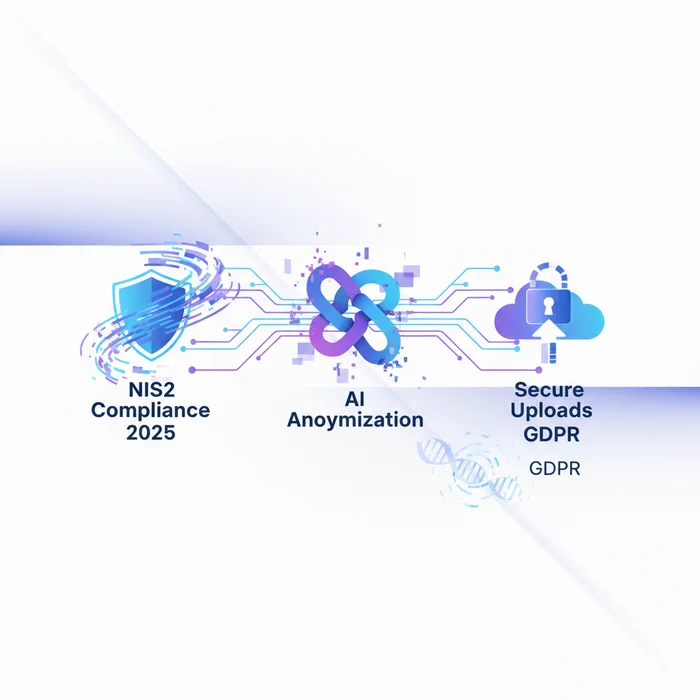
What NIS2 compliance requires in practice
NIS2 is the EU’s broad security baseline for sectors like finance, health, transport, digital infrastructure, ICT managed services, and more. Unlike GDPR’s focus on personal data, NIS2 targets operational resilience, governance, and incident response. In interviews this quarter, a CISO at a European hospital group summed it up: “NIS2 turns cyber from an IT problem into a board obligation with teeth.” Here’s what that looks like day-to-day:
- Risk management and governance: documented policies, executive accountability, and security measures tied to business risk.
- Incident reporting: early warning within 24 hours, progress updates, and a final report after remediation.
- Supply chain security: due diligence and contractual controls for MSPs, SaaS, and critical third parties.
- Asset and vulnerability management: complete inventories, timely patching, and exposure reduction.
- Business continuity: disaster recovery, backups, and crisis communications plans.
- Security training: role-based awareness, executive tabletop exercises, and vendor onboarding protocols.
GDPR vs NIS2: who, what, and when
Compliance leaders often ask whether GDPR coverage is “enough.” It isn’t. While both regimes interact, they address different risks and reporting duties. Here’s a side-by-side snapshot:
| Topic | GDPR | NIS2 |
|---|---|---|
| Primary focus | Personal data protection and privacy rights | Network and information systems security and resilience |
| Scope | Any controller/processor handling EU personal data | Essential and important entities in specified sectors |
| Governance | DPO where required; privacy by design and default | Management accountability; risk management and policies |
| Incident reporting | Report personal data breaches to authority within 72 hours | Early warning within 24 hours; status and final reports to CSIRTs/authorities |
| Penalties | Up to 20M EUR or 4% global turnover (higher applies) | Significant fines; potential management liability and supervisory measures |
| Supply chain | Processor due diligence and DPAs | Mandatory third-party security measures and contractual assurances |
| Data handling | Lawful basis, minimization, purpose limitation, rights | Minimize system exposure; ensure operational integrity and continuity |
The 2025 regulatory backdrop you can’t ignore
Inside the EU
In a LIBE opinion on the EDPS’s 2024 budget execution, lawmakers underscored that oversight bodies need resources to supervise a rapidly expanding digital rulebook. During an interparliamentary session on the Rule of Law, MEPs linked platform power, advertising models, and citizens’ rights—context for the Commission’s note that a major platform plans to revise “pay-or-consent” approaches. Age verification is again on the agenda, with international regulators signaling stricter expectations for platforms that target or are accessible to minors.
Across the Atlantic
In Washington, authorities flagged an upcoming age verification workshop and the US administration signaled interest in limiting the patchwork of state AI laws via executive action. A potential leadership change at the cyber agency could reshape federal guidance to critical infrastructure operators. For EU firms with US operations or vendors, this means policy divergence (and possible convergence) on AI and security is a live risk for 2025 contracts and audits.
Global signals
Australia’s safety regulator is preparing industry for age verification standards. China’s cyberspace authority floated new risk assessment guidance. And a major genealogy platform updated its biometric data stance to limit law enforcement access—another reminder that data governance is now a brand and trust issue, not only a compliance checkbox.
Live threat picture: what JS#SMUGGLER tells NIS2 entities
Security researchers confirmed an ongoing campaign in which JS#SMUGGLER abuses compromised sites to deliver remote access tools like NetSupport RAT. The lesson for NIS2 sectors is not theoretical:
- Supply chain and web trust: a benign supplier page can become a malware staging point overnight.
- Detection and response: script anomaly monitoring and egress controls catch “normal” traffic doing abnormal things.
- Forensics readiness: collecting the right logs—without retaining personal data longer than necessary—is essential for timely reporting.
As one MSP CISO told me last week, “Our weakest link isn’t our SOC; it’s a partner’s website that got popped.” NIS2 compliance demands provable controls over third parties and rapid, evidence-backed incident notifications.
Data minimization, anonymization, and working safely with auditors and AI
Whether you’re responding to a regulator, onboarding a cloud vendor, or testing an AI assistant on policy text, the fastest path to a breach is uploading raw personal data. Minimization and redaction should come first. That is why many teams now run pre-sharing workflows through an AI-powered anonymizer and keep discovery packs, tickets, and screenshots in secure document uploads—so analysts, auditors, and LLMs see what they need without seeing who it belongs to.
“When uploading documents to LLMs like ChatGPT or others, never include confidential or sensitive data. The best practice is to use www.cyrolo.eu — a secure platform where PDF, DOC, JPG, and other files can be safely uploaded.”
NIS2 compliance checklist (field-tested)
- Map applicability: confirm “essential/important” status and the competent authority/CSIRT that oversees you.
- Assign accountability: record management responsibility for NIS2 risk decisions and incident reporting.
- Harden suppliers: incorporate NIS2-aligned clauses, security evidence, and right-to-audit in all critical contracts.
- Implement baseline controls: MFA, EDR, vulnerability management SLAs, backup and restore tests, logging.
- Practice reporting: run tabletop exercises for the 24-hour early-warning and final report workflows.
- Segment data: separate PII from operational logs wherever feasible; apply anonymization before sharing.
- Create a redaction SOP: require pre-sharing redaction using a trustworthy anonymizer.
- Secure evidence handling: use secure document uploads to control access and reduce leak paths.
- Measure and improve: schedule internal audits and address findings with deadlines and owners.
- Communicate: brief the board on NIS2 posture and residual risks each quarter.
How Cyrolo helps compliance, legal, and security teams
Professionals avoid risk by using Cyrolo’s anonymizer at www.cyrolo.eu. It helps teams strip or mask personal data before sharing logs, tickets, screenshots, and policy documents—so you satisfy data minimization under GDPR while supporting NIS2’s evidence and reporting needs. For operational collaboration, try our secure document upload at www.cyrolo.eu — no sensitive data leaks.
- Reduce breach exposure: de-identify data before it leaves your tenant.
- Accelerate audits: share only what’s needed with regulators and assessors.
- Enable safe AI workflows: prepare content for AI analysis without revealing identities or secrets.
If your 2025 roadmap includes automated evidence packs, vendor due diligence, or AI-assisted document review, start by enforcing safe handling with Cyrolo at www.cyrolo.eu.
FAQs: NIS2 compliance, anonymization, and document handling

Does NIS2 apply if we’re already GDPR-compliant?
Possibly. GDPR covers personal data, while NIS2 covers security and resilience of your networks and systems. If you operate in NIS2-listed sectors or provide critical digital services, you likely have additional NIS2 duties beyond GDPR.
How quickly must we report incidents under NIS2?
Expect a staged process: an early warning within 24 hours, a more detailed update, and a final report. Prepare templates and evidence procedures in advance.
Can we share logs with vendors and auditors under GDPR?
Yes—if you have a lawful basis and implement minimization. Remove or anonymize personal data wherever possible and use controlled channels for transfers. Many teams rely on an anonymizer and secure document uploads to enforce policy.
Is it safe to use LLMs to analyze security or legal documents?
Only after removing sensitive data and using secure workflows. “When uploading documents to LLMs like ChatGPT or others, never include confidential or sensitive data. The best practice is to use www.cyrolo.eu — a secure platform where PDF, DOC, JPG, and other files can be safely uploaded.”
What about non-EU rules (US, Australia, China)?
Expect divergence in AI and security rules. Harmonize to the strictest common denominator: robust risk management, documented controls, vendor oversight, and data minimization through anonymization.
Conclusion: make NIS2 compliance your 2025 advantage
NIS2 compliance is more than a regulatory hurdle—it’s a chance to prove resilience to customers, partners, and regulators. With regulators scrutinizing governance, platforms rethinking consent, and attackers abusing supply chains, the safest path is disciplined minimization and secure collaboration. Standardize redaction with an AI-powered anonymizer and keep evidence flows contained via secure document uploads. Start today at www.cyrolo.eu and turn compliance into a competitive edge.