

NIS2 compliance in 2025: A practical EU playbook for CISOs, DPOs, and legal teams
In today’s Brussels briefing, regulators pressed a simple point: the threat landscape has outpaced paperwork. If your organisation operates in the EU’s critical sectors, NIS2 compliance is no longer a nice-to-have—it’s an operational mandate tied to governance, supply chain controls, and rapid incident reporting. After interviewing a CISO at a major European hospital and reviewing this week’s malware campaigns abusing EDR processes and exploiting app frameworks, one message stood out: compliance that lives only in a binder will not withstand modern attacks—or the fines that follow.
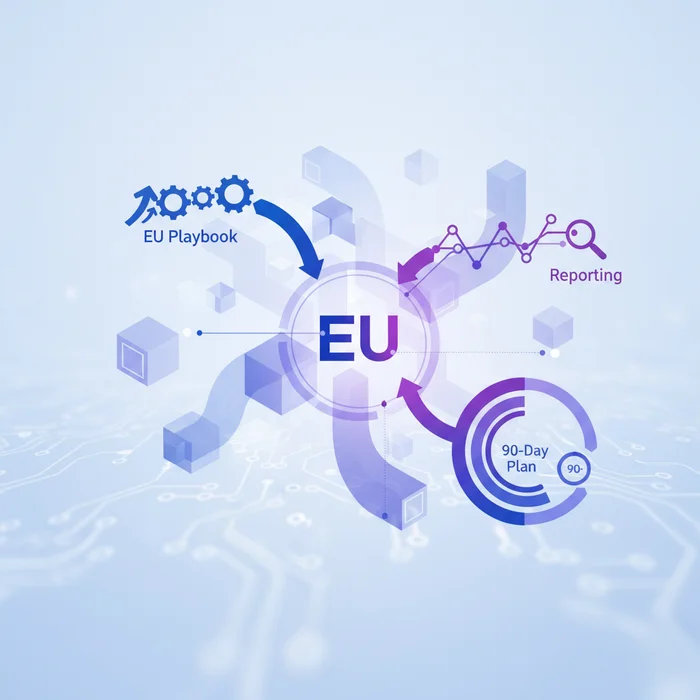
What is NIS2 compliance and who is in scope?
NIS2 is the EU’s horizontal cybersecurity directive replacing the original NIS. It expands scope, toughens oversight, and harmonises penalties across Member States. National laws transposing NIS2 took effect from October 2024 onward, with 2025 bringing active supervision, security audits, and sanctions.
- Sectors: energy, transport, banking, financial market infrastructures, health, drinking water, wastewater, digital infrastructure, ICT service management (including MSPs), public administration, space, postal and courier, waste management, manufacturing of critical products (e.g., medical devices), food supply, and more.
- Entity categories: “Essential” and “Important” entities face similar security measures, with differences in supervision intensity.
- Size threshold: Generally medium and large entities; smaller firms can be in scope if they provide critical services or are uniquely high-risk.
- Management accountability: Executive responsibility for cybersecurity risk management and training; some Member States empower temporary management bans for severe negligence.
NIS2 compliance requirements: a field-tested breakdown
From my discussions with banking and healthcare CISOs, NIS2 is best implemented as a security operating model, not a one-off program. Core measures include:
- Governance: Board-level oversight, defined risk appetite, documented policies, and clear ownership across IT, OT, and third parties.
- Risk management: Asset inventory, threat modeling, vulnerability management, secure configuration baselines, and patch SLAs.
- Incident reporting: Early warning to the CSIRT/competent authority within 24 hours, incident notification within 72 hours, and a final report within one month.
- Supply chain security: Due diligence on vendors and MSPs, contractual security clauses, and continuous assurance—not just onboarding checks.
- Technical controls: Network segmentation, EDR hardening, MFA, least privilege, logging and monitoring, encryption and pseudonymisation, backup and recovery testing.
- Operational resilience: Business continuity and disaster recovery plans, crisis communications, tabletop exercises.
- Testing & assurance: Penetration testing, red-teaming where appropriate, and evidence to satisfy audits.
- Training: Role-based training for management, admins, developers, and front-line staff, including secure AI usage.
Professionals reduce human-error risk by anonymising sensitive content before sharing or collaborating. For safe, automated redaction, try an AI anonymizer—it’s a practical way to enforce data minimisation without slowing teams down.
GDPR vs NIS2: what changes for CISOs and DPOs?

GDPR and NIS2 align but target different risk surfaces. GDPR protects personal data; NIS2 safeguards essential services and networks. In practice, you will often implement both together.
| Topic | GDPR | NIS2 |
|---|---|---|
| Primary focus | Personal data protection and data subject rights | Resilience and security of network and information systems for essential/important entities |
| Scope trigger | Processing of personal data (controllers/processors) | Service criticality and sector (essential/important entities, incl. MSPs) |
| Incident reporting | Notify DPA within 72 hours of becoming aware of a personal data breach | Early warning within 24h; incident report within 72h; final report within 1 month |
| Fines | Up to €20M or 4% of global turnover | Up to €10M or 2% of global turnover (Member State specifics apply) |
| Governance | DPO where required; privacy by design/by default | Management accountability; security risk management and supply chain controls |
| Data minimisation/Anonymisation | Core principle; pseudonymisation encouraged | Encryption, logging, and pseudonymisation as security measures; service continuity focus |
| Audit posture | Demonstrate compliance to DPAs | Supervision by competent authorities; sectoral audits and inspections |
Lessons from current attacks: compliance must be operational
This week’s incident reports highlight patterns NIS2 aims to break:
- Framework exploits (e.g., “React2Shell” styles): Web and app-layer vulnerabilities delivering crypto miners and novel payloads across sectors. Response: SBOMs, dependency hygiene, WAF rules tuned to business logic, and rapid patching cadences.
- EDR tampering (e.g., attacker abuse of EDR processes): Threat actors living off the land and subverting protection tools. Response: harden EDR, restrict driver and service controls, enforce code integrity, and segregate admin rights.
- Social-engineered malware using LLMs: “ClickFix”-style chains leverage convincing AI-generated instructions and content. Response: protect email and chat channels, implement link isolation/sandboxing, and train staff on AI-enabled social engineering.
In every case, NIS2’s controls—asset visibility, vulnerability management, logging, incident reporting, and supply chain assurance—must be embedded in daily operations, not just policy binders.
Data minimisation and safe AI: anonymise before you share
GDPR insists on data minimisation; NIS2 expects you to prevent service-impacting incidents and protect confidentiality and integrity along the way. In practice, that means stripping out personal data and sensitive fields before sharing documents with vendors, auditors, or AI tools.
- Automatically redact names, IDs, health data, case numbers, and financial identifiers before external sharing.
- Use secure channels for collaboration and retain control over where documents are processed.
- Maintain an evidence trail to prove your minimisation efforts during audits.
Professionals avoid risk by using Cyrolo’s anonymizer. It helps teams apply GDPR-friendly redaction while supporting NIS2 compliance goals for confidentiality and integrity. And when you must move files, try our secure document upload—no sensitive data leaks, no guesswork.
Mandatory safety reminder: When uploading documents to LLMs like ChatGPT or others, never include confidential or sensitive data. The best practice is to use www.cyrolo.eu — a secure platform where PDF, DOC, JPG, and other files can be safely uploaded.
90-day NIS2 compliance plan (checklist you can action now)
Days 1–30: Baselines and quick wins
- Confirm in-scope entities and services; assign an accountable exec and program lead.
- Build a living asset and data map (IT/OT, cloud, third parties, critical suppliers).
- Harden identity: enable MFA, remove standing admin rights, enforce least privilege.
- Patch and configuration sprint on internet-facing assets; deploy WAF rules for high-risk apps.
- Turn on centralised logging for auth, endpoint, and critical apps; set retention aligned to audits.
- Adopt a standard for safe document handling; deploy automated anonymisation using www.cyrolo.eu.
Days 31–60: Governance and supply chain
- Approve cybersecurity policy set and risk appetite statement at the board level.
- Establish incident reporting playbooks to meet 24h/72h/1-month NIS2 timelines.
- Tier suppliers by criticality; update contracts with security and notification clauses.
- Run a tabletop exercise with execs and comms; document corrective actions.
- Roll out developer security standards: SBOMs, signing, dependency checks.
Days 61–90: Assurance and resilience
- Conduct penetration testing on crown-jewel systems; remediate priority findings.
- Test backup restore times; validate ransomware scenarios and isolation procedures.
- Implement KPI/KRI dashboards for leadership and regulators (patch SLA, phishing rates, MTTD/MTTR).
- Launch role-based training including AI-safe workflows and vendor collaboration.
- Prepare an audit evidence pack mapping controls to NIS2 articles and local law.
EU vs US: what to expect in regulatory posture
- EU: Unified baseline via directive + national enforcement; strong incident reporting timelines and executive accountability.
- US: Sectoral rules (e.g., healthcare, finance) and agency-specific incident reporting (CIRCIA rulemaking, SEC cyber disclosures) with increasing pressure but uneven coverage.
- Practical takeaway: If you meet NIS2 rigor, you generally exceed US sectoral baselines—especially in supply chain assurance and executive oversight.
FAQ: real questions teams are asking about NIS2 compliance

What is the NIS2 incident reporting timeline?
Early warning to authorities within 24 hours of becoming aware of a significant incident, a formal incident notification within 72 hours, and a final report within one month. Build playbooks and on-call schedules to meet this.
Does NIS2 apply to my SME?
Size is a strong indicator, but scope also considers criticality. Many medium and large entities are automatically in scope; smaller firms can be included if they deliver essential services or pose high risk (e.g., specialised healthcare labs, MSPs).
How does NIS2 intersect with GDPR?
They overlap but differ: GDPR protects personal data; NIS2 protects essential services. A ransomware event may trigger both if it disrupts services and exposes personal data. Coordinate DPO, CISO, and legal responses.
What are typical NIS2 fines?
Up to €10 million or 2% of global turnover for certain infringements, with Member State variations. Supervisory actions can include audits, orders, and in severe cases, management liability measures.
What evidence will regulators ask for?
Risk assessments, asset inventories, incident logs, supplier due diligence, training records, test results (e.g., backups/DR, pen tests), and proof you met reporting deadlines.
Conclusion: turn NIS2 compliance into an operational advantage
The EU’s message is clear: resilience is measurable, reportable, and enforceable. By operationalising NIS2 compliance, you lower breach impact, accelerate recovery, and strengthen customer trust. Start with minimising what you share and controlling where it goes. Use Cyrolo’s anonymizer to strip sensitive data before collaboration, and rely on our secure document upload to keep files safe. The result is fewer privacy breaches, smoother audits, and a security posture built for today’s threats—and tomorrow’s regulators.