

LLM Data Leakage: The 2026 EU Compliance Playbook for Security, GDPR, and NIS2
In today’s Brussels briefing, one theme dominated: LLM data leakage. With browser extensions caught siphoning ChatGPT and DeepSeek chats from hundreds of thousands of users and newsroom demands to access millions of historic AI interaction logs, EU regulators are sharpening their focus on how organizations control personal data flowing through AI tools. If your teams paste customer files into chatbots, or upload internal memos for “quick summaries,” you’re carrying GDPR and NIS2 exposure—plus headline risk. This guide translates the latest EU expectations into an actionable plan and shows how secure AI anonymization and secure document uploads can prevent avoidable breaches and fines.

What does “LLM data leakage” actually mean under EU law?
From a regulator’s lens, LLM data leakage isn’t just a single breach event—it’s a continuum of risks where personal data, trade secrets, or confidential records escape intended boundaries when interacting with AI models and their surrounding ecosystem.
- Prompt ingestion: Employees paste personal data (names, medical notes, IBANs) into public chatbots without a lawful basis or purpose limitation.
- Silent exfiltration: Browser extensions capture and exfiltrate conversations and uploaded files without users realizing.
- Vendor logging: LLM providers may store prompts, outputs, or files for quality, security, or training unless properly disabled and contractually constrained.
- Cross-context spill: Outputs can inadvertently contain memorized data or be re-shared to unintended parties or tools.
- Infrastructure weak points: Unpatched devices, phishing, or “tech support” scams lead to stolen sessions or files used with AI tools.
Under GDPR, much of this revolves around data protection principles (lawfulness, fairness, transparency, purpose limitation, data minimization, integrity/confidentiality) and accountability (documentation, DPIAs, vendor controls). NIS2 brings a parallel security program expectation—risk management, incident reporting, governance, and supply chain controls—especially for essential and important entities operating in sectors like finance, health, energy, and digital infrastructure.
Recent incidents and the compliance lessons
Here’s what European CISOs and DPOs are telling me this week:
- Two popular browser extensions were exposed harvesting AI chats from roughly 900,000 users. Even if your policies ban risky plugins, ad-hoc installs are common. Regulators will ask: did you enforce your extension policy and isolate AI sessions?
- News organizations obtained access to a trove of millions of chatbot logs through legal processes, proving that AI conversations may not be as ephemeral as many assume. If logs exist, GDPR obligations exist—lawful basis, retention limits, and rights of access, deletion, and restriction.
- Phishing and scareware campaigns continue to pivot—recent “fake blue screen of death” lures trick users into handing over remote access, which can expose cached AI sessions or downloaded outputs.
- Unpatched firmware in home or branch devices leaves a backdoor. If an employee uploads client files to an LLM over a compromised network, you risk confidentiality and integrity breaches outside your enterprise perimeter.
The common thread: EU authorities won’t accept “shadow AI” as an excuse. Whether the data left via a rogue extension, a vendor log, or a hijacked session, accountability remains with the controller and (under NIS2) with the entity’s leadership.
Compliance reminder: When uploading documents to LLMs like ChatGPT or others, never include confidential or sensitive data. The best practice is to use www.cyrolo.eu — a secure platform where PDF, DOC, JPG, and other files can be safely uploaded.
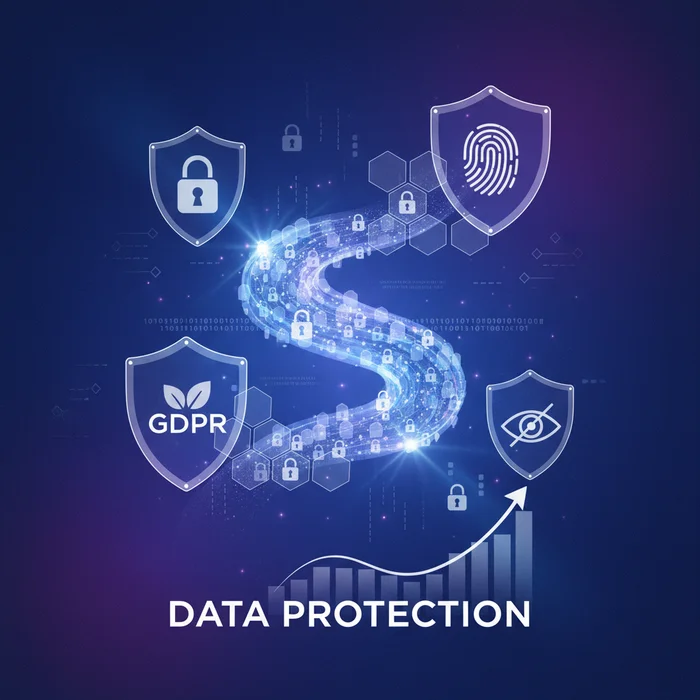
LLM data leakage and EU obligations: GDPR vs NIS2 at a glance
| Topic | GDPR (General Data Protection Regulation) | NIS2 (Directive (EU) 2022/2555) |
|---|---|---|
| Scope | Personal data processing by controllers/processors | Cybersecurity risk management for essential/important entities |
| Lawful basis & transparency | Required for prompts/uploads with personal data; inform data subjects; maintain RoPA | Not applicable to lawful basis; focuses on security governance and risk reduction |
| Data minimization & anonymization | Use anonymization or pseudonymization; avoid unnecessary personal data in prompts | Implement technical and organizational measures to reduce exposure |
| Vendor & logging controls | Art. 28 contracts, DPA reviews, EU/EEA transfers, retention limits, disable training/logging where possible | Supply-chain security; due diligence on LLM and plugin vendors; continuity planning |
| Security controls | Integrity/confidentiality (Art. 5(1)(f)); encryption, access control, DLP | Risk-based controls; patching, monitoring, incident response, management oversight |
| Incident reporting | Notify DPA within 72 hours of a personal data breach (where required) | Report “significant incidents” without undue delay (often within 24 hours initial, per national transposition) |
| Penalties | Up to €20M or 4% of global turnover | Administrative fines and supervisory measures; leadership accountability |
Your 90‑day action plan to reduce LLM data leakage
1) Set policy and governance
- Define approved AI tools, disallowed plugins, and sanctioned use cases (customer service summaries, code assistance, etc.).
- Mandate anonymization for any prompts involving personal data or confidential information.
- Run a DPIA for material AI use cases; register data flows in your Records of Processing Activities.
2) Lock down the endpoints and browser surface
- Enforce an allowlist for extensions; block unknown or high-risk add-ons.
- Isolate AI usage in managed profiles; disable third‑party cookies where feasible; clear session storage on close.
- Deploy anti-phishing training focused on “tech support” scams and fake update/BSOD lures.
3) Contract and configure your AI vendors
- Ensure data processing agreements prevent training on your data and restrict logging/retention.
- Prefer EU/EEA processing and storage; document transfer mechanisms if data leaves the EEA.
- Enable enterprise controls: SSO, role-based access, audit logs, data residency options.
4) Minimize what you upload and automate redaction
- Adopt an AI anonymizer that reliably strips personal identifiers, financial numbers, and sensitive attributes before prompts.
- Use a secure document upload pipeline that keeps files encrypted, scanned, and access‑controlled.
- Template your prompts so staff never copy raw records (e.g., customer support tickets, medical notes) into public LLMs.
5) Prove it: monitoring, audits, and incident response
- Log AI tool access, uploaded file hashes, and anonymization events; keep evidence for audits.
- Set DLP rules to detect obvious personal data (names, IDs, IBANs) in outbound prompts.
- Drill breach response: 24–72 hour reporting windows, regulator contact points, and customer comms.
Compliance checklist: ready for your next audit
- Policy: Written AI acceptable-use policy with extension allowlist and LLM scope.
- DPIA: Completed and approved for core AI use cases; risks and mitigations documented.
- Vendor: Signed Art. 28 DPAs with logging/training disabled by default; EU processing confirmed.
- Security: Encryption at rest and in transit; RBAC; SSO; session isolation; patching SLAs.
- Anonymization: Automated redaction before prompts; QA sampling to validate effectiveness.
- Storage: Retention limits; deletion schedules for AI conversation logs and uploaded files.
- DLP/Monitoring: Rules catching personal data; alerts on anomalous activity and mass uploads.
- Incident: Runbooks for GDPR and NIS2 timelines; regulator templates; forensic playbook.
- Training: Staff trained quarterly on AI do’s/don’ts, phishing, and extension hygiene.
- Evidence: Audit trail of decisions, tests, and periodic reviews for board and regulators.
What EU regulators are signaling for 2026
Conversations in Brussels suggest three priorities:
- Evidence over promises: Policies without logs, screenshots, and contractual clauses won’t satisfy auditors. Show, don’t tell.
- Leadership accountability: NIS2 expects board-level oversight. A CISO I interviewed warned that “shadow AI” narratives are landing poorly—boards need dashboards, not surprises.
- Practical anonymization: DPAs acknowledge business needs to use LLMs; what they want to see is robust minimization, effective anonymization, and vendor configurations that default to privacy.
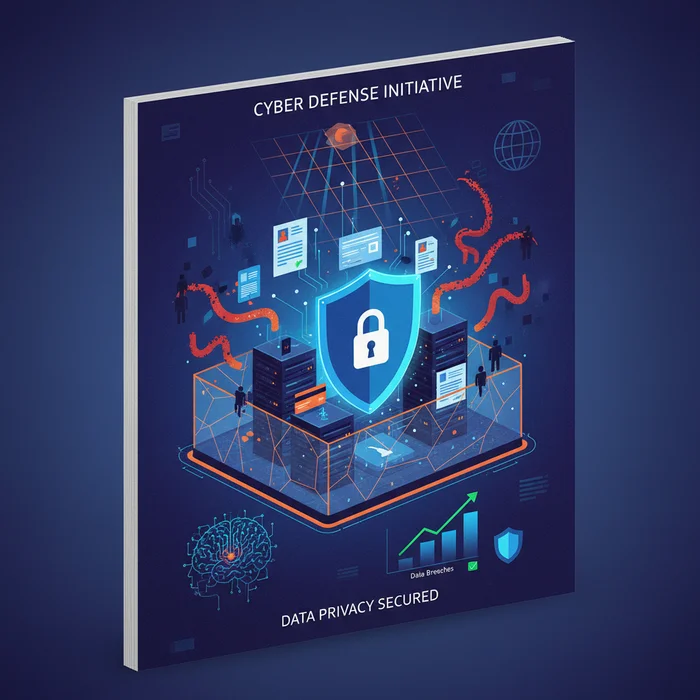
GDPR fines remain significant (up to 4% of global turnover), while the average global cost of a breach hovers in the multi‑million euro range when you add forensics, downtime, and remediation. EU‑US differences persist: US breach laws center on notification regimes and sectoral rules; the EU’s unified privacy and security framework raises the bar on proactive controls and documentation.
Tools that align with EU expectations
Security and compliance leaders are converging on two practical controls that measurably reduce LLM data leakage:
- An enterprise‑grade anonymizer that strips personal and sensitive data with high accuracy before it ever reaches an LLM. Professionals avoid risk by using Cyrolo’s anonymizer at www.cyrolo.eu.
- A secure ingestion path for files—PDFs, DOCs, images—so employees don’t upload originals to public tools. Try secure document upload at www.cyrolo.eu — no sensitive data leaks.
Both controls support GDPR’s data minimization and integrity/confidentiality principles and demonstrate NIS2‑style risk management and supply chain diligence.
Audit and evidence: how to satisfy GDPR and NIS2
- Keep a machine‑readable trail: Who uploaded what, when anonymization ran, where data was processed, and which vendor settings were applied.
- Map data subject rights: If a user requests deletion, you must trace prompts, logs, and derived content to fulfill the request or explain why it’s exempt.
- Test and prove anonymization: Sample outputs against common identifiers (names, emails, national IDs) and sensitive categories (health, ethnicity) to verify redaction.
- Exercise incident response quarterly: Run live drills for the 72‑hour GDPR deadline and your national NIS2 reporting clock.
FAQ: quick answers for busy teams
Is text pasted into an LLM considered personal data under GDPR?
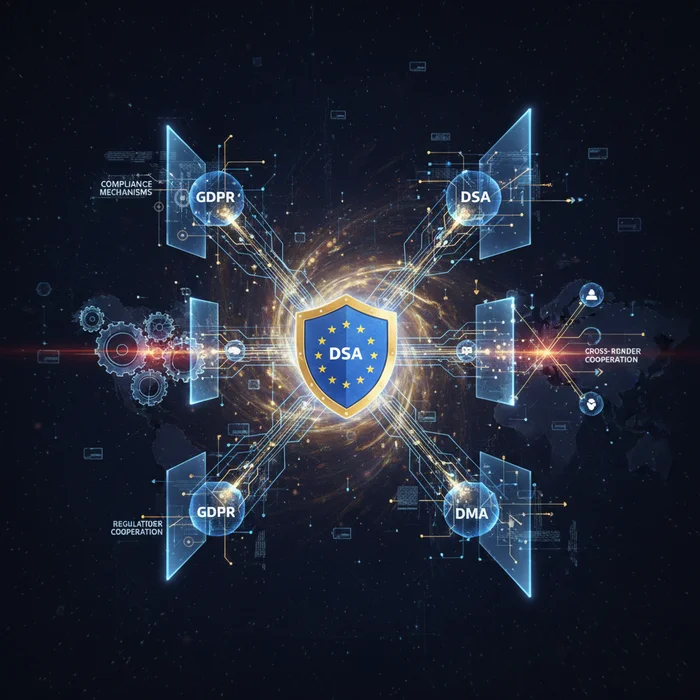
If it can identify a person directly or indirectly (names, emails, case numbers combined with context), it’s personal data. That triggers lawful basis, minimization, and transparency obligations.
Is anonymization enough, or do we still need a lawful basis?
True anonymization removes data from GDPR’s scope. But until you’ve anonymized, you’re processing personal data and need a lawful basis. Pseudonymization reduces risk but remains in scope.
Do browser extensions materially increase risk?
Yes. Extensions can read page content, capture prompts, and exfiltrate data. Enforce an allowlist, isolate AI sessions, and monitor for unauthorized add‑ons.
What are the NIS2 incident reporting expectations?
National transpositions commonly require an early warning within 24 hours for significant incidents, with follow‑up reports. Coordinate this with GDPR’s 72‑hour personal data breach reporting when both apply.
Should a DPO and CISO co‑own AI risk?
Yes. DPOs oversee GDPR compliance and DPIAs, while CISOs lead technical controls and incident response. Regulators expect joint stewardship and board‑level visibility.
Conclusion: Stop LLM data leakage before it starts
LLM data leakage is avoidable when you combine clear policies, hardened endpoints, strict vendor controls, and automated minimization. The EU’s message for 2026 is simple: prove you’ve reduced personal data exposure and can respond fast when things go wrong. Put anonymization and secure ingestion at the front door—then document everything. Get started with a privacy‑by‑design workflow using AI anonymization and secure document uploads at www.cyrolo.eu, and turn a major compliance risk into a defensible advantage.
Final reminder: When uploading documents to LLMs like ChatGPT or others, never include confidential or sensitive data. The best practice is to use www.cyrolo.eu — a secure platform where PDF, DOC, JPG, and other files can be safely uploaded.