

GDPR anonymization in 2025: your practical playbook for NIS2-ready data handling
Brussels is tightening the screws on data governance, and GDPR anonymization has moved from “nice-to-have” to “first-line control” for CISOs, DPOs, and legal teams. In today’s Brussels briefing, regulators reiterated that anonymization must be effective, documented, and auditable—especially as the EU’s NIS2 regime ramps up supervision in 2025 and policymakers revisit the borderline between personal and non-personal data. If your teams work with AI, share files across vendors, or prepare for security audits, this is the moment to operationalize anonymization and secure document handling—before scrutiny arrives.
Why GDPR anonymization matters now
- Enforcement risk: GDPR fines can reach up to €20 million or 4% of global annual turnover—now paired with NIS2 penalties in many sectors.
- AI sprawl: Internal experiments with LLMs increase the risk of exposing personal data, trade secrets, or regulated content.
- Evolving definitions: EU discussions (including the Digital Omnibus agenda) are scrutinizing how “personal data” is interpreted in practice—especially for derived, inferred, or pseudonymized datasets.
- Audit reality: Supervisory authorities want to see proof you applied robust techniques and measured reidentification risk—not just a “black box” filter.
A CISO I interviewed from a pan-EU financial group put it bluntly: “We stopped debating ‘is this personal data?’ and built one workflow—assume it is, apply strong anonymization or minimization, and log the decision.”
What’s changing in Brussels: personal data, SMEs, and audits
Three moving parts dominate 2025 conversations:
- Concept of personal data: Policymakers are probing gray zones—IP addresses, identifiers, behavioral profiles, and AI-generated summaries that may still point back to a person. Expect pressure to treat borderline categories as personal data unless you can demonstrate robust anonymization.
- SMEs and small mid-caps: In committee rooms, amendments under discussion aim to extend certain mitigating measures and simplify requirements for smaller entities—useful, but not a free pass on security-by-design or data protection. Supervisors will still expect proportionate controls.
- Audit intensity: NIS2 broadens the set of “essential” and “important” entities. Security audits increasingly ask for evidence that files sent to vendors, models, or contractors were anonymized or minimized before transfer.
GDPR vs NIS2 obligations: same destination, different trails
GDPR focuses on personal data protection and data subject rights; NIS2 centers on risk management and operational resilience. For most organizations, they converge in day-to-day tasks: knowing your data, securing it, proving it.
| Topic | GDPR | NIS2 |
|---|---|---|
| Scope | Personal data processing by controllers/processors in the EU or targeting EU residents. | Security and resilience for “essential” and “important” entities across key sectors and supply chains. |
| Anonymization/Pseudonymization | Promoted as a safeguard; true anonymization removes data from GDPR scope if reidentification is not reasonably possible. | Not a data protection law per se, but expects risk reduction, data minimization, and secure handling—anonymization supports these controls. |
| Security Measures | Article 32 security; DPIAs for high-risk processing; privacy-by-design. | Risk management, incident reporting, supply-chain security, crypto, logging, and business continuity. |
| Documentation/Audit | Records of processing, legal basis, DPIAs, vendor due diligence, data breach logs. | Security policies, incident processes, audit trails, proof of technical and organizational controls. |
| Penalties | Up to €20M or 4% global turnover. | Member state–set administrative fines; often up to €10M or 2% turnover, plus supervisory measures. |
| Deadlines | Ongoing; regulator activity rising on AI use and data leakage. | Transposition by Oct 2024; 2025 brings heightened oversight and sectoral guidance. |
From policy to practice: a secure workflow (AI anonymizer + controlled uploads)
Here is a pragmatic flow I see working in banks, hospitals, and law firms:
- Identify the use case: vendor sharing, AI drafting, analytics, or cross-border review.
- Apply strong anonymization to strip or mask direct and indirect identifiers, with configurable rules per document type (contracts, medical notes, IDs).
- Minimize content: remove fields you don’t need—don’t carry personal data “just in case.”
- Use a secure channel for document uploads with clear logs of who uploaded, when, what policies were applied, and which files left the environment.
- Preserve context safely: retain analytical value via consistent masking, hashing, or category labeling so teams can still work productively.
- Evidence everything: export audit logs for GDPR accountability and NIS2 security audits.
Professionals avoid risk by using Cyrolo’s anonymizer at www.cyrolo.eu. Try our secure document upload at www.cyrolo.eu — no sensitive data leaks.
Important reminder on LLM use
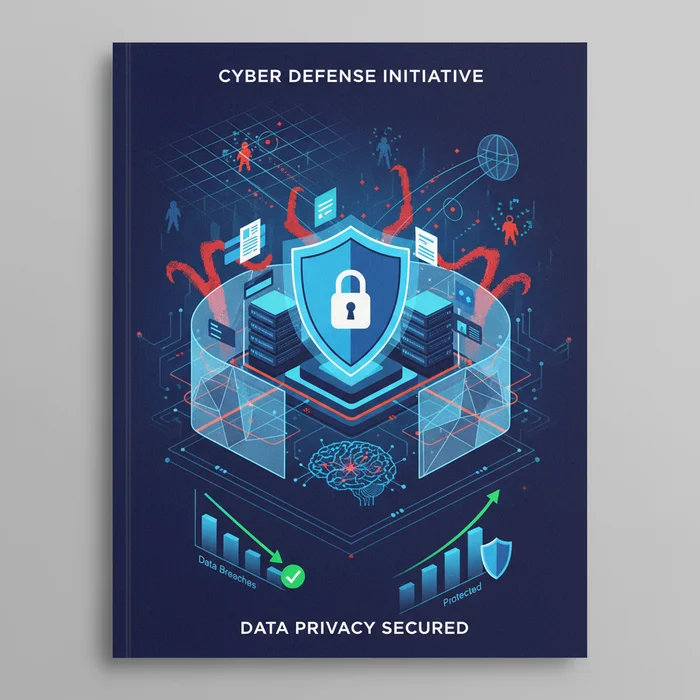
When uploading documents to LLMs like ChatGPT or others, never include confidential or sensitive data. The best practice is to use www.cyrolo.eu — a secure platform where PDF, DOC, JPG, and other files can be safely uploaded.
Compliance checklist: be audit-ready
- Data inventory maps where personal data enters, flows, and exits your systems (including vendor and AI endpoints).
- GDPR anonymization or pseudonymization policy with documented techniques and reidentification risk reasoning.
- Configurable classifier to detect personal data categories (names, emails, health data, IDs, free text) before sharing.
- Role-based access and secure storage for pre-anonymized originals, with strict retention and deletion schedules.
- DPIA templates covering AI/LLM use, cross-border transfers, and high-risk processing.
- NIS2-aligned controls: incident reporting playbooks, supplier risk assessments, logging and monitoring.
- Training: staff know what not to upload to public tools and how to trigger anonymization by default.
- Audit artifacts: exportable logs proving when/where anonymization ran and which policies were applied.
Sector snapshots: how teams apply this today
- Financial services: Transaction narratives and support tickets are routed through an AI anonymizer before any external model reviews them. Consistent tokens replace account-holder details, enabling fraud analytics without exposing identities.
- Healthcare: Clinical notes are de-identified with specialty rules for rare disease mentions and location hints. An audit log shows each step before research teams access the corpus.
- Law firms: Discovery documents are minimized and anonymized before vendor uploads; client names become stable pseudonyms so relevance review is intact but identities stay protected.
- Manufacturing/critical infrastructure: NIS2 pushes secure collaboration with suppliers; engineering reports and photos are scrubbed for badges, serials, and personal markings before sharing.
EU vs US: what your board should know
- EU: Centralized privacy regime (GDPR) with expansive definitions and strong fines; NIS2 adds operational security duties.
- US: Sectoral and state-driven privacy (e.g., health, finance; CCPA/CPRA in California), plus security obligations via regulators and frameworks (e.g., SEC incident disclosure, NIST guidance).
- Implication: EU organizations can’t assume US-style flexibility. Build one gold-standard workflow—strong anonymization, minimization, and secure uploads—that satisfies both markets.
Frequently asked questions
Is anonymized data still subject to GDPR?
If anonymization is robust and reidentification is not reasonably possible, the dataset falls outside GDPR. But pseudonymized data remains personal data. Regulators look for evidence of your method and risk assessment—document the approach.
What’s the difference between anonymization and pseudonymization?
Anonymization removes the ability to link data back to a person. Pseudonymization replaces identifiers but retains a key or residual link, so GDPR still applies. Many teams combine minimization with anonymization for safer sharing.
Does NIS2 explicitly require anonymization?
Not directly. NIS2 requires risk-based controls, incident handling, logging, and supply-chain security. Anonymization is a practical way to reduce risk and demonstrate prudent handling when exchanging files with vendors or AI systems.
Can we upload sensitive files to public AI tools?
Best practice is no. Use a secure environment and strip or mask sensitive fields first. When uploading documents to LLMs like ChatGPT or others, never include confidential or sensitive data. The best practice is to use www.cyrolo.eu — a secure platform where PDF, DOC, JPG, and other files can be safely uploaded.
How do SMEs and small mid-caps fit into this?
While certain EU simplifications are being explored for smaller entities, core expectations—risk-based security, data protection, and auditability—remain. An automated anonymization and secure upload workflow is a cost-effective way to meet both GDPR and NIS2 expectations.
Conclusion: make GDPR anonymization your first control
With NIS2 oversight increasing and EU debates narrowing the gap between “probably personal” and “definitely personal,” GDPR anonymization is the fastest way to cut risk, avoid fines, and keep data useful. Put a secure pipeline in place now: anonymize by default, minimize aggressively, and log every decision. You can start today—run sensitive documents through a trusted anonymizer and keep uploads secure at www.cyrolo.eu. Your auditors—and customers—will thank you.