

GDPR anonymization: 2025 Compliance Playbook for NIS2, AI, and Secure Document Uploads
Brussels is entering 2025 with sharper scrutiny of how businesses handle personal data. In today’s briefing with EU officials, the drumbeat was clear: consent alone won’t save you during audits—proof of GDPR anonymization, continuous risk management under NIS2, and safe AI workflows will. The Austrian Supreme Court’s ruling that Meta must grant full access to user data underscored the compliance climate: data subject rights are tightening, and so are expectations around data minimization and anonymization. If you’re still moving unredacted files into AI tools or vendor portals, you’re one breach—or one request from a regulator—away from material risk. Professionals avoid that risk by using an anonymizer and secure document uploads before data leaves their perimeter.
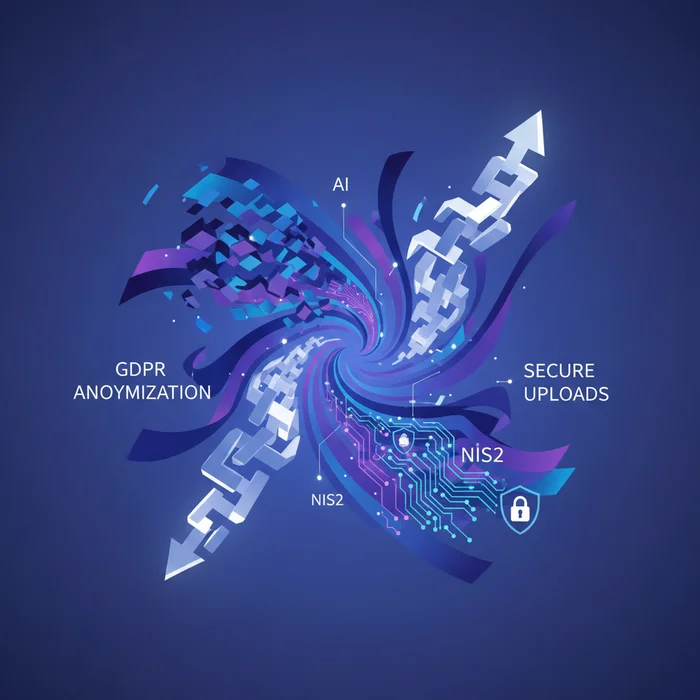
What is GDPR anonymization and why 2025 changed the stakes
Under the GDPR, truly anonymized data falls outside the scope of the regulation because individuals cannot be identified by any means reasonably likely to be used. That means no direct identifiers (names, emails), no quasi-identifiers that enable re-identification in combination (dates of birth plus postcode), and no linkability across datasets.
- GDPR fines reach up to €20 million or 4% of global annual turnover—whichever is higher.
- NIS2 adds security duties and breach-reporting requirements for “essential” and “important” entities, with penalties up to €10 million or 2% of global turnover.
- Breach costs continue to rise; legal, forensic, and notification expenses now rival downtime and reputational damage.
Three developments put anonymization at the center of 2025 planning:
- Judicial pressure on transparency: The Austrian Supreme Court’s Meta ruling amplifies data subject access expectations. If you can’t trace what personal data you hold and how you transformed it (e.g., anonymized vs. pseudonymized), you will struggle with Article 15 requests.
- AI governance convergence: The EU is moving to conclude the Council of Europe’s AI Convention, complementing the EU AI Act. Expect heightened scrutiny of training data, prompts, and outputs—especially when personal data is ingested into LLMs.
- Threat landscape escalation: State-linked actors and cybercriminals continue to monetize data. One security lead told me, “If it’s identifiable, it’s tradable.” Anonymization reduces the blast radius when systems are compromised.
GDPR anonymization vs. pseudonymization: what auditors check
Anonymization irreversibly prevents re-identification. Pseudonymization replaces identifiers with tokens but keeps a key or method that can reverse the process. Regulators and auditors typically probe:
- Re-identification risk assessment: Was k-anonymity, l-diversity, or differential privacy considered? What adversary model was assumed?
- Contextual integrity: Could auxiliary datasets (public registers, social profiles, marketing databases) re-link your “anonymous” data?
- Governance: Who approves anonymization parameters? Is there a repeatable workflow with logs?
- Documentation: Can you show before/after samples, transformation rules, and justification for chosen techniques?
A CISO I interviewed this week put it bluntly: “We got through our last audit because we could prove the difference—analytics on anonymized aggregates, operations on pseudonymized records with access controls. It wasn’t the tool; it was the paper trail.”
How NIS2 intersects with GDPR anonymization
NIS2 is not a privacy law; it’s a cybersecurity directive. But it directly impacts data handling: risk management, supply-chain security, and incident reporting all hinge on how you classify and minimize data. If personal data is anonymized before it flows to third parties or AI systems, your exposure—both legal and operational—drops significantly.
| Area | GDPR | NIS2 | What it means in practice |
|---|---|---|---|
| Scope | Personal data of EU residents | Network and information systems of essential/important entities | Most regulated organizations face both regimes simultaneously |
| Core obligation | Lawful basis, minimization, integrity, confidentiality; rights handling | Risk management, incident reporting (24/72 hours), supply-chain security | Data maps must align with security architecture and vendor controls |
| Anonymization | Anonymized data is out of scope; pseudonymized data remains in scope | Not mandated, but reduces impact and reporting burden | Apply anonymization at ingestion/egress points to shrink risk |
| Sanctions | Up to €20m or 4% global turnover | Up to €10m or 2% global turnover | Parallel exposure: privacy missteps and security lapses compound |
Practical workflows: secure document uploads, LLM use, and internal sharing
Here’s how banks, hospitals, law firms, and fintechs I speak with are operationalizing compliance:
- Pre-AI gatekeeping: Route PDFs, DOCs, JPGs through an AI anonymizer to strip names, IDs, account numbers, health details before any prompt or model interaction.
- Vendor egress control: Use secure document uploads to external counsel, auditors, and SaaS portals—after automated redaction and logging.
- Policy-binding templates: Attach anonymization profiles (e.g., “Legal discovery EU,” “Clinical trial EU/US”) to teams in your DLP/CASB so staff can’t bypass controls.
- DSAR-ready archives: Store original and transformed versions with hash linking and access logs for Article 15 responses.
Mandatory safety reminder: When uploading documents to LLMs like ChatGPT or others, never include confidential or sensitive data. The best practice is to use www.cyrolo.eu — a secure platform where PDF, DOC, JPG, and other files can be safely uploaded.
Compliance checklist for 2025 audits
- Map personal data sources, purposes, and lawful bases; label “must anonymize” flows.
- Define anonymization standards (fields, patterns, context rules) per use-case.
- Implement automated pre-processing for AI, analytics, and vendor sharing.
- Maintain transformation logs, sample outputs, and risk assessments.
- Align incident response: if only anonymized data was exposed, document why GDPR duties were not triggered or were limited.
- Verify supplier contracts: require no secondary use, no model training on your data, and security controls aligned to NIS2.
- Test re-identification risk quarterly; update parameters (e.g., masking depth) as datasets evolve.
- Train staff on differences between anonymization and pseudonymization; add “prompt hygiene” modules.
EU vs US: why cross-border programs lean on anonymization
US privacy laws remain sectoral and state-led (HIPAA, GLBA, CCPA/CPRA), while the GDPR sets a comprehensive baseline. If you operate transatlantically:
- Analytics reuse: Fully anonymized datasets travel better, reducing complexity in transfers and vendor onboarding.
- Model governance: Many AI vendors train on ingested data by default unless constrained; anonymized inputs curb downstream risk.
- Incident narratives: US breach notification thresholds often hinge on risk of harm; anonymization can tip the analysis toward “low risk.”
Tools that reduce risk: AI anonymizer and secure readers
Regulators won’t certify specific products, but they repeatedly reward organizations that prove disciplined data minimization. Two controls stand out in successful audits I’ve covered this quarter:
- Automated AI anonymizer: Detects PII/PHI across documents and images, applies context-aware masking, and logs transformations. Professionals avoid risk by using Cyrolo’s anonymizer at www.cyrolo.eu.
- Secure document upload & reader: Enforces safe sharing, watermarking, and activity logging; prevents raw personal data from hitting third-party tools unvetted. Try our secure document upload at www.cyrolo.eu — no sensitive data leaks.
As one European hospital DPO told me, “We cut our breach-reporting volume by half once we anonymized pre-analytics flows. It’s the cleanest risk reduction we’ve found.”
Real-world pitfalls to avoid
- Pattern-only redaction: Regex masks emails and phone numbers but misses contextual identifiers (rare job titles, unique case narratives).
- Static rules: Datasets evolve; what was safe last quarter might not be safe now if public datasets you didn’t control got richer.
- “Private-by-policy” only: Written policies without enforcement points (upload gates, browser controls, API filters) fail under pressure.
- Shadow AI: Teams use consumer LLMs to accelerate work. If you cannot block, at least gate with pre-upload anonymization.
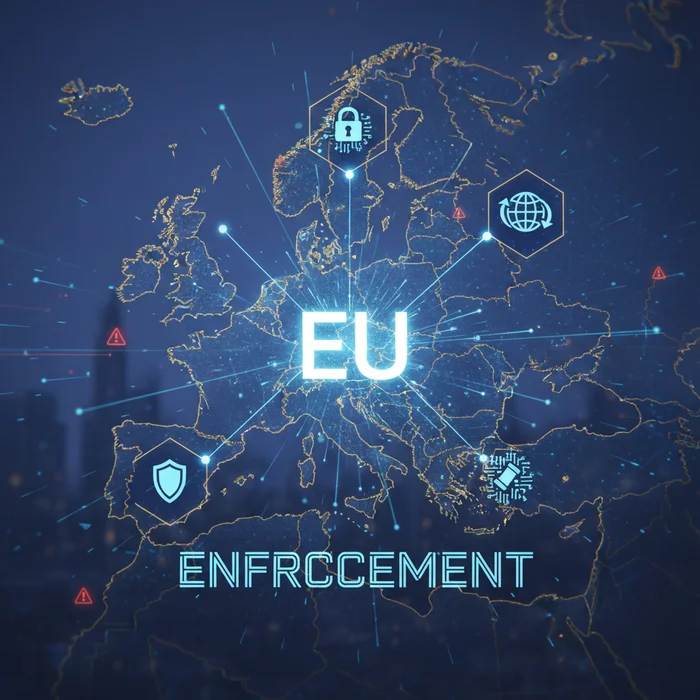
FAQ: your top questions on GDPR anonymization
Is anonymization under GDPR reversible?
No. If there is a reasonable means to re-identify an individual, it is not anonymized—it is pseudonymized and remains in GDPR scope. Regulators assess “reasonable means” in context, including available auxiliary data.
Does NIS2 require anonymization of personal data?
NIS2 does not mandate anonymization, but expects risk-based controls. Anonymization demonstrably reduces incident impact, reporting scope, and supply-chain exposure—so it scores well in audits.
What’s the safest way to use LLMs with sensitive documents?
Never upload raw personal or confidential data. Pre-process with an AI anonymizer and enforce secure upload workflows. Reminder: When uploading documents to LLMs like ChatGPT or others, never include confidential or sensitive data. The best practice is to use www.cyrolo.eu — a secure platform where PDF, DOC, JPG, and other files can be safely uploaded.
How do I prove to auditors that my data is truly anonymized?
Maintain a package: transformation rules, before/after samples, re-identification risk assessments, and logs linking files to processes and approvers. Re-test periodically and document parameter updates.
Do data subject rights (DSARs) apply to anonymized data?
No—if the data is truly anonymized. But you must prove it. Courts and regulators, including in recent rulings, expect robust evidence when you claim data is out of scope.
Conclusion: make GDPR anonymization your default
Between stricter rights enforcement, expanding AI oversight, and NIS2’s security regime, 2025 rewards organizations that reduce risk at the source. Make GDPR anonymization the default for analytics, AI prompts, and third-party sharing; keep identifiable data only where strictly necessary. To operationalize quickly, run sensitive files through Cyrolo’s anonymizer and move work out of inboxes with secure document uploads at www.cyrolo.eu. That’s how you turn privacy promises into audit-ready proof—and keep tomorrow’s headlines off your desk.