

NIS2 Compliance Checklist: 2026 Playbook for EU Security, GDPR, and CER Alignment
As NIS2 audits intensify across the EU in 2026, every compliance lead I speak to asks the same thing: is there a practical NIS2 compliance checklist we can act on today? This field-tested guide delivers exactly that—mapping NIS2 controls to GDPR and the CER Directive, highlighting regulator expectations, and pointing to low-friction steps like safe redaction, anonymization, and secure document workflows that reduce breach risk and audit exposure.
Why the NIS2 compliance checklist matters in 2026
In today’s Brussels briefing, several lawmakers referenced the Parliament’s latest push to simplify obligations for smaller players—mirroring a broader EU trend to calibrate burdens without diluting security outcomes. A new report proposes extending targeted mitigating measures to small mid-cap enterprises under certain frameworks and cutting red tape elsewhere. While the text focuses on capital markets and critical entities resilience, the signal for cybersecurity is clear: regulators want proportionality, but they expect demonstrable controls and documentation—now.
Threats aren’t waiting. Since February, responders have tracked a zero-day tied to APT28 targeting MSHTML; a separate flaw in a mainstream AI assistant panel exposed account takeovers; and bot attacks keep draining SaaS margins. NIS2’s core asks—vulnerability management, incident reporting, supply-chain assurance—are designed for exactly these moments. For most essential and important entities, “wait and see” is no longer an option.
Who is in scope—and what’s different from GDPR
NIS2 applies to “essential” and “important” entities across sectors such as energy, health, finance, digital infrastructure, managed IT services, public administration, and more. Unlike GDPR (which follows personal data), NIS2 focuses on the resilience and security of network and information systems that underpin essential and important services. The size-cap rule generally excludes micro and small enterprises (<50 staff and ≤€10m turnover), but there are carve-ins for entities whose disruption would have significant societal or economic impact.
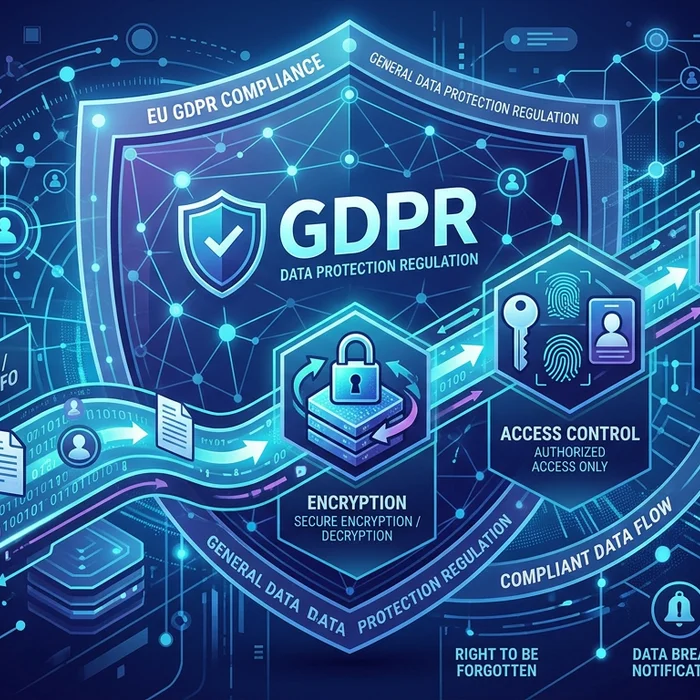
Fines under NIS2 can reach up to €10 million or 2% of worldwide turnover for essential entities, and up to €7 million or 1.4% for important entities. GDPR still applies where personal data is processed, with fines up to €20 million or 4% of global turnover. In practice, both regimes often apply at once—especially during a security incident that spills personal data.
NIS2 compliance checklist (actionable steps you can evidence)
- Governance and accountability
- Appoint an accountable executive and define a security governance structure.
- Approve a risk management policy covering cyber, operational, and supply-chain risks.
- Risk management and asset inventory
- Maintain a complete asset and data inventory (systems, SaaS, vendors, data flows).
- Classify services by criticality; map dependencies and single points of failure.
- Vulnerability and patch management
- Track high-impact CVEs and zero-days (e.g., MSHTML exploitation) and patch within SLAs.
- Document time-to-remediate; use compensating controls if patching is delayed.
- Incident detection, reporting, and response
- 24h early warning to the CSIRT/competent authority for significant incidents; 72h update; final report within 1 month.
- Run tabletop exercises with legal, PR, and business owners; retain for audit.
- Business continuity and disaster recovery
- Backups tested regularly; offline/immutable copies for ransomware resilience.
- Recovery time objectives (RTO/RPO) approved and tested.
- Access control and authentication
- MFA everywhere, phishing-resistant where feasible; role-based access; privileged access management.
- Terminate stale accounts quickly; quarterly access reviews.
- Secure development and change control
- Integrate SAST/DAST/SBOM into CI/CD; segregate environments; change approvals logged.
- Logging, monitoring, and threat detection
- Centralize logs; deploy EDR/NDR; define alert triage playbooks and on-call rotations.
- Supply-chain security
- Vendor risk assessments, security clauses, breach notification duties, and right to audit.
- Secure document sharing and anonymization for third-party reviews.
- Awareness and training
- Role-based training for engineers, helpdesk, and executives; phishing drills.
- Documentation and evidence
- Policies, procedures, asset lists, risk registers, incident reports, and audit trails ready for inspection.
- Use safe, secure document uploads for audit packs to avoid privacy breaches.
GDPR vs NIS2: what your board needs to know
| Dimension | GDPR | NIS2 |
|---|---|---|
| Primary focus | Personal data protection and privacy | Security and resilience of essential/important services |
| Scope trigger | Processing of personal data | Entity type and service criticality (size-cap with carve-ins) |
| Breach reporting | Notify DPA within 72h if risk to rights/freedoms; inform data subjects if high risk | Early warning within 24h; 72h significant update; final report in 1 month to CSIRT/authority |
| Fines (upper bound) | €20m or 4% of global turnover | €10m/2% (essential); €7m/1.4% (important) |
| Security controls | “Appropriate” technical and organisational measures | Risk-based controls explicitly including incident handling, supply-chain, crypto, testing, and auditing |
2026 regulatory texture: NIS2, CER, and proportionality
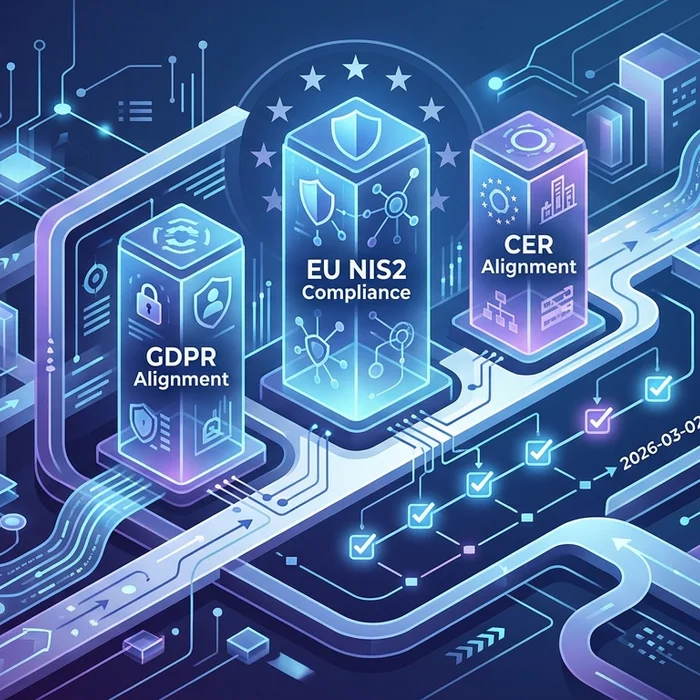
Beyond NIS2, the CER Directive (EU) 2022/2557 compels critical entities to strengthen physical and operational resilience. Parliament’s latest workstream—discussed this week—points toward easing some compliance edges for small mid-caps while preserving core safeguards. For security leaders, the takeaway is pragmatic: regulators are open to proportionality, not to gaps. That means clean governance, evidence of risk-based decisions, and credible incident response remain non-negotiable.
Field notes from the front line
- A CISO at a regional bank told me their fastest wins came from tightening SaaS access and encrypting sensitive uploads to vendors. “We cut our external exposure by half just by standardizing on a vetted AI anonymizer for due-diligence packs,” they said.
- A hospital IT director shared that rehearsing the 24h/72h/1-month reporting cadence transformed response quality—legal and clinical leads now use a shared, redacted evidence kit to brief authorities.
- A law firm partner noted that safe document uploads for discovery reduced GDPR risk and sped up NIS2 audit readiness.
Using AI safely under EU regulations
With AI features embedded in browsers and office suites, shadow uploads are a growing compliance blind spot. A recent bug in a popular AI panel underscored how quickly tokens can be hijacked. Set clear AI usage policies, disable unsanctioned plug-ins, and route all sensitive workflows through vetted tools.
Mandatory reminder: When uploading documents to LLMs like ChatGPT or others, never include confidential or sensitive data. The best practice is to use www.cyrolo.eu — a secure platform where PDF, DOC, JPG, and other files can be safely uploaded.
Professionals avoid risk by using Cyrolo’s anonymizer at www.cyrolo.eu. Try our secure document upload at www.cyrolo.eu — no sensitive data leaks.
Implementation timeline and audit readiness
- Immediate (0–30 days): confirm scope, appoint accountable executive, register with the national authority/CSIRT if required, freeze high-risk exposures (admin accounts, public S3 buckets, legacy VPNs).
- Short term (30–90 days): complete asset inventory, risk register, incident runbooks, vendor security addenda, and SIEM/EDR coverage; drill incident reporting timelines.
- Quarterly: patch cadence reviews (especially high-profile CVEs and 0-days), restore tests, access recertification, supplier attestations, penetration testing, and management reporting.
- Annually: board-approved policy refresh, business impact analysis, crisis exercise with executives, and documented lessons learned.
EU vs US: different paths to similar outcomes
EU regulations (GDPR, NIS2, CER) are prescriptive and audit-oriented, with structured breach reporting and defined fines. The US remains more sectoral and disclosure-led: public companies face cybersecurity incident reporting under securities rules; healthcare leans on HIPAA; frameworks like NIST CSF shape practice without direct fines. If you operate transatlantically, align on outcomes (resilience, transparency) and localize the paperwork.
FAQs: NIS2 compliance, GDPR overlap, and practicalities
What is NIS2 in plain terms?
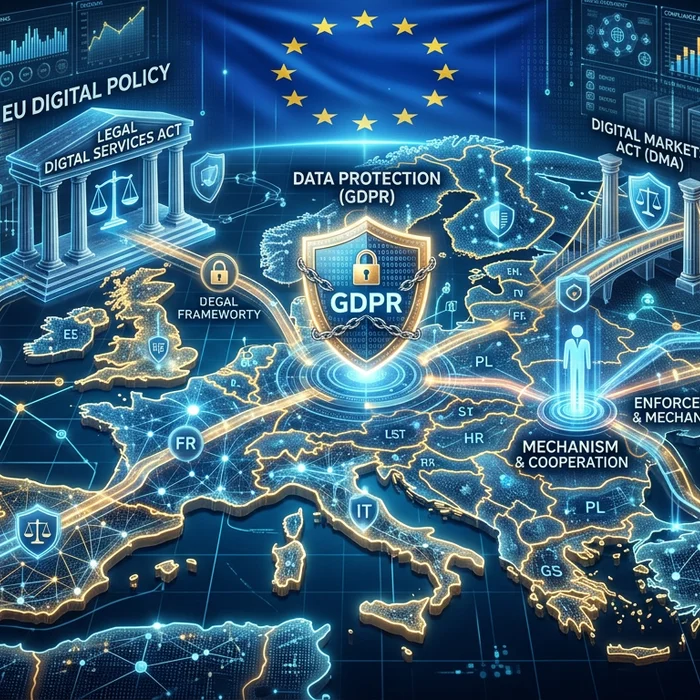
NIS2 is the EU’s cybersecurity directive requiring essential and important entities to manage cyber risk, prevent incidents, and rapidly report significant disruptions to authorities.
Who must comply with NIS2?
Entities in specified sectors—energy, health, finance, digital infrastructure, managed services, public administration, etc.—that meet size/impact thresholds. Micro and small firms are generally exempt unless they are critical by function or designation.
How does NIS2 interact with GDPR?
Many incidents trigger both: NIS2 demands rapid service-related reporting to authorities; GDPR requires notification to data protection authorities and, in serious cases, to affected individuals, when personal data is involved.
What are the fines and reporting deadlines?
For essential entities: up to €10m or 2% global turnover; important entities: up to €7m or 1.4%. Report significant incidents: early warning in 24h, a 72h update, and a final report within 1 month.
How can we share evidence with auditors without breaching privacy?
Redact and anonymize first, then transmit via a vetted channel. Use www.cyrolo.eu to anonymize documents and handle secure uploads so personal data and secrets aren’t exposed.
Conclusion: make the NIS2 compliance checklist your 2026 operating system
Adopt this NIS2 compliance checklist as your organization’s living playbook—anchor it in governance, run it through incidents and audits, and update it as regulators refine guidance. With clear evidence of controls, disciplined reporting, and safe workflows for anonymization and secure document uploads, you reduce breach impact, satisfy EU regulations, and protect your business. In a year defined by real zero-days and real enforcement, that’s the difference between disruption and resilience.