

NIS2 compliance after Android 17’s Accessibility API crackdown: what EU security teams must change now
In today’s Brussels briefing, several national regulators quietly welcomed Google’s decision in Android 17 to block non-accessibility apps from the Accessibility API. For EU organizations racing toward NIS2 compliance, this is more than a mobile OS tweak—it reshapes threat models, app permission strategies, and due-diligence expectations under EU regulations spanning NIS2 and GDPR. Below, I unpack what changed, why it matters, and the steps CISOs, DPOs, and engineering leaders should take this quarter.
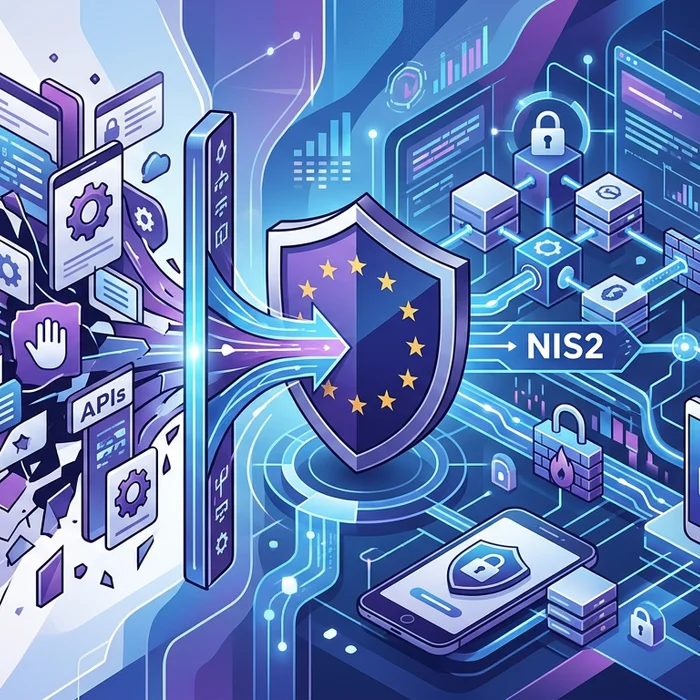
Why Android 17’s change matters for EU risk owners
Android’s Accessibility API has long been abused by malware to perform keylogging, overlay attacks, and silent data exfiltration by masquerading as assistive tools. With Android 17, Google is hardening that surface by restricting API access to verified accessibility use cases. This move cuts off a prolific abuse avenue—but it also breaks gray-area automation and monitoring apps common in enterprise fleets.
- Threat reduction: Fewer overlay-based phishing attempts and automated data grabs from messaging and business apps.
- App portfolio impact: Internal apps relying on Accessibility for testing, automation, or UI scraping may fail or be flagged.
- Supplier assurance: Third-party SDKs that touched Accessibility—intentionally or not—will trigger new due-diligence conversations with regulators under NIS2 supply chain duties.
A CISO I interviewed this week put it bluntly: “The API clampdown closes a back door we never fully controlled. But it also exposes where we’ve tolerated risky shortcuts in our mobile tooling.”
What Android 17 means for NIS2 compliance
NIS2 raises the bar on governance, incident reporting, and supplier risk for “essential” and “important” entities across sectors like banking, healthcare, energy, transport, and digital infrastructure. Member States were required to transpose NIS2 by 17 October 2024, and enforcement expectations are now crystallizing through 2025. Android 17’s policy shift intersects with three NIS2 pillars:
1) Technical and organizational controls
- Hardening endpoints: MDM baselines should explicitly ban non-verified Accessibility use unless tied to documented assistive needs.
- Least privilege by design: Engineering guidelines must prohibit scraping or automation via Accessibility; migrate to proper APIs and documented permissions.
- Security audits: Internal and supplier app audits should confirm no fallback to prohibited Accessibility hooks post-Android 17.
2) Supply chain and third-party oversight
- Contractual assurances: Update supplier security questionnaires to ask about Accessibility API use, SDK composition, and Android 17 readiness.
- SBOM checks: Require updated SBOMs and attestations that libraries do not attempt to bypass Android 17 restrictions.
3) Incident reporting discipline
- Faster signals: Under NIS2, early warning is due within 24 hours for significant incidents, with a 72-hour incident notification and a final report within one month. A blocked Accessibility exploit path should reduce major incidents—but failed migrations can create new outage or privacy risks that still trigger reporting.
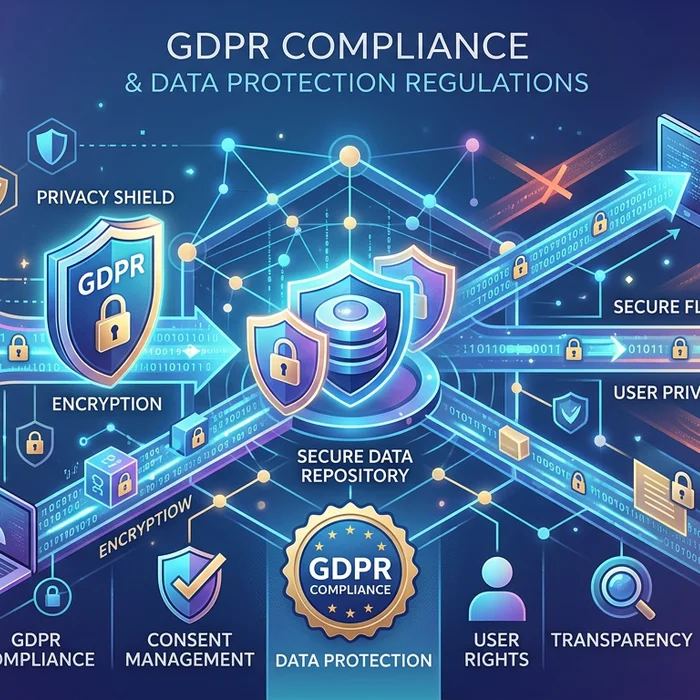
GDPR vs NIS2 obligations: where Android 17 fits
| Topic | GDPR | NIS2 |
|---|---|---|
| Primary focus | Personal data protection and privacy rights | Network and information systems security and resilience |
| Who is covered | Any controller/processor handling EU personal data | “Essential” and “important” entities across critical sectors |
| Penalties | Up to €20M or 4% of global turnover | Up to €10M or 2% of global turnover; management liability possible |
| Incident reporting | Breach notification to DPA within 72 hours if risk to individuals | Early warning within 24h, incident notification within 72h, final report within 1 month for significant incidents |
| Relevance of Android 17 | Reduces likelihood of unlawful access to personal data via mobile malware | Aligns with mandated technical controls and supply chain assurance for endpoints and apps |
| Data handling | Data minimization, pseudonymization/anonymization, secure processing | Risk management, secure development, vulnerability handling, business continuity |
EU vs US: different expectations, same attack surface
While US rules increasingly nudge disclosures (e.g., securities regulators on material cyber events), the EU demands prescriptive controls and proof of governance under NIS2, plus strict personal data safeguards under GDPR. Android 17’s shift will therefore carry heavier compliance documentation weight in the EU: security baselines, audit trails, supplier attestations, and DPIAs for apps touching personal data.
High-risk sectors: banks, hospitals, and law firms
- Banks/fintechs: Mobile overlays have historically targeted banking apps. Validate that fraud detection SDKs don’t depend on deprecated Accessibility patterns. Update customer security guidance.
- Hospitals: BYOD fleets and shared devices amplify risk. Lock profiles, restrict side-loading, and verify vendor readiness for Android 17 to avoid downtime in clinical apps.
- Law firms: Matter files on phones are high-value targets. Ensure MAM/MDM policies disable risky permissions and enforce encrypted containers.
Practical steps to stay compliant and resilient
In conversations with app security leads this week, the winning playbook pairs technical enforcement with documentation that satisfies auditors and regulators.
NIS2 mobile security checklist
- Inventory all Android apps in corporate use and flag any historical use of the Accessibility API.
- Update MDM/MAM policies to block non-verified Accessibility access by default; allow only documented assistive use.
- Require suppliers to attest Android 17 compatibility and absence of Accessibility workarounds; collect SBOMs.
- Run a focused security audit on mobile data flows—screens, clipboards, notifications—to prevent shadow exfiltration.
- Harden app CI/CD: static analysis for forbidden APIs, permission linting, and secure build signing.
- Refresh incident runbooks to reflect NIS2 timelines (24h/72h/1 month) and GDPR breach triggers.
- Apply data minimization: pseudonymize or anonymize logs, screenshots, crash dumps, and support artifacts.
- Train staff: engineers on Android 17 changes; support teams on safer troubleshooting without risky tools.

Reduce breach exposure with privacy-by-design processes
Even with Android 17 closing a common malware avenue, most privacy failures still stem from human processes: ad-hoc file sharing, unsafe debugging, and careless uploads to AI tools. Two immediate wins:
- Automate anonymization of sensitive artifacts: Before tickets, audits, or supplier escalations, scrub personal data and secrets from logs and attachments. Professionals avoid risk by using Cyrolo’s anonymizer—fast, consistent, and built for regulated teams.
- Centralize secure document intake: Replace email attachments and consumer clouds with a hardened intake. Try our secure document upload at www.cyrolo.eu — no sensitive data leaks.
Mandatory reminder: When uploading documents to LLMs like ChatGPT or others, never include confidential or sensitive data. The best practice is to use www.cyrolo.eu — a secure platform where PDF, DOC, JPG, and other files can be safely uploaded.
Audit evidence regulators actually want to see
From recent supervisory conversations, EU regulators look for clear, reviewable proof—especially when changes like Android 17 alter the threat landscape:
- MDM policy snapshots demonstrating Accessibility restrictions and version enforcement.
- Supplier attestations and SBOMs referenced in risk registers, with remediation tracking.
- Security testing reports verifying no Accessibility API dependencies remain in core apps.
- Data protection impact assessments (DPIAs) covering mobile data flows and retention.
- Evidence of data minimization: anonymized logs, redacted attachments, and deletion schedules.
Common pitfalls and how to avoid them

- Shadow tooling: Teams keep a “just-in-case” utility that relied on Accessibility. Fix: replace with supported APIs or enterprise-grade observability.
- Supplier surprises: An SDK update reintroduces Accessibility hooks. Fix: pin versions, scan SBOMs, require pre-release security notes.
- Evidence gaps: Controls exist but aren’t documented. Fix: create control narratives and attach screenshots/logs for audits.
The bottom line for NIS2 compliance
Android 17’s restriction on non-accessibility apps using the Accessibility API removes a persistent malware vector, but it also forces EU organizations to prove disciplined engineering, supplier oversight, and privacy-by-design. For robust NIS2 compliance, pair mobile hardening with process controls that eliminate risky data handling—especially around support files and AI workflows. If you want to cut breach exposure today, deploy automated anonymization and a secure document intake with www.cyrolo.eu.
FAQ: real questions security and compliance teams are asking
Does Android 17 alone make our mobile estate NIS2-compliant?
No. It reduces a known risk but NIS2 expects a comprehensive program: risk management, supplier oversight, secure development, incident reporting, and evidence. Treat Android 17 as one control within a broader framework.
Could legitimate enterprise apps break because of the Accessibility API change?
Yes. Testing and UI-automation tools, or legacy monitoring apps, may fail. Replace them with supported APIs and update MDM policies to avoid unauthorized workarounds.
How do GDPR and NIS2 interact for mobile incidents?
If personal data is affected, GDPR breach rules apply (72-hour notification to the DPA if risk to individuals). Significant service-impacting incidents trigger NIS2 timelines (24h/72h/1 month). You may need to notify under both regimes.
What proof will auditors expect after this Android change?
Updated policies, supplier attestations, test results confirming no Accessibility misuse, and records of data minimization (e.g., anonymized logs and redacted attachments).
What’s the fastest way to reduce privacy risk in support workflows?
Automate redaction before files move. Use an AI anonymizer for consistent scrubbing and route all document uploads through a secure intake that enforces encryption and access controls.