

NIS2 compliance in 2025: a practical EU playbook for CISOs, DPOs, and legal teams
In Brussels this morning, lawmakers revisited cyber resilience expectations amid a drumbeat of high-profile intrusions. If you’re responsible for NIS2 compliance in 2025, the message is blunt: show evidence of risk management, supply-chain controls, and rapid incident reporting—or expect audits and sanctions. Below I break down what changed, how NIS2 interacts with GDPR, a field-tested checklist, and why safe AI workflows (including anonymization and secure document uploads) now sit at the heart of cybersecurity compliance.
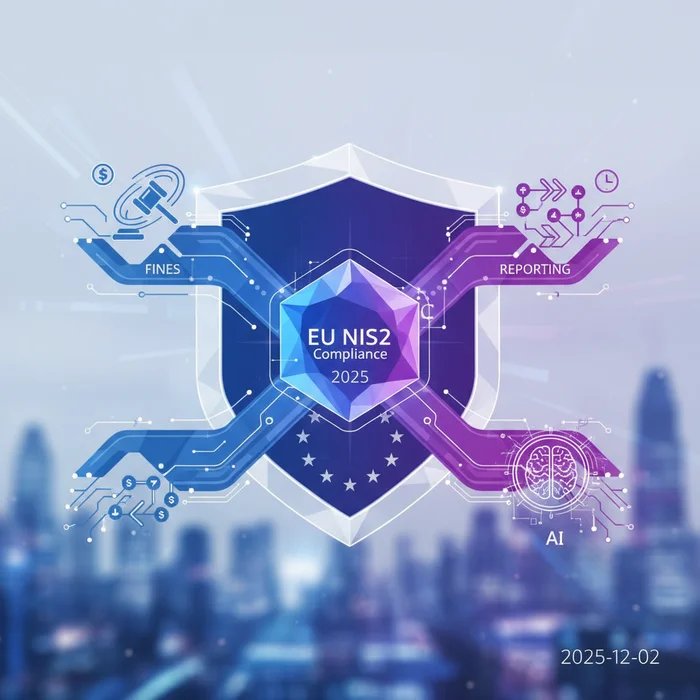
- Fines: up to €10M or 2% global turnover for essential entities; €7M or 1.4% for important entities.
- Deadlines: early warning within 24 hours for significant incidents; full reporting within 72 hours and a final report in one month.
- Top risks: third-party code and supplier compromise, credential theft, and AI misuse in data handling.
- Quick wins: formalize an AI/data handling policy, deploy anonymization on files, and centralize incident evidence and audit trails.
What changed in 2025 for NIS2 compliance
During today’s joint ECON–LIBE discussions in Parliament, officials underscored a tighter supervisory posture: more requests for proof of risk assessments, testing regimes, and vendor oversight. At the same time, recent campaigns—from Iran-linked backdoors targeting critical sectors to North Korea’s malicious open-source package “factories”—underline why the EU’s focus on supply-chain security is not a paperwork exercise but a core operational necessity.
Three shifts matter most this year:
- From policies to evidence. Regulators increasingly ask for artifacts: logs of security audits, results of security testing, supplier risk scoring, and documented remediation timelines.
- Supply-chain by default. NIS2 explicitly elevates third-party risk. Packaging ecosystems, managed service providers, and SaaS dependencies are in scope for both technical and contractual controls.
- AI data handling under the microscope. Supervisors expect guardrails for personal data in AI workflows—especially where staff paste documents into LLMs or upload client files to web tools.
NIS2 vs GDPR: scope, reporting, and accountability
Many boards still conflate NIS2 with GDPR. They overlap—but they are not the same. GDPR secures personal data and privacy rights; NIS2 secures network and information systems that provide essential and important services. You may be fully GDPR-compliant and still fall short on NIS2’s service continuity, incident reporting, and supply-chain obligations.
| Area | GDPR | NIS2 |
|---|---|---|
| Primary focus | Protection of personal data and data subject rights | Cybersecurity and resilience of essential/important entities’ systems and services |
| Who is in scope | Controllers/processors handling personal data | Essential and important entities across sectors (e.g., energy, health, finance, digital infrastructure, managed services) |
| Incident reporting | Personal data breach to authority within 72 hours (if risk to rights/freedoms) | Significant incidents: early warning within 24 hours; incident notification within 72 hours; final report within one month |
| Fines (upper tier) | Up to €20M or 4% of global turnover | Essential: up to €10M or 2%; Important: up to €7M or 1.4% |
| Executive accountability | DPIAs, DPO where required; accountability principle | Management body approval of policies; possible temporary bans and personal liability under national law |
| Third-party risk | Processors bound by data processing agreements | Mandatory supply-chain cybersecurity measures and oversight of service providers |
Reporting windows that matter
- Within 24 hours: Early warning to your CSIRT/competent authority for significant incidents.
- Within 72 hours: Initial incident notification with preliminary impact assessment.
- Within 1 month: Final report including root cause, indicators of compromise, mitigation, and lessons learned.
Best practice: prepare templated reports, a pre-approved communications plan, and a cross-border notification matrix. In a call with a Nordic CISO last week, I heard the same refrain: “We didn’t lose minutes; we lost hours deciding who calls whom.”

NIS2 compliance checklist (2025 edition)
Use this concise list to scope your next security audit and to evidence controls during supervisory reviews.
- Governance
- Board-approved cybersecurity policy and risk appetite
- Named accountable executive for NIS2 oversight
- Documented security audits and management review minutes
- Risk management & controls
- Asset inventory (business services mapped to critical systems)
- Vulnerability and patch management SLAs with evidence of closure
- Multi-factor authentication and privileged access controls
- Encryption for data in transit and at rest; key management procedures
- Supply-chain security
- Vendor tiering and due diligence (security questionnaires, certifications)
- Contractual security clauses and right to audit
- Third-party service continuity and incident notification terms
- Detection & response
- 24/7 monitoring and alerting; tested escalation paths
- Playbooks for ransomware, insider abuse, and third‑party compromise
- Forensics readiness: log retention, time sync, chain-of-custody steps
- Reporting & evidence
- Templates for 24h/72h/30d NIS2 notifications
- Incident register linked to corrective actions and lessons learned
- Board and regulator reporting cadence
- Data protection alignment
- DPIAs for high-risk processing; records of processing activities
- Personal data minimization and anonymization for non-production uses
- LLM/AI usage policy covering redaction, retention, and approved tools
- People & training
- Role-based security training (engineers, legal, procurement)
- Phishing and secure coding exercises, including dependency hygiene
Practical tip: before sharing files with auditors or vendors—or before anyone tests content with AI—strip identifiers at source. Professionals avoid risk by using Cyrolo’s AI anonymizer at www.cyrolo.eu. It redacts personal data and sensitive fields so you can collaborate without privacy breaches.
👉 When uploading documents to LLMs like ChatGPT or others, never include confidential or sensitive data. The best practice is to use www.cyrolo.eu — a secure platform where PDF, DOC, JPG, and other files can be safely uploaded.
Operationalizing NIS2: scenarios from the field
Banks and fintechs (NIS2 + DORA)
With DORA applying in 2025, financial entities face dual scrutiny: ICT risk management under DORA and service continuity under NIS2. A CISO I interviewed warned that third-party testing evidence is the blind spot: “We had reports, but not the traceability—who tested what, when, and which control failed.” Unify vendor security testing and capture artifacts in a single repository. When you exchange test data, apply anonymization first; if you must share samples, use a secure document upload channel that logs access without exposing client data.
Hospitals and healthcare providers

Healthcare remains a prime target due to high data value and low disruption tolerance. Under NIS2, hospitals must demonstrate robust incident response and dependency mapping—think imaging vendors, lab systems, and telemedicine platforms. Encrypt backups, practice tabletop exercises, and prohibit staff from pasting patient data into AI tools. An AI usage policy backed by technical controls (e.g., anonymization at file ingress) can prevent accidental disclosures.
Law firms and corporate legal teams
Legal services face acute confidentiality risks. Drafts, evidence bundles, and discovery data often contain personal data and trade secrets. To meet both GDPR and NIS2 expectations, enforce least privilege access, log every read/download, and sanitize documents before external sharing. Try our secure document upload at www.cyrolo.eu—no sensitive data leaks, audit-friendly, and fast for large case files.
Threat trends driving supervisory scrutiny
- State-linked backdoors in critical sectors. Recent campaigns against energy, healthcare, and public administration show adversaries moving laterally through third-party tools and remote access services.
- Supply-chain and open-source abuse. Malicious packages in popular ecosystems can propagate quickly. NIS2 expects you to manage software composition risk and verify integrity.
- Credential and session theft. MFA fatigue attacks and token hijacking bypass traditional perimeter defenses; session management and device trust now matter as much as passwords.
- AI data leakage. Staff experimentation with LLMs can turn into unauthorized transfers of personal data or client secrets. Regulators are increasingly asking for your AI data handling policy and enforcement mechanisms.
Tooling that stands up to audits
Auditors and regulators look for two things: proportionate controls and proof. Your stack should make it easy to show both.
- Evidence by design: Log who accessed which file, when it was anonymized, and how sensitive fields were handled.
- Data minimization by default: Remove personal data from documents before they leave your perimeter or enter AI systems.
- Secure exchange: Use upload channels that prevent accidental sharing to public clouds or personal email.
Cyrolo’s platform was built to solve that exact problem set: apply enterprise-grade anonymization and maintain auditable, secure document uploads without slowing teams down. Try it at www.cyrolo.eu and align your “paper controls” with verifiable technical safeguards.
FAQ: NIS2 compliance, GDPR, and AI data handling
What is NIS2 compliance and who must comply?
NIS2 sets cybersecurity and resilience requirements for essential and important entities in sectors like energy, health, finance, digital infrastructure, and managed services. If your organization is designated by national rules or meets size/sector criteria, you must implement risk management, incident reporting, and supply-chain controls.
Is NIS2 the same as GDPR?
No. GDPR protects personal data and privacy rights; NIS2 protects the continuity and security of services. Many organizations need to comply with both. A breach can be both a cybersecurity incident (NIS2) and a personal data breach (GDPR), triggering separate reporting duties.
What are the penalties for non-compliance?
For essential entities, fines can reach €10 million or 2% of worldwide annual turnover; for important entities, up to €7 million or 1.4%. Supervisors may also impose corrective measures and management accountability.
How should we handle AI tools and document uploads under NIS2/GDPR?
Adopt a written AI usage policy, mandate anonymization of personal data before uploads, and route files through monitored channels. Professionals avoid risk by using Cyrolo’s anonymizer at www.cyrolo.eu. It supports safe workflows for PDFs, Word files, and images without exposing personal data.
Does NIS2 apply outside the EU?
Yes, indirectly. Non-EU providers serving EU essential/important entities can be contractually required to meet NIS2-aligned security standards, incident cooperation, and notification clauses—especially for managed services and critical suppliers.
Conclusion: make NIS2 compliance your competitive advantage
NIS2 compliance in 2025 is about demonstrable resilience: documented risks, tested controls, trustworthy suppliers, and safe data handling—including AI. The organizations I speak with that excel treat evidence as a product and privacy as a design choice. Start with quick wins: formalize your AI policy, anonymize files by default, and centralize proof for audits. Try Cyrolo’s AI anonymizer and secure document upload at www.cyrolo.eu to cut breach risk, impress regulators, and keep work moving.