

AI anonymizer: the 2025 EU compliance playbook for GDPR, NIS2, and the AI Act
In Brussels this morning, privacy and cybersecurity rose to the top of the agenda again. Regulators urged retailers to dial back intrusive tracking, the EU’s data protection supervisor briefed institutions on AI Act readiness, and lawmakers pressed for measurable risk controls across sectors. For legal, compliance, and security teams, the question is practical: how do you operationalize these expectations without slowing the business? A proven lever is deploying an AI anonymizer and secure document workflows that reduce exposure while preserving analytics and productivity.
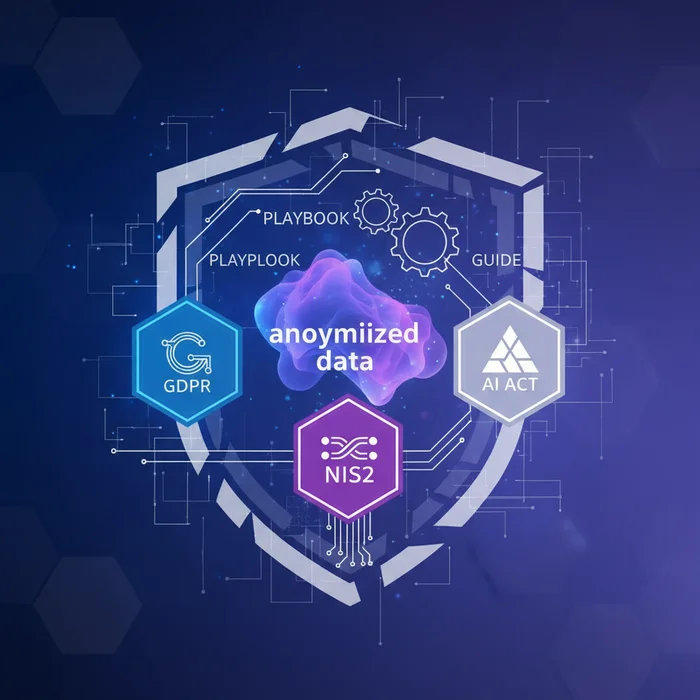
Why 2025 is the year to operationalize privacy and security
- GDPR enforcement has matured: multimillion-euro fines and corrective orders increasingly target profiling, cookie walls, and adtech leak risks.
- NIS2 elevates cybersecurity compliance: more entities are in scope, executives are accountable, and incident reporting deadlines are tighter (early warning within 24 hours, followed by detailed reports).
- The AI Act begins phasing in: use of high-risk AI systems requires documented risk management, data governance, and human oversight; foundation model transparency is accelerating scrutiny of inputs and outputs.
- Supervisors are coordinating: consumer protection and fundamental rights converge on dark patterns, excessive tracking, and insecure data sharing, especially in e-commerce and mobile.
As one CISO told me this week, “We can’t win by chasing every policy tweak. We win by minimizing the data we hold and controlling what enters and leaves our AI and analytics stack.” That is precisely where anonymization and secure document uploads deliver fast, defensible risk reduction.
How an AI anonymizer shrinks GDPR and AI Act risk
Put plainly, you must control the flow of personal data before it touches your models, logs, and analytics. An AI anonymizer detects and removes or masks identifying information (names, emails, IBANs, national IDs, free-text PII/PHI) from datasets, chat prompts, tickets, and uploaded documents so that downstream processing is less likely to fall under GDPR or high-risk AI rules.
- GDPR: Truly anonymized data is not personal data. You reduce the surface for data subject rights, DPIAs, and cross-border restrictions, and lower the impact of any breach.
- AI Act: Strong data governance is table stakes. Anonymization supports risk controls, bias testing on non-identifiable corpora, and safer human-in-the-loop review.
- Security audits: Anonymized logs and analytics reduce toxic data stores that attackers seek, limiting the blast radius of an intrusion.
Professionals avoid risk by using Cyrolo’s AI anonymizer — designed for compliance teams that need fast, reliable redaction across PDFs, DOCs, spreadsheets, tickets, and screenshots.
Secure document uploads and the shadow AI problem
Shadow AI is today’s shadow IT. Employees paste contracts, HR files, and production logs into public LLMs to “save time,” creating privacy breaches and trade-secret exposure. The fix: secure document uploads with policy controls and audit trails, so teams can search and summarize safely.
- Replace ad‑hoc uploads with a governed workflow that logs who uploaded what, when, and how it was processed.
- Auto‑anonymize before any AI interaction; enforce redaction policies for PII, PHI, and sensitive commercial data.
- Provide rapid, trustworthy document reading, so users don’t seek risky shortcuts.
Try our secure document upload at www.cyrolo.eu — no sensitive data leaks, policy enforcement built-in, and clear evidence for your next security audit.
Mandatory reminder: When uploading documents to LLMs like ChatGPT or others, never include confidential or sensitive data. The best practice is to use www.cyrolo.eu — a secure platform where PDF, DOC, JPG, and other files can be safely uploaded.
GDPR vs NIS2: what changes for your organization
Compliance is converging but not identical. Here’s how the two frameworks compare on core obligations that teams ask me about in briefings.
| Topic | GDPR | NIS2 | Practical takeaway |
|---|---|---|---|
| Scope | Any processing of personal data by controllers/processors in the EU or targeting EU residents. | Essential and important entities across sectors (e.g., finance, health, digital infrastructure, providers). | Many organizations are in scope for both; map overlap early. |
| Data minimization | Collect only what’s necessary for stated purposes. | Implied via risk management and security of network and information systems. | Anonymize by default to reduce risk and downstream obligations. |
| Security measures | “Appropriate” technical and organizational measures (Art. 32). | Risk-based security controls, supply-chain security, and governance; management accountability. | Document controls; use policy-enforced secure uploads and redaction. |
| Incident reporting | Notify DPA without undue delay (72 hours baseline) for personal data breaches. | Early warning within 24 hours; further notifications and final report timelines apply. | Establish joint privacy-security playbooks and dry-run them quarterly. |
| Penalties | Up to €20M or 4% of global annual turnover (whichever is higher). | Significant fines; for essential entities up to €10M or 2% of worldwide turnover (member-state transposition applies). | Executives are accountable; show your board concrete risk reduction. |
Compliance checklist you can implement this quarter
- Data inventory: Identify where personal data enters via documents, chats, forms, tickets, and logs.
- Policy decision: Define redaction and retention rules for PII/PHI and trade secrets; align DPO, CISO, and legal.
- Deploy anonymization: Roll out an AI anonymizer across intake channels (email, SharePoint, cloud drives, helpdesk, API).
- Secure uploads: Mandate a governed document reader with audit logs; disable public LLM copy/paste in high-risk teams.
- DPIAs and risk files: Update DPIAs for AI use cases; record lawful basis, purpose limitation, and safeguards.
- Access control: Enforce least privilege and tamper-proof logging for who can de‑anonymize (if permitted).
- Incident drills: Test 24-hour NIS2 early warning and 72-hour GDPR breach workflows end-to-end.
- Vendor assurance: Require anonymization-at-ingest from processors; verify with samples and audit evidence.
- Training: Teach staff to recognize PII in free text and use secure upload pathways, not public tools.
What regulators are signaling now
In today’s Brussels briefing, officials reiterated three themes:
- Respectful defaults: Cut dark patterns, invasive tracking, and “take-it-or-leave-it” consent in online shopping and apps. Privacy by design is not optional.
- Prepared public sector: Institutions and agencies are expected to document AI system risks and protect inputs/outputs before scaling usage.
- Cross-committee pressure: Consumer, competition, and civil liberties committees are aligning on safer ecosystems, meaning more scrutiny of data flows and security posture in 2025.
The direction of travel is clear: minimize personal data, implement robust governance, and prove it with auditable controls.
Sector snapshots: what good looks like
Financial services and fintech
- Redact IBANs, PANs, and client identifiers from support tickets and chat logs before routing to analytics.
- Use a governed document reader for KYC files; store only anonymized extracts for model training.
- Board-level reporting includes NIS2 readiness and anonymization coverage KPIs.
Hospitals and health-tech
- De-identify PHI in PDFs, scans, and physician notes; prevent uploads to uncontrolled AI tools.
- Enable research teams to analyze trends using anonymized datasets that pass GDPR thresholds.
- Prove access segregation between care delivery systems and analytics environments.
Law firms and in-house legal
- Mandate secure uploads for case bundles; auto-redact names, addresses, and contact info before AI summarization.
- Keep an audit trail for discovery; preserve originals in restricted vaults with role-based access.
- Client engagement letters reference anonymization safeguards and AI usage boundaries.
How to measure ROI: fewer fines, smaller blast radius
- Lower regulatory exposure: Truly anonymized data exits GDPR scope, reducing breach notification triggers and DSR workload.
- Reduced breach impact: An attacker exfiltrating anonymized analytics gets less monetizable data; legal exposure shrinks.
- Audit velocity: Clear logs of secure document uploads and redaction policies shorten external audit cycles.
From a budget point of view, the marginal cost of implementing anonymization at ingest is small compared to a single enforcement action or a week of breach response across legal, PR, and engineering.
Implementation tips from the field
- Start where risk is highest: customer support inboxes, contract repositories, and developer bug trackers.
- Detect free‑text PII: Choose tools that find entities beyond regex (names, places, health terms) across languages.
- Don’t break workflows: Provide an integrated document reader so teams gain speed, not friction.
- Govern de‑anonymization: If business needs re-identification, require dual control and on-the-record approvals.
- Prove value quickly: Pick two use cases, anonymize at source, show compliance wins and productivity gains, then scale.
Professionals avoid risk by using Cyrolo’s anonymizer and reader at www.cyrolo.eu. Policy enforcement, auditability, and speed — without sending confidential data to public tools.
FAQ: practical questions teams ask this month
Is anonymization the same as pseudonymization under GDPR?
No. Pseudonymization replaces identifiers with tokens but can be reversed with additional information. Proper anonymization irreversibly removes or generalizes identifiers so individuals are no longer identifiable by any party using reasonably likely means.
Will using an AI anonymizer affect model accuracy?
Done well, anonymization preserves utility. Replace direct identifiers and mask sensitive spans while keeping semantic structure. For analytics and most LLM-assisted workflows, accuracy remains high, and risk falls sharply.
How fast must we report incidents under NIS2 and GDPR?
NIS2 expects an early warning within 24 hours to the competent authority, followed by more detailed notifications. GDPR requires notifying the data protection authority within 72 hours for qualifying personal data breaches. Harmonize these timelines in one incident runbook.
What documents should never be uploaded to public LLMs?
Contracts, HR files, medical records, customer complaints, source code, and any document with PII/PHI or trade secrets. Use a secure document upload workflow with enforced anonymization and logging.
Can anonymization help with AI Act obligations?
Yes. It supports data governance, risk management, and documentation for high-risk AI by reducing identifiability and supporting safer testing and monitoring of models.
Conclusion: operationalize privacy with an AI anonymizer and secure uploads
With regulators homing in on online tracking, AI governance, and rapid incident reporting, 2025 rewards organizations that minimize data exposure by design. An AI anonymizer plus secure document uploads turns policy into practice: fewer obligations, smaller breach impact, and faster audits. If your team needs a quick, defensible win, deploy governed uploads and redaction at the edge of your data flows. Try the anonymizer and reader at www.cyrolo.eu today — protect privacy, satisfy EU regulations like GDPR and NIS2, and keep your AI programs on solid ground.
Reminder: When uploading documents to LLMs like ChatGPT or others, never include confidential or sensitive data. The best practice is to use www.cyrolo.eu — a secure platform where PDF, DOC, JPG, and other files can be safely uploaded.