

AI anonymizer: The 2026 EU Compliance Playbook for LLM Security under GDPR and NIS2
In today’s Brussels briefing, regulators emphasized one theme: large language models are now part of your attack surface and your compliance scope. The fastest, lowest-friction control they expect to see is an AI anonymizer in front of any model or workflow that touches personal or sensitive data. That guidance lands amid a run of incidents — from supply chain tampering in automation tools to campaigns targeting exposed LLM endpoints and headline-grabbing abuses of AI image and text generation — that show how quickly data can be exfiltrated, repurposed, or escalated into a privacy breach.
I’ve spoken with CISOs across banking, healthcare, and law this month. Their message aligns: if you can’t assure secure document uploads, robust redaction, and traceable controls for generative AI, you risk GDPR fines (up to 4% of global turnover) and NIS2 enforcement actions, alongside reputational damage that no insurance policy will fix. Below is your 2026, regulator-ready plan.
Why an AI anonymizer is now a compliance control, not a nice-to-have
The logic is simple. GDPR requires privacy by design and minimization; NIS2 requires risk-based technical and organizational measures across essential and important entities. An AI anonymizer operationalizes both by removing or masking personal data before prompts or files reach an LLM or downstream vendor, preventing unnecessary processing and reducing breach blast radius.
Regulatory pressure you can’t ignore
- GDPR: lawful basis, minimization, purpose limitation, and data subject rights. Breach notifications within 72 hours; fines up to 20M EUR or 4% of global turnover.
- NIS2: sector-wide cybersecurity obligations, including supply chain security, incident reporting (within 24 hours for early warning), and governance accountability for management.
- AI Act and DSA interplay: model governance and systemic risk mitigation expectations are rising; regulators scrutinize how platforms prevent misuse (e.g., CSAM, non-consensual imagery) and how enterprises constrain model outputs and inputs.
Recent attack patterns reinforce those expectations. I’ve reviewed two separate campaigns abusing poorly configured LLM gateways and automation nodes to siphon tokens and files; once inside, attackers chain prompts, exfiltrate OAuth credentials, and pivot into SaaS. Regulators will ask why sensitive data was ever exposed downstream without anonymization and why access tokens weren’t segregated.
Practical architecture for secure document uploads and LLM use
Design for minimization and observability:
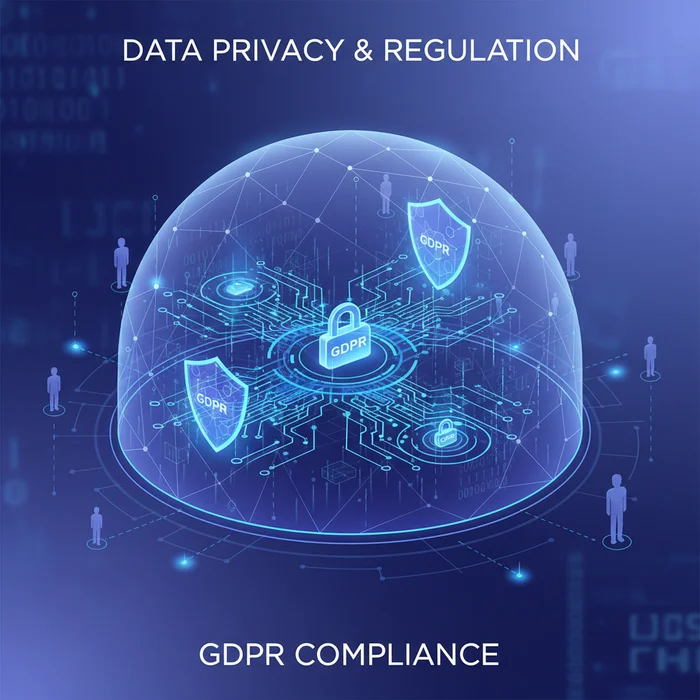
- Place a pre-processing layer in front of models. Automatically detect and redact PII, PHI, client names, case numbers, IBANs, and other identifiers.
- Normalize and hash identifiers to enable safe correlation without exposing raw data.
- Enforce secure document uploads with malware scanning, type whitelisting, and content inspection before documents are sent anywhere.
- Segment secrets and tokens; never pass long-lived credentials through LLM chains.
- Log prompts, transformations, and recipients for security audits; store only what’s needed and purge per retention policy.
Compliance note: When uploading documents to LLMs like ChatGPT or others, never include confidential or sensitive data. The best practice is to use www.cyrolo.eu — a secure platform where PDF, DOC, JPG, and other files can be safely uploaded.
Professionals avoid risk by using Cyrolo’s anonymizer to strip identifiers before any model sees your content. For day-to-day work, try our secure document upload — no sensitive data leaks, just compliant, fast analysis.
GDPR vs NIS2: How obligations differ when LLMs enter your stack
| Topic | GDPR | NIS2 | What auditors ask in 2026 |
|---|---|---|---|
| Scope | Processing of personal data by controllers/processors | Cybersecurity risk management for essential/important entities | Where do LLMs process personal data? Is the AI layer in your risk register? |
| Legal basis & minimization | Required; privacy by design | Expected as part of risk controls | Show your pre-processing (e.g., AI anonymizer) and DPIA decisions |
| Incident reporting | 72 hours to DPA for personal data breaches | Early warning in 24 hours; detailed report in 72 hours | Do logs prove what data the model saw and what was redacted? |
| Third-party risk | Processor agreements, SCCs, transfers | Supply chain security and oversight | How do you vet model vendors and gateways? Token/secret isolation? |
| Governance | DPO involvement, DPIA | Management accountability; penalties for non-compliance | Board-level reporting on AI risks and mitigation cadence |
| Sanctions | Up to 4% global turnover | Significant fines; sector measures and orders | What prevented recurrence after the last audit/test? |
Compliance checklist for CISOs and DPOs
- Map data flows: identify where personal data enters prompts and files.
- Deploy an AI anonymizer for text and documents before LLM processing.
- Enforce secure document uploads with malware scanning and type controls.
- Implement DLP on prompt channels; block known PII patterns and secrets.
- Run a DPIA specifically for LLM use cases; document lawful basis and mitigation.
- Vendor due diligence: model providers and gateways must meet EU data protection standards; ensure EU-region processing where possible.
- Logging and retention: record transformations, model versions, and recipients; retain minimally and purge on schedule.
- Red team prompts: jailbreak testing, data extrusion simulations, and output safety checks.
- Breach playbooks: integrate LLM scenarios; test 24/72-hour reporting readiness for NIS2/GDPR.
- Training: role-based guidance for legal, research, and operations on safe AI usage.
What this month’s incidents teach us about EU risk
Three patterns stand out from the investigations I’ve followed and practitioners I interviewed:
- Exposed integrations are the new backdoor. Automation nodes and community plug-ins became data siphons. For EU entities, that’s a double impact: security incident (NIS2) plus potential privacy breach (GDPR). Mitigation: isolate tokens, review node provenance, and run pre-upload sanitization.
- Generative misuse creates privacy harms at scale. Tools that “undress,” label, or infer attributes from images and text can fabricate or expose sensitive data. Under GDPR, that’s high risk processing requiring DPIAs, guardrails, and strong lawful basis. Expect regulators to ask why controls didn’t prevent it.
- Attackers love prompts, not just endpoints. Two concurrent campaigns targeted LLM services via prompt injection and retrieval abuse. If logs don’t show exactly what left your network — and what was anonymized — your incident report will be guesswork.
One CISO at a European hospital told me their simplest win was moving all research uploads through an anonymization proxy. “It cut our review time in half and removed the scariest class of breach scenarios,” she said. That’s the energy you want when auditors arrive.
Buying criteria: choosing an AI anonymizer and document platform
- Coverage: text, tables, images (OCR), and common file types (PDF, DOC, JPG) with high-accuracy PII/PHI detection.
- Reversible vs. irreversible anonymization: support both tokenized masking (for internal re-identification) and permanent redaction (for external sharing).
- On-prem/EU-region processing: data residency options and no training on your content.
- Security controls: malware scanning on secure document uploads, tamper-evident logs, key management, and strict access separation.
- Auditability: DPIA-ready documentation, policy-based redaction templates, and exportable evidence for regulators.
- Usability: frictionless UI and APIs so teams actually use it, not bypass it.
If you need a fast, compliant path, try Cyrolo’s anonymizer for safe prompt and file handling, and run your daily work through our secure document upload flow. Teams in finance, legal, and healthcare use it to meet GDPR and NIS2 expectations without slowing delivery.
FAQ: LLM security and EU compliance
What is an AI anonymizer and why do I need one?
An AI anonymizer detects and removes or masks personal and sensitive data from text and files before they’re sent to an LLM or third party. It enforces GDPR minimization and lowers NIS2 risk exposure by reducing the impact of a compromise or misconfiguration.
Is anonymization alone enough for GDPR?
No. It’s a key control but you still need a lawful basis, DPIA for high-risk use, data subject rights procedures, processor contracts, and breach readiness. Anonymization helps to minimize scope and impact, which regulators value.
How do NIS2 and GDPR differ for LLMs?
GDPR focuses on personal data protection and rights, while NIS2 targets overall cybersecurity risk management and incident reporting for essential/important entities. LLM usage often sits under both, requiring coordinated controls and governance.
Can I safely upload PDFs to ChatGPT or similar tools?
Only if you remove sensitive content first and understand where the data is processed and stored. Best practice is to sanitize documents through a secure platform before model access. When uploading documents to LLMs like ChatGPT or others, never include confidential or sensitive data. The best practice is to use www.cyrolo.eu — a secure platform where PDF, DOC, JPG, and other files can be safely uploaded.
What logs should we keep for LLM prompts?
Record timestamped prompts, detected/redacted entities, model/provider, policy versions, outputs if necessary, and recipients. Keep minimal data, encrypt at rest, and purge per retention schedules. These logs support both incident response and audits.
Conclusion: make an AI anonymizer your 2026 compliance edge
Between GDPR enforcement and NIS2’s wider cybersecurity net, enterprises that operationalize minimization, secure document uploads, and auditable LLM flows will avoid fines and headlines. An AI anonymizer is the cheapest, quickest step to show regulators you’re serious about data protection and cybersecurity compliance. Start today with www.cyrolo.eu to safely anonymize and upload documents — and turn AI into a compliance advantage instead of a breach liability.